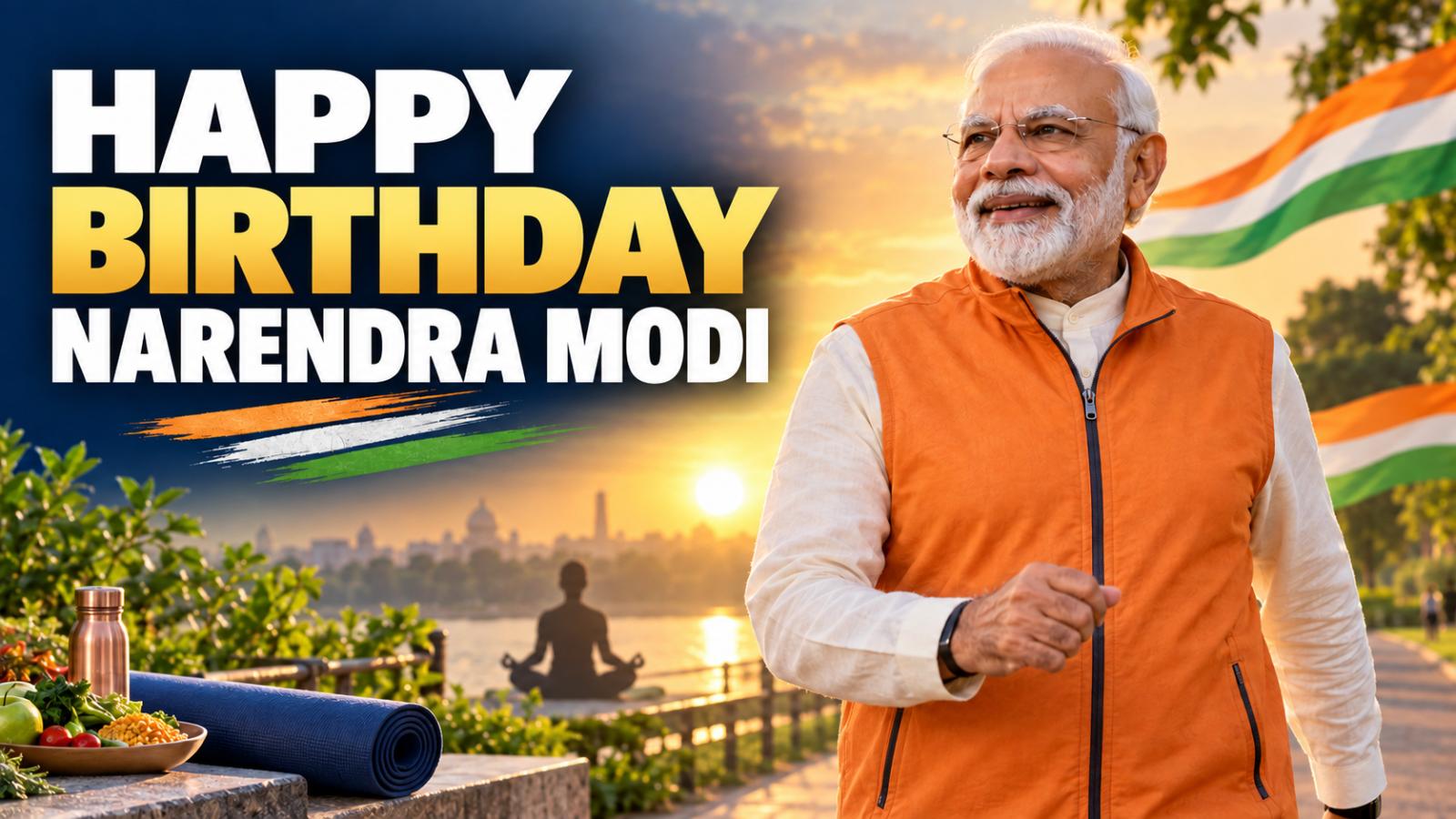

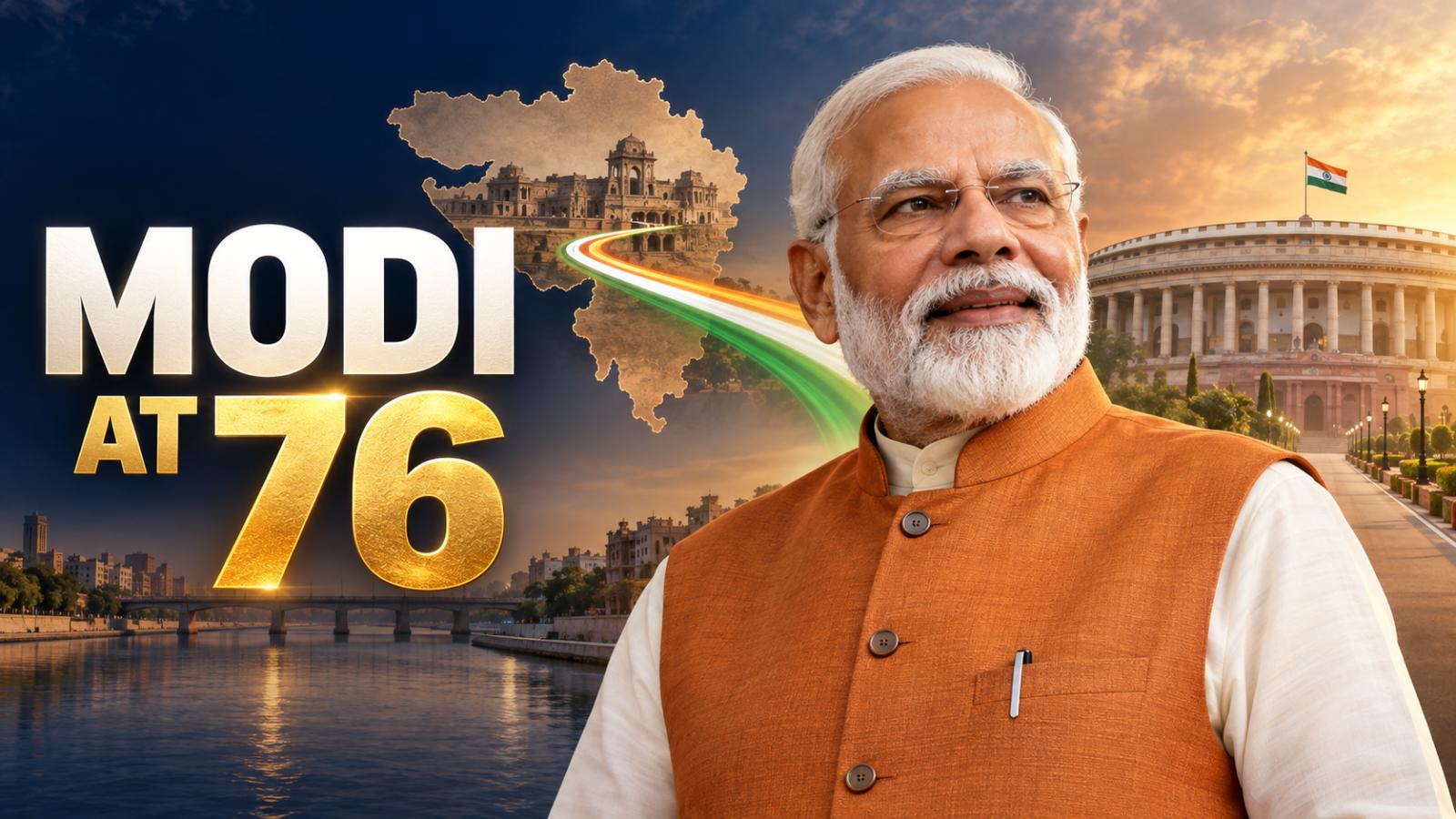
Narendra Modi turns 76 as India looks back at his journey from an RSS organiser to Gujarat Chief Minister and three-term Prime Minister.
Prime Minister Narendra Modi turned 76 on September 17, 2026, marking another milestone in a public career shaped by organisational work, electoral victories, internal party struggles and national leadership. His journey from Vadnagar in Gujarat to the Prime Minister’s Office has included several periods when his political future appeared uncertain.
Modi’s birthday comes during a challenging year for the Union government. Global conflicts, rising oil prices, inflationary pressure, supply disruptions, punitive US tariffs and an uncertain international order have tested India’s economy and foreign policy. The government has also faced domestic political protests and criticism over policy decisions.
However, difficult periods are not new to Modi’s career. From working as an RSS pracharak and operating underground during the Emergency to being moved out of Gujarat politics and later facing intense scrutiny as chief minister, setbacks have repeatedly influenced his political evolution.
Born in Vadnagar on September 17, 1950, Modi came from a family of modest means. Accounts of his childhood say he helped at his family’s tea stall before becoming associated with the Rashtriya Swayamsevak Sangh.
He joined the RSS as a pracharak and gradually moved into full-time organisational work. His responsibilities reportedly included preparing tea and breakfast and completing everyday work at the organisation’s Ahmedabad office.
During the Emergency imposed in June 1975, the RSS was banned and many of its activists were forced underground. Modi became involved in the resistance network in Gujarat, helping distribute anti-Emergency literature and maintain contacts among activists. Accounts from the period also describe him travelling in disguise to avoid detection.
The Emergency became an early lesson in political organisation, secrecy and survival for the young RSS worker. His organisational experience later helped him secure increasingly important responsibilities within the BJP.
Happy Birthday Narendra Modi: Five Habits Behind His Energy
By the mid-1990s, Modi had become an influential figure in the Gujarat BJP. His growing organisational authority also created tensions within the state unit, where rival leaders accused him of interfering in government affairs and encouraging factional politics.
The crisis intensified in 1995 when BJP leader Shankersinh Vaghela rebelled against Chief Minister Keshubhai Patel. The party’s central leadership negotiated a compromise under which Patel stepped down and Modi was moved out of Gujarat.
Modi was subsequently assigned responsibilities in Delhi and Chandigarh as a BJP national secretary. Political rivals portrayed the move as a punishment rather than a promotion. He remained away from Gujarat politics for approximately six years, including an initial 18-month period described by biographers as one of isolation.
Instead of ending his rise, the national assignment allowed Modi to build political networks across northern India. His organisational work outside Gujarat expanded his experience and strengthened his position within the BJP’s national structure.
In 2001, the BJP government in Gujarat was struggling with political dissatisfaction, electoral setbacks and criticism following the Bhuj earthquake. The party leadership decided to replace Keshubhai Patel and selected Modi as chief minister.
Modi was sworn in on October 7, 2001, despite never having contested an election. As he had to enter the state legislature within six months, securing a suitable Assembly constituency became an immediate challenge.
Vajubhai Vala eventually vacated the Rajkot-II seat, allowing Modi to contest his first election. He won the February 2002 by-election and entered the Gujarat Assembly. However, his government soon faced its most severe crisis after the Godhra train burning and the communal violence that followed across Gujarat.
The violence brought widespread criticism of the state government and years of political and legal scrutiny. Modi offered to resign at the BJP National Executive meeting in Goa, but the party did not accept his resignation. In 2022, the Supreme Court dismissed a challenge to the Special Investigation Team’s closure report in a case alleging a larger conspiracy.
Modi subsequently built a political campaign around development, investment and governance, promoted nationally as the Gujarat Model. Vibrant Gujarat summits and infrastructure programmes strengthened his image as a development-focused administrator, even as criticism and political controversies continued.
Modi secured three consecutive terms as Gujarat Chief Minister, with his 2012 Assembly election victory strengthening demands within the BJP for a larger national role. His growing popularity also changed the leadership equation inside the party.
On September 13, 2013, the BJP formally named Modi its prime ministerial candidate for the 2014 Lok Sabha election. Under his leadership, the party won a parliamentary majority, allowing it to form the first single-party majority government at the Centre in three decades.
Modi led the BJP to another larger victory in 2019 and returned for a third term as Prime Minister in 2024, although the party then required support from its National Democratic Alliance partners to form the government.
At 76, Modi remains one of India’s most influential and polarising political figures. Supporters point to his electoral record, infrastructure agenda and international profile, while critics question his government’s handling of social tensions, institutions and economic challenges.
His political journey nevertheless shows a consistent pattern: organisational assignments created opportunities, periods of isolation produced wider networks and major controversies were followed by reinvention. As Modi enters another year in office, the domestic and global pressures of 2026 present the latest test in a career repeatedly shaped by adversity and comeback.