
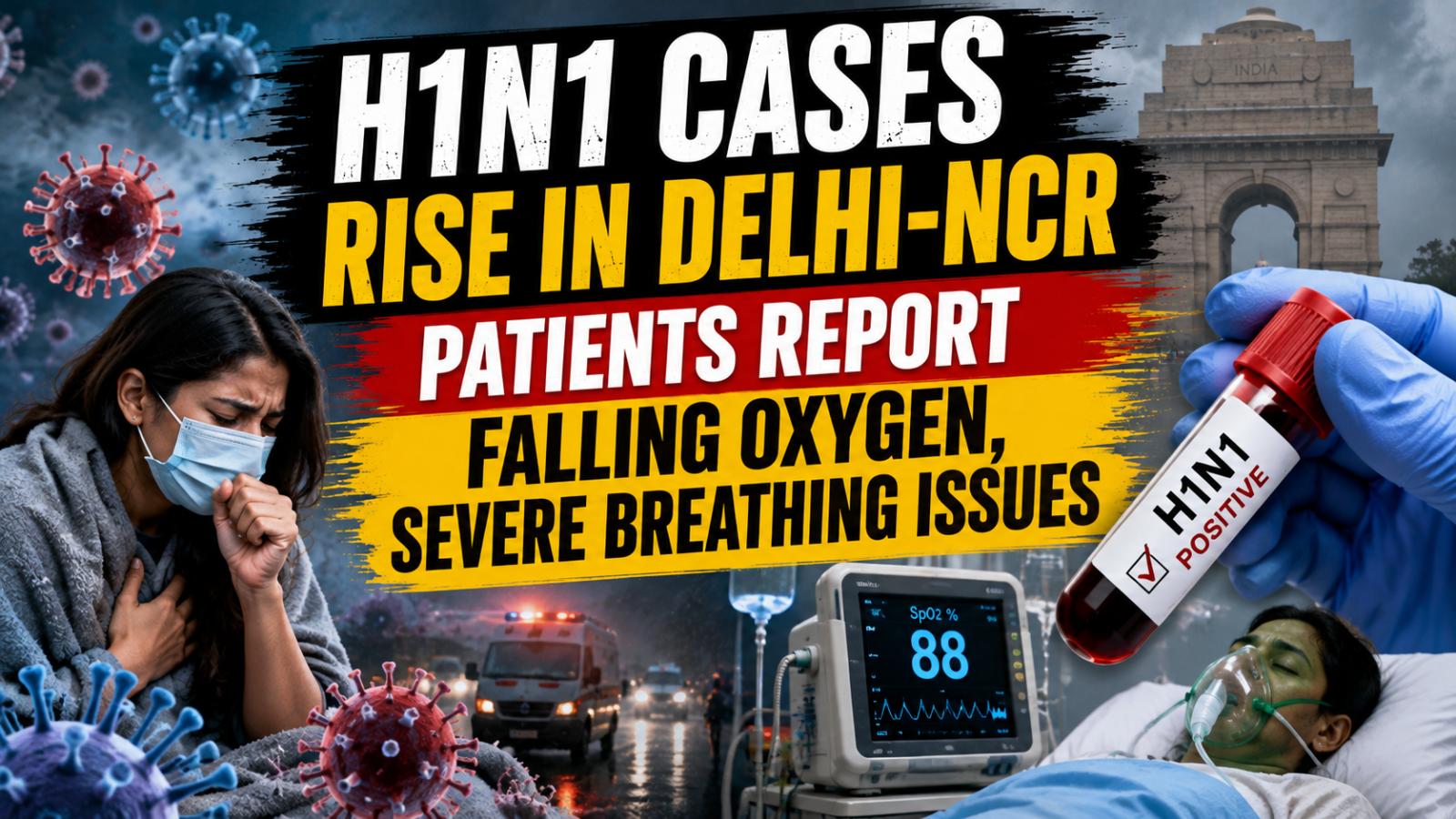
New Delhi: H1N1 infections are rising across Delhi-NCR, with doctors reporting severe respiratory symptoms and falling oxygen levels in some patients.
Delhi-NCR is witnessing a noticeable rise in H1N1 influenza, commonly known as swine flu, along with other respiratory infections as humid and changing monsoon weather continues across the region. Doctors have reported an increase in patients with fever, cough, body aches and breathing difficulties, while some cases have involved declining oxygen levels. Several medical professionals, including doctors and the head of a Delhi government hospital, have also reportedly tested positive for the infection.
The latest rise has increased concern because Delhi has already recorded 1,349 H1N1 infections this year, compared with 229 during the corresponding period last year. That represents nearly a six-fold increase in reported cases in the capital, although the figure applies specifically to Delhi and should not be interpreted as a total for the entire NCR.
Delhi-NCR H1N1 Cases Rise Amid Humid Monsoon WeatherDoctors say changing weather, high humidity and the circulation of multiple respiratory viruses are contributing to an increase in flu-like illnesses. H1N1 generally causes symptoms including fever, cough, sore throat, headache, chills, fatigue and muscle aches. While many patients recover without serious complications, influenza can become severe in some cases.
The reports of patients experiencing falling oxygen saturation and breathing difficulties have drawn particular attention. Difficulty breathing, persistent chest pain, confusion and symptoms that improve before returning or worsening are among warning signs for which prompt medical attention is recommended.
Delhi-NCR H1N1 High-Risk Groups Urged To Stay AlertOlder adults, young children, pregnant women and people with chronic medical conditions face a higher risk of serious influenza complications. Those with asthma, diabetes, heart disease, chronic lung conditions or weakened immunity should contact a healthcare professional early if flu symptoms develop.
Doctors are also advising people not to dismiss persistent or worsening symptoms as an ordinary seasonal cold, especially when accompanied by breathlessness or severe weakness.
Delhi-NCR H1N1 Treatment Works Best When Started EarlyPrescription antiviral medicines may be recommended for people with influenza, particularly those who are seriously ill or at increased risk of complications. According to the CDC, antiviral treatment provides the greatest benefit when started early, ideally within one to two days after symptoms begin, although treatment may still help high-risk or severely ill patients when started later.
Antibiotics do not treat influenza viruses and should only be used when prescribed for a confirmed or suspected bacterial infection. Patients should avoid self-medication and seek professional medical advice for treatment decisions.
Delhi-NCR H1N1 Prevention Focus Turns To Vaccination And HygieneHealth experts recommend annual influenza vaccination as an important preventive measure. Frequent handwashing, covering coughs and sneezes, avoiding close contact with others while sick and staying home during symptomatic illness can also help reduce transmission.
With Delhi reporting a sharp year-on-year increase in H1N1 cases, doctors are urging residents to remain alert rather than panic. Anyone experiencing significant breathing difficulty, worsening symptoms or other emergency warning signs should seek medical care promptly.