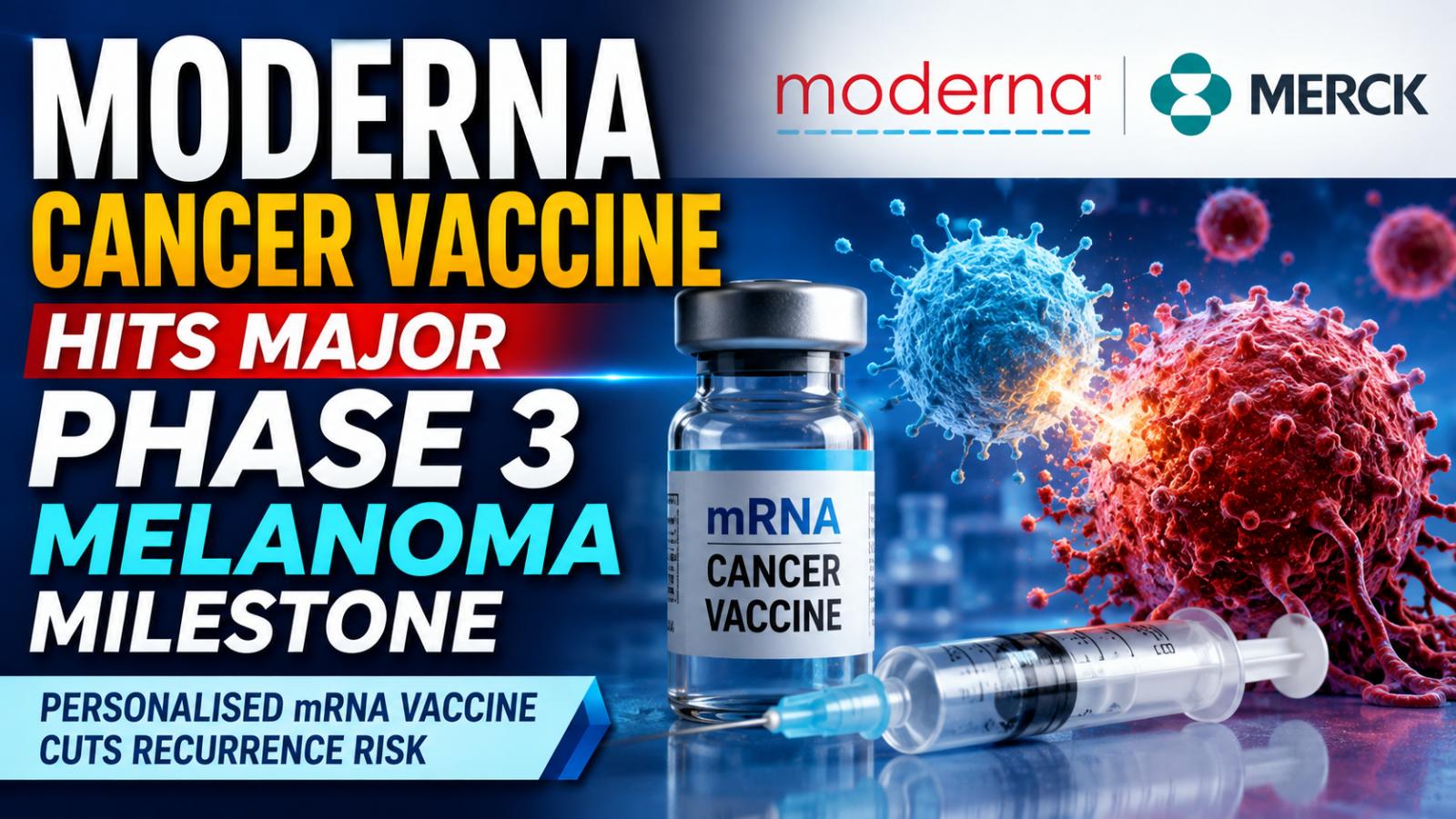
Moderna and Merck announced positive late-stage melanoma trial results on Wednesday, August 19. The Phase 3 study involved 1,137 patients with surgically removed high-risk stage IIB to IV melanoma.
Moderna Cancer Vaccine meets key Phase 3 melanoma goalsModerna and Merck have reported a major clinical milestone for their personalised mRNA cancer therapy after the Phase 3 INTerpath-001 trial met its primary and key secondary endpoints in patients with high-risk melanoma.
The experimental therapy, intismeran autogene, also known as mRNA-4157 or V940, was given alongside Merck's immunotherapy drug Keytruda, or pembrolizumab. The companies said the combination significantly improved recurrence-free survival and distant metastasis-free survival compared with Keytruda alone. No new safety signals were identified. Detailed Phase 3 data will be presented at a future medical meeting.
Moderna Cancer Vaccine uses personalised tumour mutationsUnlike vaccines that prevent infectious diseases, intismeran is designed individually for each cancer patient. After a tumour is removed, its genetic mutations are analysed to identify unique neoantigens that can serve as targets for the immune system.
An mRNA treatment is then created to provide instructions that help immune cells recognise those tumour-specific markers. Keytruda simultaneously blocks the PD-1 pathway, helping immune cells maintain their attack on cancer. The strategy aims to eliminate remaining cancer cells after surgery before they can cause recurrence or spread elsewhere in the body. The Phase 3 study enrolled 1,137 patients with completely resected stage IIB to IV melanoma.
Moderna Cancer Vaccine builds on 49% recurrence reductionEarlier Phase 2b findings had already raised expectations for the treatment. At five years of follow-up, intismeran combined with Keytruda reduced the risk of recurrence or death by 49% compared with Keytruda alone in patients with resected high-risk stage III or IV melanoma.
That 49% figure should not be confused with the newly announced Phase 3 results. Moderna and Merck have not yet disclosed the precise risk reduction from INTerpath-001. The positive late-stage outcome nevertheless provides stronger evidence that personalised mRNA technology could become a new addition to post-surgery melanoma treatment.
Moderna Cancer Vaccine moves closer to regulatory reviewModerna and Merck said they are discussing the Phase 3 findings with regulators. Reuters reported that the treatment could potentially reach the market as early as 2027 if regulators approve it, but it remains investigational and is not yet available for routine clinical use.
Overall-survival data and complete Phase 3 results are still awaited, making those findings important for judging the treatment's long-term benefit and safety.
The companies are also studying personalised mRNA therapies across other cancers, including lung, bladder and kidney cancers. If further trials succeed, the melanoma result could become an important milestone in the broader effort to use individually tailored vaccines alongside immunotherapy in precision cancer care.