India Launches First National Guidelines for Childhood Diabetes Care
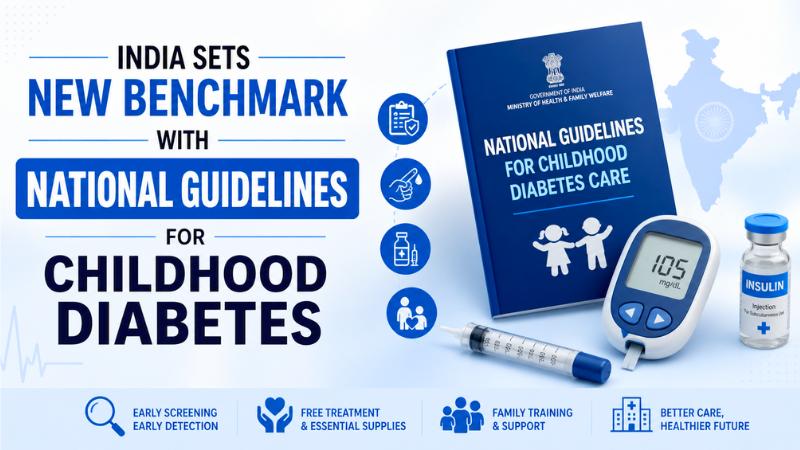
India has taken a major step toward strengthening child healthcare with the launch of its first-ever national guidelines for managing Childhood Diabetes. Issued by the Health Ministry, the framework aims to ensure early detection, effective treatment, and long-term care for children affected by diabetes.
The new guidelines introduce a structured system for screening children from birth to 18 years through schools, Anganwadi centres, and community health networks. If symptoms are identified, immediate blood sugar testing and prompt referral to district hospitals are recommended, helping reduce delays in diagnosis and treatment.
A key focus of the initiative is early identification. The government is promoting awareness of common warning signs, often referred to as the “4Ts” — frequent urination, excessive thirst, unusual tiredness, and unexplained weight loss. Recognising these symptoms early can enable families to seek timely medical care.
The guidelines also emphasise comprehensive and continuous care after diagnosis. Public healthcare facilities will provide free insulin, glucometers, testing strips, and regular follow-ups. This is expected to significantly ease the financial burden on families managing lifelong conditions such as Type 1 Diabetes.
Another important aspect is the inclusion of families in the care process. Parents and caregivers will receive training to administer insulin, monitor blood sugar levels, and manage emergencies at home, where most day-to-day care takes place.
Alongside these measures, the government has expanded its child health screening programme, Rashtriya Bal Swasthya Karyakram. The updated version (RBSK 2.0) broadens its scope to include chronic conditions such as diabetes, high blood pressure, and mental health concerns, enabling earlier detection and improved follow-up.
With stronger referral systems, digital health tracking, and better coordination between schools, Anganwadi centres, and hospitals, the initiative aims to prevent children from slipping through gaps in the healthcare system.
This move marks a significant shift toward proactive healthcare in India, focusing not only on treatment but also on early detection and sustained management of childhood diabetes nationwide.