
































#legal-matters
Mira Road Bakri Eid Goat Row: Police Deployed After Society Dispute
Dispute Over Goats In Mira Road Society Tension was reported at Poonam Cluster housing society in Mira Road near Mumbai after some residents objected to goats being kept on the society premises ahead of Bakri Eid, which falls on May 28, 2026. The disagreement reportedly began earlier this week and later escalated after videos of arguments and protests started circulating on social media. The issue gained at
Mira Road Bakri Eid Goat Row: Police Deployed After Society Dispute
Dispute Over Goats In Mira Road Society Tension was reported at Poonam Cluster housing society in Mira Road near Mumbai after some residents objected to goats being kept on the society premises ahead of Bakri Eid, which falls on May 28, 2026. The disagreement reportedly began earlier this week and later escalated after videos of arguments and protests started circulating on social media. The issue gained at
Daughters Have Equal Right To Inheritance Under Hindu Law
Supreme Court Reaffirms Equal Rights The Supreme Court has reaffirmed that daughters have equal right to inheritance under Hindu law. The ruling makes it clear that a daughter is a legal heir to her father’s share in property and cannot be denied her claim because of gender. This strengthens the principle of equality in family property matters and reminds families that sons and daughters must be treated e
Daughters Have Equal Right To Inheritance Under Hindu Law
Supreme Court Reaffirms Equal Rights The Supreme Court has reaffirmed that daughters have equal right to inheritance under Hindu law. The ruling makes it clear that a daughter is a legal heir to her father’s share in property and cannot be denied her claim because of gender. This strengthens the principle of equality in family property matters and reminds families that sons and daughters must be treated e
Gifting Property to Son: Legal Experts Explain Limits of Mutation Rules
Gifting property to a son is a widely followed practice in India, often used to simplify succession and reduce the chances of future disputes. This transfer is typically carried out through a registered gift deed under the Transfer of Property Act, 1882. The law requires that the gift be made voluntarily, without consideration, and accepted by the recipient during the lifetime of the donor. Registration of the gift deed is mandatory to make the transfer legally valid. To register, stamp duty and registration charges must be paid, which vary by state. In many states, concessional stamp duty is offered when property is gifted to close family members, such as sons or daughters. Legal experts advise verifying state-specific rules before executing the deed, as non-compliance can lead to complications or even rejection of the document. A key area of confusion is mutation. Mutation is the process of updating property records in local municipal or revenue offices after ownership changes. While it is important for tax purposes and maintaining accurate land records, mutation does not establish legal ownership. Courts, including the Supreme Court of India, have consistently held that ownership is determined by valid legal documents like a registered gift deed, not by mutation entries. Another important aspect is the nature of the property being gifted. If the property is self-acquired, the owner has full rights to gift it to anyone, including a son. However, in the case of ancestral property, the rights of other legal heirs must be considered. A person cannot unilaterally gift ancestral property if it affects the share of other coparceners under Hindu law. Experts also point out that once a gift deed is executed and registered, it is generally irrevocable. Revocation is possible only if specific conditions are clearly mentioned in the deed and agreed upon by both parties. This makes it crucial for individuals to carefully draft the document, preferably with legal assistance, to avoid unintended consequences later. Tax implications should also be kept in mind. Under the Income Tax Act, 1961, gifts received from specified relatives, including parents, are exempt from income tax. However, future income generated from the property, such as rent, will be taxable in the hands of the recipient.
Gifting Property to Son: Legal Experts Explain Limits of Mutation Rules
Gifting property to a son is a widely followed practice in India, often used to simplify succession and reduce the chances of future disputes. This transfer is typically carried out through a registered gift deed under the Transfer of Property Act, 1882. The law requires that the gift be made voluntarily, without consideration, and accepted by the recipient during the lifetime of the donor. Registration of the gift deed is mandatory to make the transfer legally valid. To register, stamp duty and registration charges must be paid, which vary by state. In many states, concessional stamp duty is offered when property is gifted to close family members, such as sons or daughters. Legal experts advise verifying state-specific rules before executing the deed, as non-compliance can lead to complications or even rejection of the document. A key area of confusion is mutation. Mutation is the process of updating property records in local municipal or revenue offices after ownership changes. While it is important for tax purposes and maintaining accurate land records, mutation does not establish legal ownership. Courts, including the Supreme Court of India, have consistently held that ownership is determined by valid legal documents like a registered gift deed, not by mutation entries. Another important aspect is the nature of the property being gifted. If the property is self-acquired, the owner has full rights to gift it to anyone, including a son. However, in the case of ancestral property, the rights of other legal heirs must be considered. A person cannot unilaterally gift ancestral property if it affects the share of other coparceners under Hindu law. Experts also point out that once a gift deed is executed and registered, it is generally irrevocable. Revocation is possible only if specific conditions are clearly mentioned in the deed and agreed upon by both parties. This makes it crucial for individuals to carefully draft the document, preferably with legal assistance, to avoid unintended consequences later. Tax implications should also be kept in mind. Under the Income Tax Act, 1961, gifts received from specified relatives, including parents, are exempt from income tax. However, future income generated from the property, such as rent, will be taxable in the hands of the recipient.
Sabarimala Hearing: Justice B.V. Nagarathna Backs Open Access to Temples
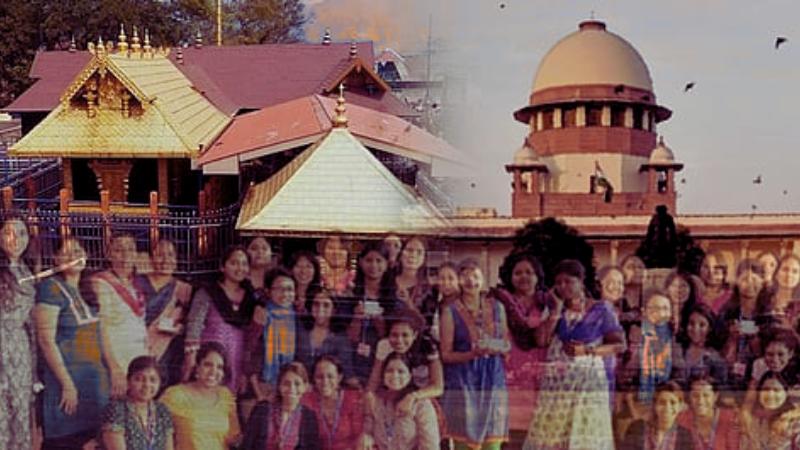
The Supreme Court of India, while hearing the Sabarimala Temple case, made key observations on religious access and unity within Hindu society.
Sabarimala Hearing: Justice B.V. Nagarathna Backs Open Access to Temples
The Supreme Court of India, while hearing the Sabarimala Temple case, made key observations on religious access and unity within Hindu society.
Supreme Court of India on Sabarimala Temple Case: Limits Exist, but Judicial Review Must Continue
The Supreme Court of India, on Day 6 of hearings in the Sabarimala women's entry case, focused on key constitutional questions surrounding religious freedom and judicial review. The bench observed that while certain limitations e
Supreme Court of India on Sabarimala Temple Case: Limits Exist, but Judicial Review Must Continue
The Supreme Court of India, on Day 6 of hearings in the Sabarimala women's entry case, focused on key constitutional questions surrounding religious freedom and judicial review. The bench observed that while certain limitations e


