




















#aadhaar
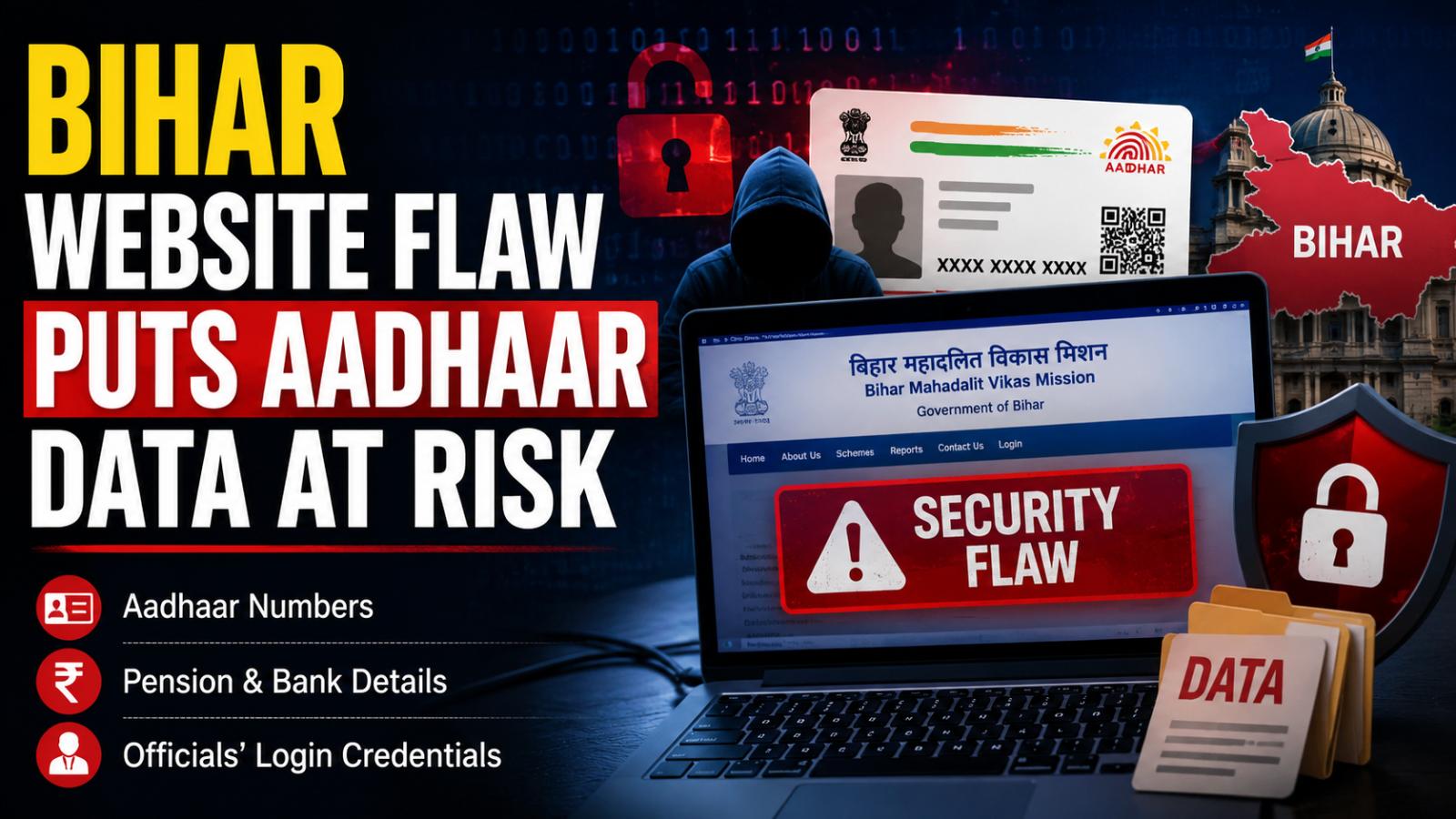
Bihar Website Security Flaw Put Aadhaar Data at Risk
How the BMVM Portal Vulnerability Was Discovered A 21-year-old student discovered a serious vulnerability in the Bihar Mahadalit Vikas Mission portal that could have allowed unauthorised access to Aadhaar, PAN, pension, banking, and government login records. The flaw was reported to CERT-In and later fixed. Bihar Government Website Security Flaw Put Sensitive Data at Risk New Delhi, July 28, 2026: A Bihar gov
Bihar Website Security Flaw Put Aadhaar Data at Risk
How the BMVM Portal Vulnerability Was Discovered A 21-year-old student discovered a serious vulnerability in the Bihar Mahadalit Vikas Mission portal that could have allowed unauthorised access to Aadhaar, PAN, pension, banking, and government login records. The flaw was reported to CERT-In and later fixed. Bihar Government Website Security Flaw Put Sensitive Data at Risk New Delhi, July 28, 2026: A Bihar gov
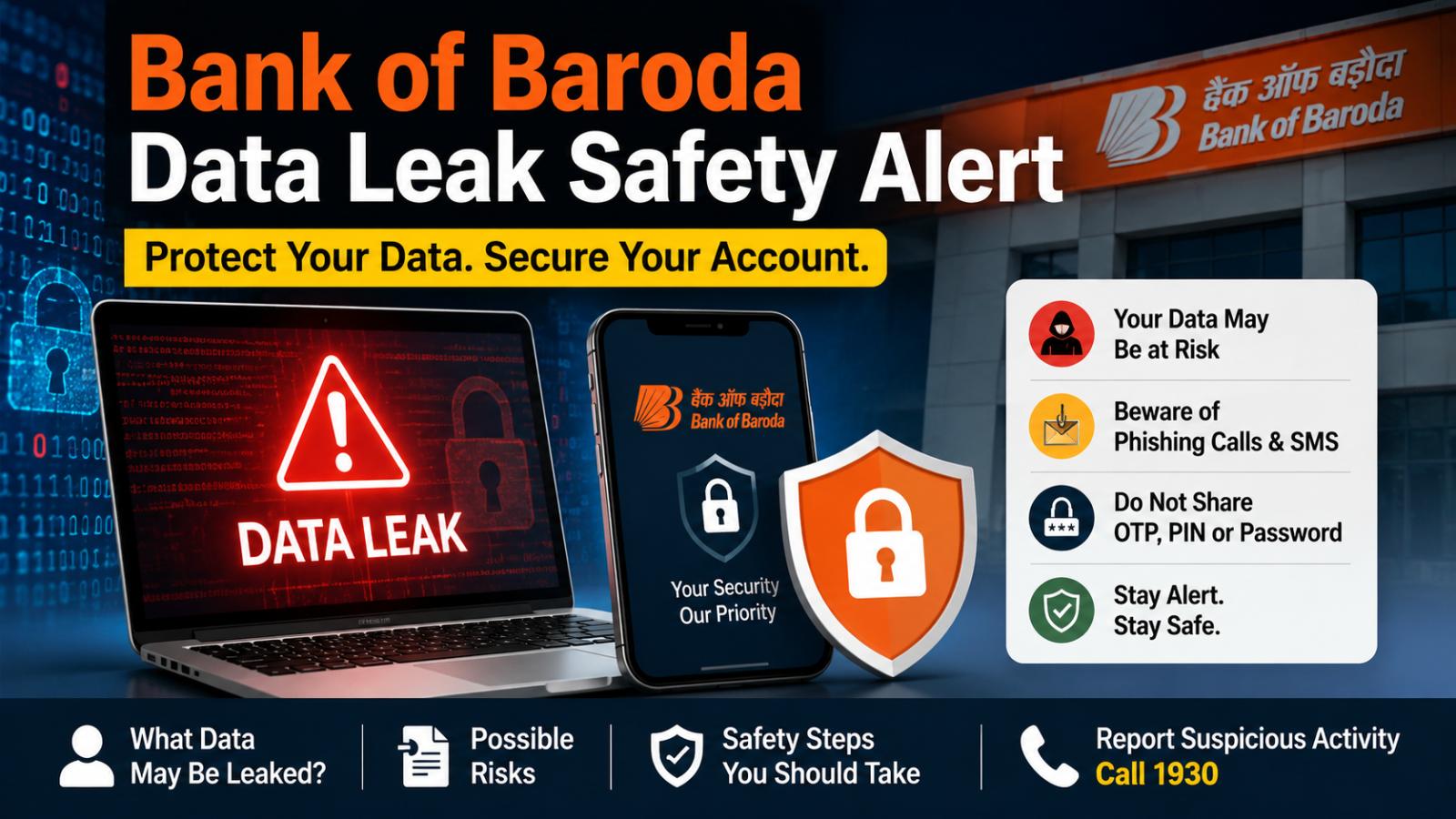
Bank of Baroda Data Leak: Customer Safety Steps Explained
Bank of Baroda Data Leak: Customer Safety Steps Explained Reports claim nearly 1TB of Bank of Baroda data may have surfaced online, potentially exposing customer and internal records. The breach remains unverified, but customers are being urged to watch for phishing, secure banking access, and report suspicious activity quickly. New Delhi, July 27, 2026: Bank of Baroda data leak customer safety steps have come into focus after reports c
Bank of Baroda Data Leak: Customer Safety Steps Explained
Bank of Baroda Data Leak: Customer Safety Steps Explained Reports claim nearly 1TB of Bank of Baroda data may have surfaced online, potentially exposing customer and internal records. The breach remains unverified, but customers are being urged to watch for phishing, secure banking access, and report suspicious activity quickly. New Delhi, July 27, 2026: Bank of Baroda data leak customer safety steps have come into focus after reports c
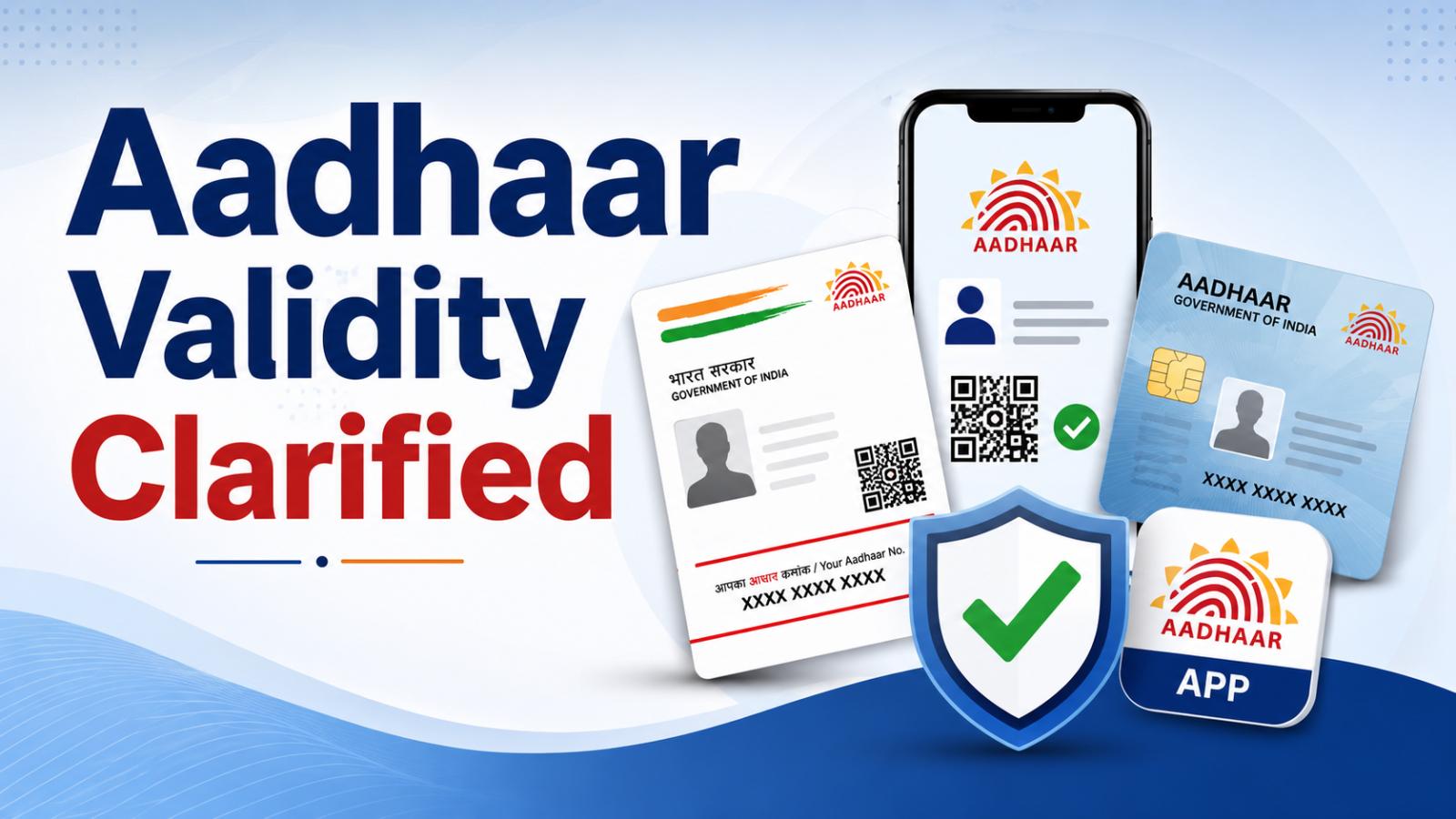
Aadhaar formats valid: UIDAI clarifies rule
UIDAI clarifies Aadhaar validity The Unique Identification Authority of India has clarified that all official forms of Aadhaar carry the same validity. This means Aadhaar Letter, e-Aadhaar, Aadhaar PVC Card, and Aadhaar available through the Aadhaar App can all be used as valid identity proof wherever Aadhaar is accepted. The clarification is important becaus
Aadhaar formats valid: UIDAI clarifies rule
UIDAI clarifies Aadhaar validity The Unique Identification Authority of India has clarified that all official forms of Aadhaar carry the same validity. This means Aadhaar Letter, e-Aadhaar, Aadhaar PVC Card, and Aadhaar available through the Aadhaar App can all be used as valid identity proof wherever Aadhaar is accepted. The clarification is important becaus
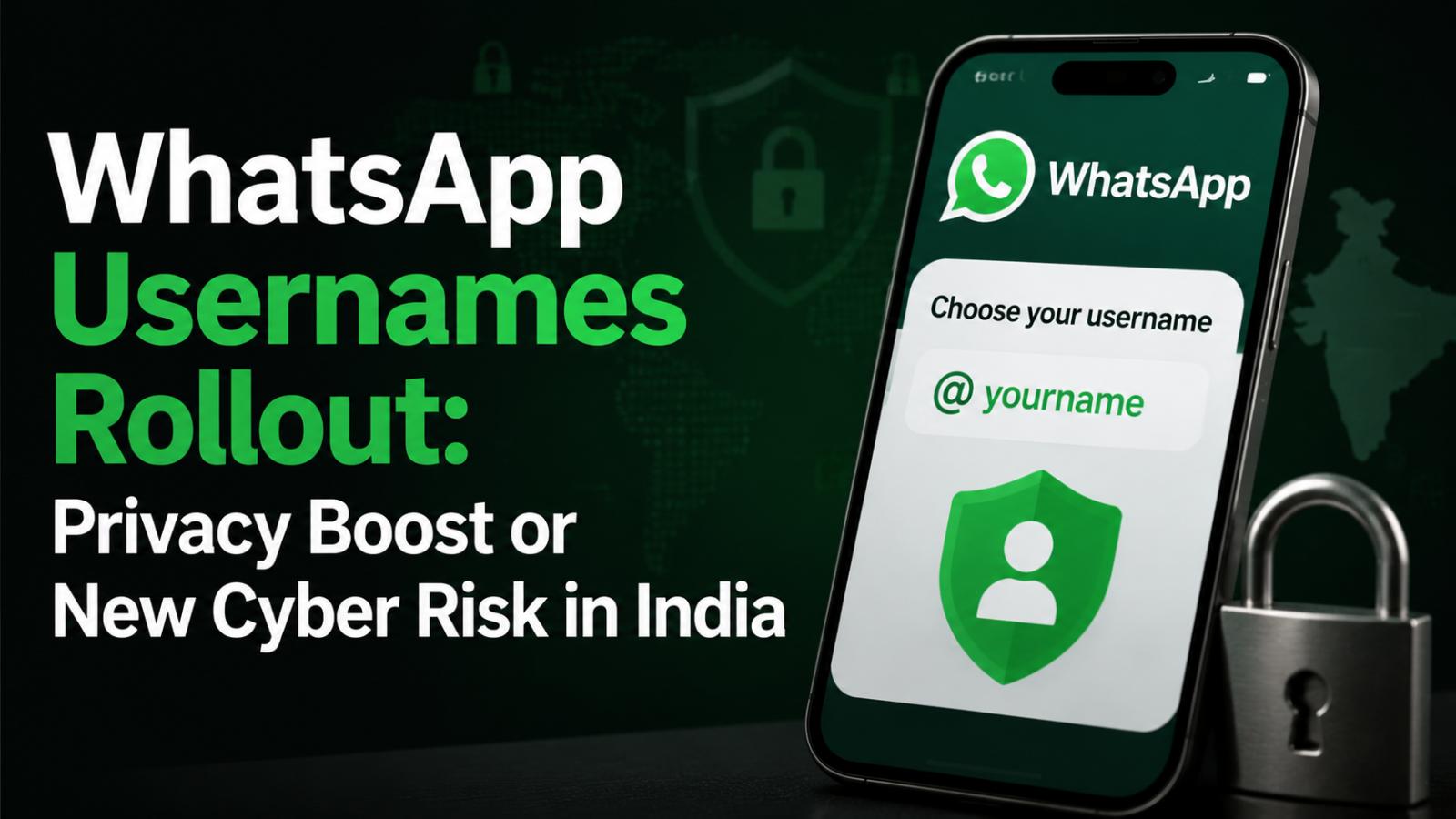
WhatsApp usernames update: privacy gain or new security risk in India
How WhatsApp usernames change user identity sharing WhatsApp’s rollout of usernames introduces a new way for users to connect without directly sharing their mobile number. In India, where phone numbers are closely connected to UPI payments, Aadhaar verification, banking services, and multiple digital identity systems, this shift is especially significant. While phone numbers remain required for account creation and verification, they will no longer be the only way users identify or connect with each other on the platform. Privacy improvements and everyday impact The introduction of usernames helps reduce exposure of personal phone numbers in group chats, business communication, and online marketplaces. This can lower the chances of spam calls, unsolicited messages, and basic data harvesting. It also creates a separation between private identity and public interaction, which is increasingly important in large digital ecosystems like India’s. However, the actual privacy benefit will depend on how WhatsApp manages visibility settings and user discovery options. Cybersecurity concerns and impersonation risks At the same time, experts warn that usernames introduce new cybersecurity challenges. The biggest concern is impersonation, where attackers can create similar-looking usernames to deceive users. Unlike phone numbers, usernames can be copied or slightly modified, making fake accounts harder to detect at a glance. In India, where cyber fraud linked to messaging apps and digital payments is already rising, this increases the importance of careful identity verification. Safety features and implementation factors WhatsApp is expected to introduce additional protections such as a “username key” system, which restricts who can message a user even if they know the username. This could help reduce spam and unwanted contact. However, the overall effectiveness of the feature will depend on default settings, user awareness, and how strictly WhatsApp enforces anti-impersonation measures. The update represents a shift in digital identity handling, offering stronger privacy on one side while introducing new forms of security risk on the other.
WhatsApp usernames update: privacy gain or new security risk in India
How WhatsApp usernames change user identity sharing WhatsApp’s rollout of usernames introduces a new way for users to connect without directly sharing their mobile number. In India, where phone numbers are closely connected to UPI payments, Aadhaar verification, banking services, and multiple digital identity systems, this shift is especially significant. While phone numbers remain required for account creation and verification, they will no longer be the only way users identify or connect with each other on the platform. Privacy improvements and everyday impact The introduction of usernames helps reduce exposure of personal phone numbers in group chats, business communication, and online marketplaces. This can lower the chances of spam calls, unsolicited messages, and basic data harvesting. It also creates a separation between private identity and public interaction, which is increasingly important in large digital ecosystems like India’s. However, the actual privacy benefit will depend on how WhatsApp manages visibility settings and user discovery options. Cybersecurity concerns and impersonation risks At the same time, experts warn that usernames introduce new cybersecurity challenges. The biggest concern is impersonation, where attackers can create similar-looking usernames to deceive users. Unlike phone numbers, usernames can be copied or slightly modified, making fake accounts harder to detect at a glance. In India, where cyber fraud linked to messaging apps and digital payments is already rising, this increases the importance of careful identity verification. Safety features and implementation factors WhatsApp is expected to introduce additional protections such as a “username key” system, which restricts who can message a user even if they know the username. This could help reduce spam and unwanted contact. However, the overall effectiveness of the feature will depend on default settings, user awareness, and how strictly WhatsApp enforces anti-impersonation measures. The update represents a shift in digital identity handling, offering stronger privacy on one side while introducing new forms of security risk on the other.
July 1 Financial Changes: ITR Deadline, Aadhaar Update, Passport Fees And Credit Card Rules
July 1 Financial Changes: ITR Deadline, Aadhaar Update, Passport Fees And Credit Card Rules Several important financial changes have come into effect from July 1, 2026, and many of them directly affect Indian households, taxpayers, bank customers, and credit card users. From income tax return filing deadlines to Aadhaar email updates, passport fee hikes, fuel price cuts, and revised card benefits, these new money rules are worth checking before making financial de
July 1 Financial Changes: ITR Deadline, Aadhaar Update, Passport Fees And Credit Card Rules
July 1 Financial Changes: ITR Deadline, Aadhaar Update, Passport Fees And Credit Card Rules Several important financial changes have come into effect from July 1, 2026, and many of them directly affect Indian households, taxpayers, bank customers, and credit card users. From income tax return filing deadlines to Aadhaar email updates, passport fee hikes, fuel price cuts, and revised card benefits, these new money rules are worth checking before making financial de
Aadhaar Email Update Free Till December 31, 2026: Check Details
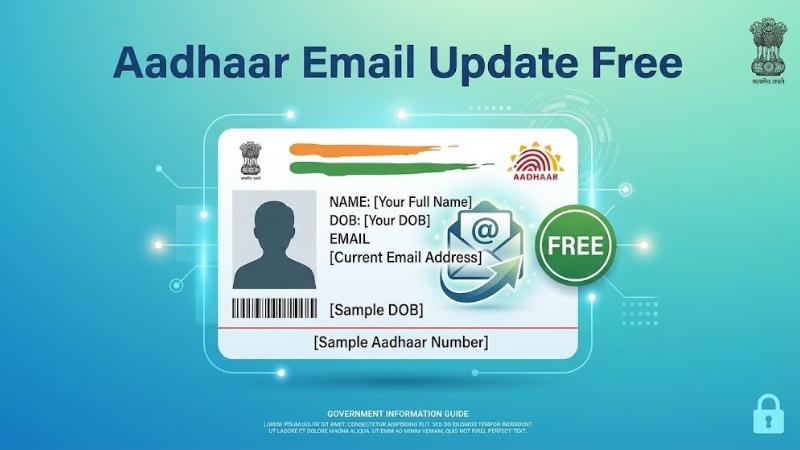
Aadhaar Email Update Free Till December 31: Who Can Benefit Aadhaar users can now update their email address for free through the official Aadhaar mobile app. The Unique Identification Authority of India has waived the earlier ₹75 charge for updating Aadhaar-linked email IDs for a limited period. What Has Changed? The free email update facility started on July 1, 2026, and will remain available till December 31, 2026. Durin
Aadhaar Email Update Free Till December 31, 2026: Check Details
Aadhaar Email Update Free Till December 31: Who Can Benefit Aadhaar users can now update their email address for free through the official Aadhaar mobile app. The Unique Identification Authority of India has waived the earlier ₹75 charge for updating Aadhaar-linked email IDs for a limited period. What Has Changed? The free email update facility started on July 1, 2026, and will remain available till December 31, 2026. Durin
Indian Passport, Aadhaar Not Final Proof of Citizenship: What Counts?
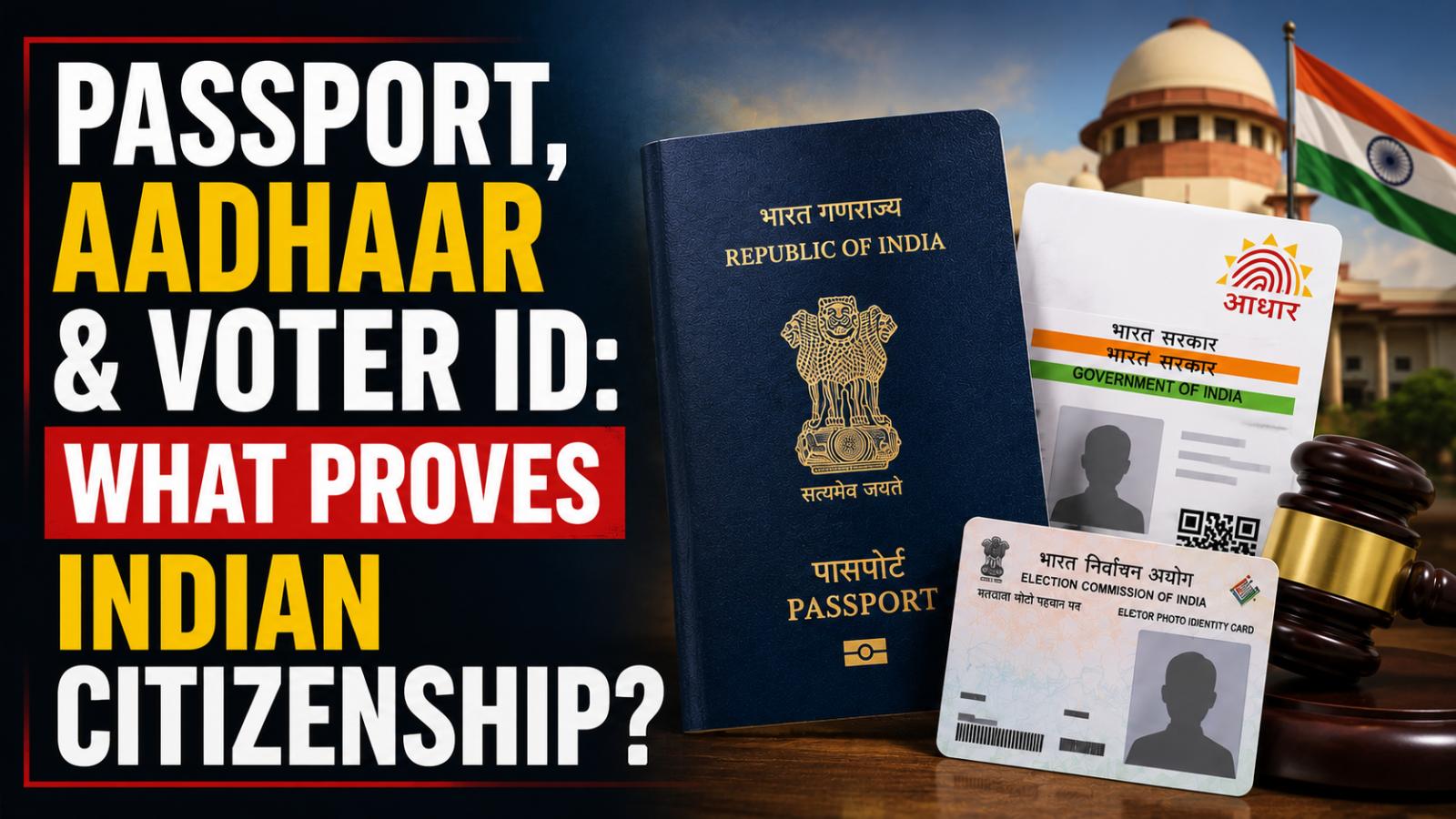
Why Common Identity Documents May Not Be Enough For many Indians, possessing a passport, Aadhaar card, or voter ID has long been considered sufficient evidence of citizenship. However, recent clarifications from government officials have highlighted an important legal distinction: these documents are not always considered conclusive proof of Indian citizenship. An Indian passport serves primarily as an international travel document and carries a strong presumption of nationality, but it does not automatically establish citizenship in every legal situation. Similarly, Aadhaar is officially recognized only as proof of identity and residence, while a voter ID card, although significant for electoral purposes, may not always be the final determining document during complex legal proceedings. The issue becomes particularly important when citizenship is challenged or when authorities require strict legal verification. In such cases, courts and government agencies often rely on historical records, family documentation, and documents issued under the provisions of the Citizenship Act, 1955. Documents That Legally Establish Indian Citizenship The strongest evidence of Indian citizenship includes a Certificate of Registration or Certificate of Naturalisation issued by the Ministry of Home Affairs under the Citizenship Act, 1955. These certificates are granted to individuals who acquire Indian citizenship through legal registration or naturalization procedures. For citizens born in India, a birth certificate can also serve as crucial proof, but its legal validity depends on the date of birth. People born between January 26, 1950, and July 1, 1987, are generally considered citizens solely based on birth in India. Those born between July 1, 1987, and December 3, 2004, must additionally prove that at least one parent was an Indian citizen at the time of birth. For individuals born after December 3, 2004, the requirements became stricter. They must provide evidence that both parents are Indian citizens or that one parent is an Indian citizen while the other is not an illegal migrant. In disputed cases, authorities may also examine ancestral documents, legacy records, land ownership papers, and entries in government registers to establish citizenship claims. The clarification serves as a reminder that while commonly used identity documents are important for everyday purposes, proving citizenship under Indian law may require a broader set of supporting records and historical documentation.
Indian Passport, Aadhaar Not Final Proof of Citizenship: What Counts?
Why Common Identity Documents May Not Be Enough For many Indians, possessing a passport, Aadhaar card, or voter ID has long been considered sufficient evidence of citizenship. However, recent clarifications from government officials have highlighted an important legal distinction: these documents are not always considered conclusive proof of Indian citizenship. An Indian passport serves primarily as an international travel document and carries a strong presumption of nationality, but it does not automatically establish citizenship in every legal situation. Similarly, Aadhaar is officially recognized only as proof of identity and residence, while a voter ID card, although significant for electoral purposes, may not always be the final determining document during complex legal proceedings. The issue becomes particularly important when citizenship is challenged or when authorities require strict legal verification. In such cases, courts and government agencies often rely on historical records, family documentation, and documents issued under the provisions of the Citizenship Act, 1955. Documents That Legally Establish Indian Citizenship The strongest evidence of Indian citizenship includes a Certificate of Registration or Certificate of Naturalisation issued by the Ministry of Home Affairs under the Citizenship Act, 1955. These certificates are granted to individuals who acquire Indian citizenship through legal registration or naturalization procedures. For citizens born in India, a birth certificate can also serve as crucial proof, but its legal validity depends on the date of birth. People born between January 26, 1950, and July 1, 1987, are generally considered citizens solely based on birth in India. Those born between July 1, 1987, and December 3, 2004, must additionally prove that at least one parent was an Indian citizen at the time of birth. For individuals born after December 3, 2004, the requirements became stricter. They must provide evidence that both parents are Indian citizens or that one parent is an Indian citizen while the other is not an illegal migrant. In disputed cases, authorities may also examine ancestral documents, legacy records, land ownership papers, and entries in government registers to establish citizenship claims. The clarification serves as a reminder that while commonly used identity documents are important for everyday purposes, proving citizenship under Indian law may require a broader set of supporting records and historical documentation.
mAadhaar App Replacement: New Aadhaar App Brings QR Sharing And Face Login
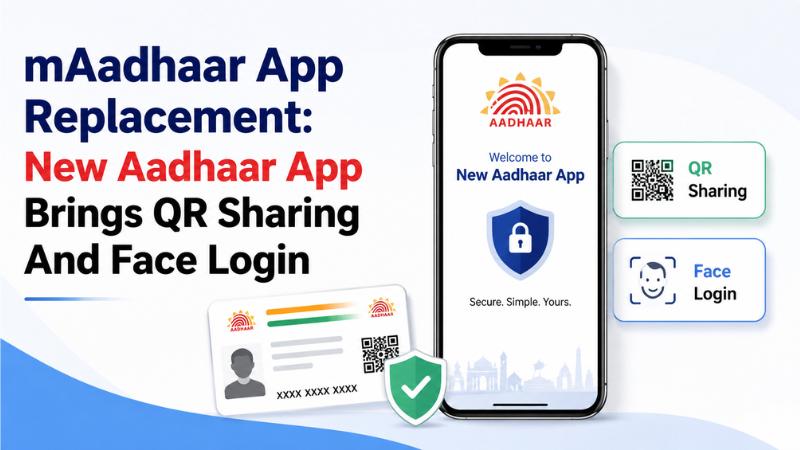
UIDAI’s new Aadhaar app brings safer QR sharing, face authentication, and biometric lock controls mAadhaar App To Be Replaced UIDAI’s old mAadhaar app will soon be discontinued as the government moves users to a new Aadhaar app with improved security and easier digital identity access. The new app is not just a redesigned version of mAadhaar. It focuses on safer Aadhaar sharing, better privacy, and stronger verification for
mAadhaar App Replacement: New Aadhaar App Brings QR Sharing And Face Login
UIDAI’s new Aadhaar app brings safer QR sharing, face authentication, and biometric lock controls mAadhaar App To Be Replaced UIDAI’s old mAadhaar app will soon be discontinued as the government moves users to a new Aadhaar app with improved security and easier digital identity access. The new app is not just a redesigned version of mAadhaar. It focuses on safer Aadhaar sharing, better privacy, and stronger verification for
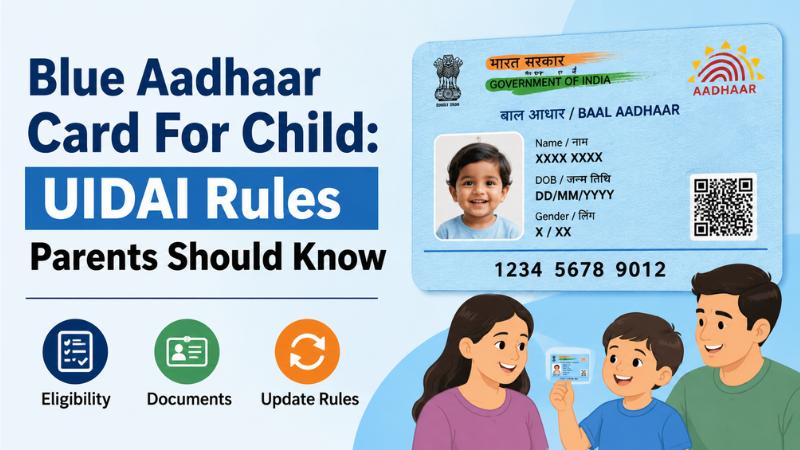
Blue Aadhaar Card For Child: UIDAI Rules Parents Should Know
Blue Aadhaar Vs White Aadhaar: Baal Aadhaar Eligibility, Documents And Update Rules India’s Aadhaar system has a special identity card for young children called Blue Aadhaar or Baal Aadhaar. It is issued by UIDAI for children below five years and works as an early identity document for school admission, healthcare, welfare schemes, and other official needs. Unlike the regular white Aadhaar card, Blue Aadhaar is printed in light blue colour so that it can be easi
Blue Aadhaar Card For Child: UIDAI Rules Parents Should Know
Blue Aadhaar Vs White Aadhaar: Baal Aadhaar Eligibility, Documents And Update Rules India’s Aadhaar system has a special identity card for young children called Blue Aadhaar or Baal Aadhaar. It is issued by UIDAI for children below five years and works as an early identity document for school admission, healthcare, welfare schemes, and other official needs. Unlike the regular white Aadhaar card, Blue Aadhaar is printed in light blue colour so that it can be easi
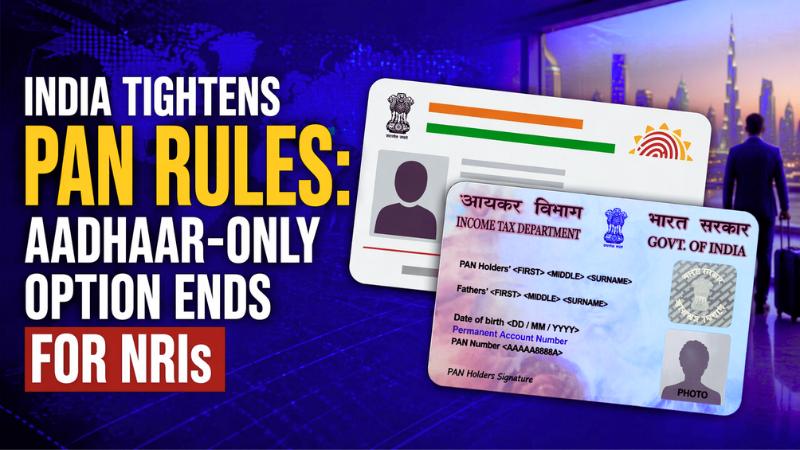
India Tightens PAN Rules: Aadhaar-Only Option Ends for NRIs
Indian nationals living in the United Arab Emirates will soon face stricter requirements when applying for a Permanent Account Number (PAN) card or updating existing details. From April 1, 2026, Aadhaar alone will no longer be sufficient for PAN applications, and additional supporting documents will be required. The change is part of revised rules und
India Tightens PAN Rules: Aadhaar-Only Option Ends for NRIs
Indian nationals living in the United Arab Emirates will soon face stricter requirements when applying for a Permanent Account Number (PAN) card or updating existing details. From April 1, 2026, Aadhaar alone will no longer be sufficient for PAN applications, and additional supporting documents will be required. The change is part of revised rules und


