
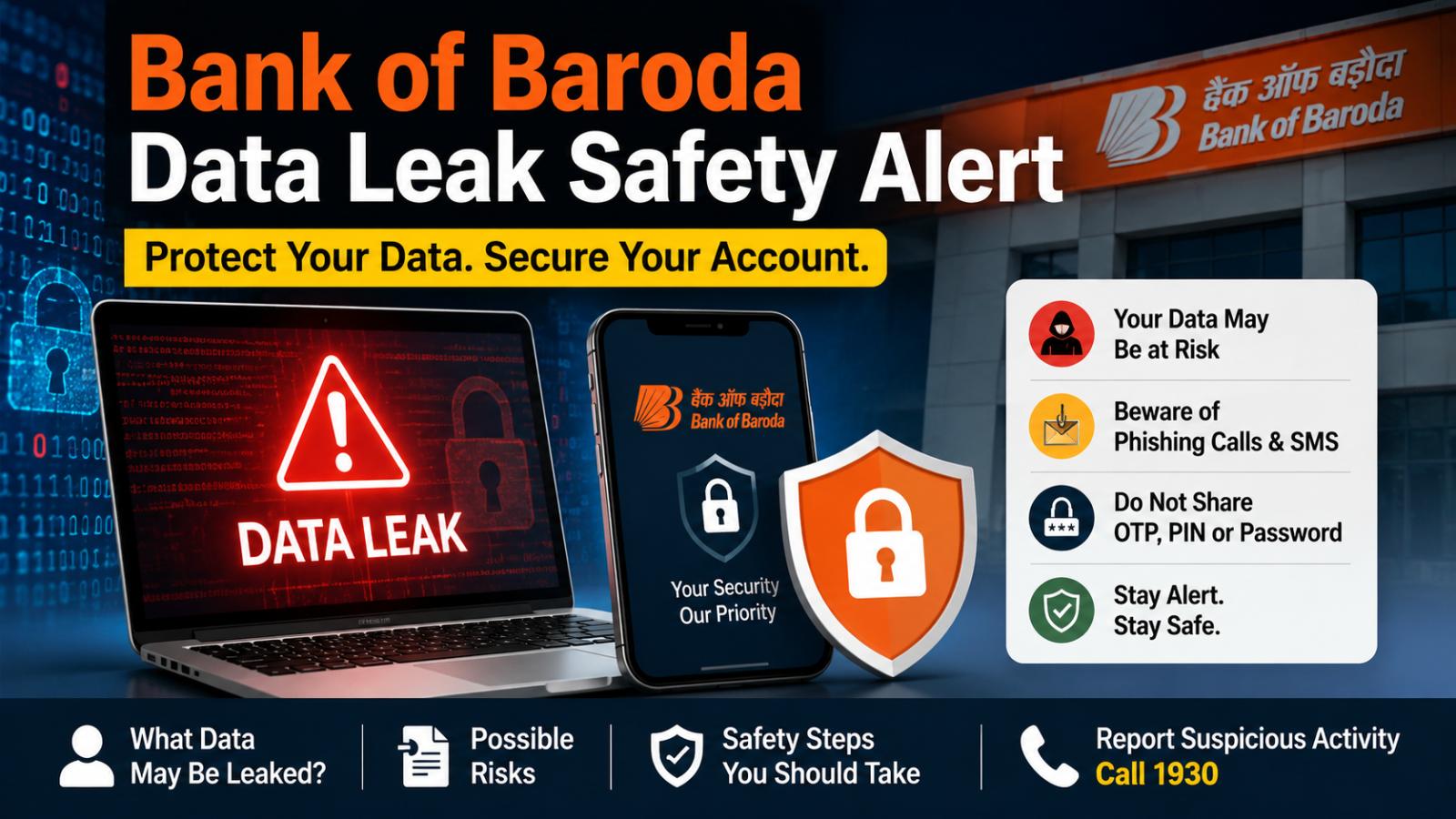
Bank of Baroda Data Leak: Customer Safety Steps Explained
Reports claim nearly 1TB of Bank of Baroda data may have surfaced online, potentially exposing customer and internal records. The breach remains unverified, but customers are being urged to watch for phishing, secure banking access, and report suspicious activity quickly.
New Delhi, July 27, 2026: Bank of Baroda data leak customer safety steps have come into focus after reports claimed that nearly 1TB of information connected to the public-sector lender had surfaced online.
The reportedly exposed material may include customer records, Aadhaar numbers, banking information, loan documents and internal bank files. However, the authenticity and complete scope of the alleged breach had not been independently established at the time of reporting.
Bank of Baroda 1TB Data Leak Remains Under Investigation
A threat actor has reportedly claimed responsibility for accessing Bank of Baroda systems and publishing a large collection of files online. Cybersecurity researchers examining sample documents and directory listings said the material appeared to contain personal, corporate, and internal banking information.
Bank of Baroda was reported to be examining the allegations but had not publicly confirmed that the entire dataset was genuine or disclosed how many customers might be affected. No public confirmation had been issued by the Reserve Bank of India or CERT-In at the time of the initial reports.
Until an official investigation is completed, the incident should therefore be described as an alleged or reported data breach rather than a confirmed exposure affecting every Bank of Baroda customer.
What Data May Have Been Exposed?
Based on the samples and file listings discussed in reports, the potentially exposed information may include:
- Customer names and registered mobile numbers
- Aadhaar numbers and identity documents
- Savings and current account records
- Loan applications and appraisal documents
- Internet banking user records
- NRI and corporate banking information
- Customer application and support documents
- Branch, ATM, audit, and compliance records
- Internal vigilance and investigation reports
There was no evidence in the initial reporting that ATM PINs, UPI PINs, passwords, or one-time passwords had been included in the alleged dataset. Nevertheless, personal and account-related information can still help criminals create highly convincing scams.
Why the Bank of Baroda Aadhaar Leak Risk Matters
Possession of a name, mobile number, Aadhaar information, bank branch, and loan details does not automatically allow a criminal to withdraw money from an account.
The bigger immediate risk is social engineering. Fraudsters may use genuine personal details to impersonate bank employees and convince customers that a call, SMS, email, or WhatsApp message is authentic.
A caller may already know the customer’s name, branch, or account type before asking for an OTP, UPI PIN, card CVV, or internet banking password. This information can make a fraudulent request sound more believable than an ordinary scam call.
The exposed records could also potentially be misused for forged KYC documents, fraudulent loan applications, identity theft, or targeted phishing campaigns.
Bank of Baroda Data Leak Customer Safety Steps
Customers do not need to panic, but they should take reasonable precautions while the claims are investigated.
Change the password used for Bank of Baroda internet or mobile banking, especially when the same password has been used on another website. The new password should be unique and difficult to guess.
Customers should also secure the email account connected to their banking profile, activate every available authentication feature and regularly review account activity for unfamiliar transactions or login alerts.
Avoid opening banking links received through SMS, email, or WhatsApp. Access the bank only through its official application or by manually entering its verified website address.
Bank employees do not need a customer’s OTP, ATM PIN, UPI PIN, card CVV, or banking password to investigate a data leak. Any person requesting such information should be treated as suspicious.
Bank of Baroda’s official security guidance also warns customers about phishing and impersonation fraud. Cybercrime incidents can be reported through the national cybercrime helpline at 1930.
What to Do After a Suspicious Transaction
Customers noticing an unexpected OTP, password-reset message, unauthorised transaction, or change to registered account details should contact the bank immediately through an official channel.
They should change their banking credentials, block affected cards when required, and report unauthorised transactions without delay. Screenshots, message records, telephone numbers, and transaction references should be preserved as possible evidence.
The alleged Bank of Baroda data leak remains a developing cybersecurity story. Until the bank or regulators publish verified findings, customers should avoid unconfirmed claims while remaining alert to phishing attempts that exploit fear surrounding the reported incident.