
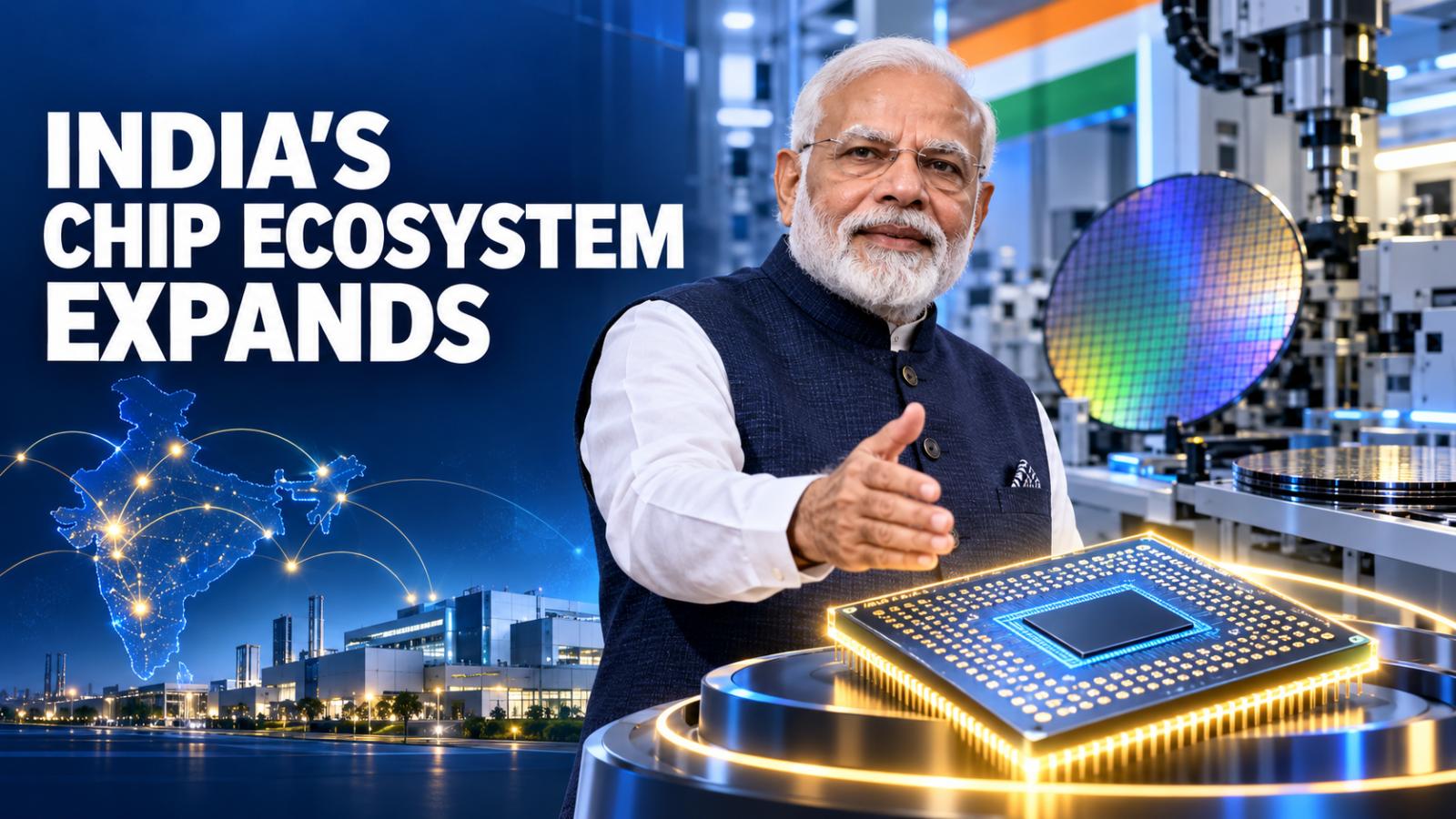
PM Narendra Modi inaugurated SEMICON India 2026 at Yashobhoomi, highlighting India’s expanding chip manufacturing and design ecosystem.
Prime Minister Narendra Modi inaugurated the fifth edition of SEMICON India 2026 at Yashobhoomi in New Delhi on Thursday, highlighting the rapid growth of the country’s semiconductor ecosystem and its rising importance in global technology supply chains.
The three-day conference and exhibition, scheduled from September 17 to 19, brings together chipmakers, electronics companies, investors, policymakers, researchers, start-ups and academic institutions. The theme for this year’s event is “Silicon to Systems: Building the Ecosystem.”
Modi said India was creating new opportunities across semiconductor manufacturing, chip design, packaging, research and innovation. The government’s objective is to build an integrated domestic ecosystem capable of supporting the entire value chain instead of remaining dependent on a limited number of imported components.
SEMICON India 2026 is designed to showcase the progress made under the India Semiconductor Mission and identify the next steps required to strengthen domestic capabilities.
The conference covers areas such as chip fabrication, design, assembly, testing, advanced packaging, electronic components, display technologies, equipment, materials and research. Its broader objective is to connect global technology companies with Indian manufacturers, start-ups, investors and skilled professionals.
The theme “Silicon to Systems” reflects India’s ambition to move beyond individual semiconductor projects and develop the surrounding infrastructure, supply chains and technical capabilities necessary for a globally competitive industry. The event also includes international roundtables, industry discussions and sessions focusing on investment, innovation, workforce development and partnerships.
Addressing the gathering on Vishwakarma Jayanti, Modi linked India’s emerging semiconductor capabilities with the country’s traditional culture of craftsmanship, creation and construction.
He described Lord Vishwakarma as a symbol of creative and manufacturing strength. The Prime Minister said India’s centuries-old traditions and its 21st-century technological ambitions together provide inspiration for the vision of an Aatmanirbhar and developed country.
Modi also referred to developments in financial technology, artificial intelligence, tokenisation and quantum technology to underline the speed of India’s digital transformation.
He highlighted progress on the Dedicated Freight Corridor network, saying improved freight movement and logistics infrastructure would support manufacturing. Faster movement of components and finished products is particularly important for electronics and semiconductor companies operating through complex supply chains.
The Semicon India Programme was launched to establish domestic capabilities covering chip design, fabrication, assembly, testing, packaging and module production.
According to government figures highlighted around the conference, 10 semiconductor projects have attracted investment commitments exceeding Rs 1.5 lakh crore, with estimates placing the total close to Rs 1.6 lakh crore. These projects are spread across multiple states and different segments of the semiconductor value chain.
Commercial production has begun at facilities associated with Micron and Kaynes, while additional approved projects are progressing towards production. The developments mark a shift from policy announcements and investment approvals to the actual manufacture, assembly and testing of semiconductor products in India.
The government is also preparing the next phase of its semiconductor strategy, commonly referred to as Semicon 2.0, to expand support for fabrication, advanced packaging, compound semiconductors, chip-design companies, equipment manufacturers and material suppliers.
Semiconductors are critical to smartphones, automobiles, telecommunications, medical equipment, defence platforms, industrial machinery, artificial intelligence systems and data centres. Disruptions during recent global crises exposed the risks of depending on a small number of countries for chip production.
India is seeking to use its large electronics market, engineering talent, expanding manufacturing base and government incentives to secure a greater role in this strategic industry.
Before the conference, Modi held discussions with senior leaders from global semiconductor companies, including firms involved in fabrication equipment, chip design, packaging and manufacturing. The meetings focused on investment opportunities, research partnerships and the development of a skilled workforce.
The success of India’s semiconductor push will depend on whether approved projects begin production on schedule and develop reliable local supply networks. Access to specialised talent, stable power, water, advanced machinery and global technology partnerships will also determine the country’s long-term competitiveness. SEMICON India 2026 therefore serves as both a showcase of progress and a platform for attracting the technology, capital and partnerships needed to turn India into a major semiconductor manufacturing and innovation centre.