
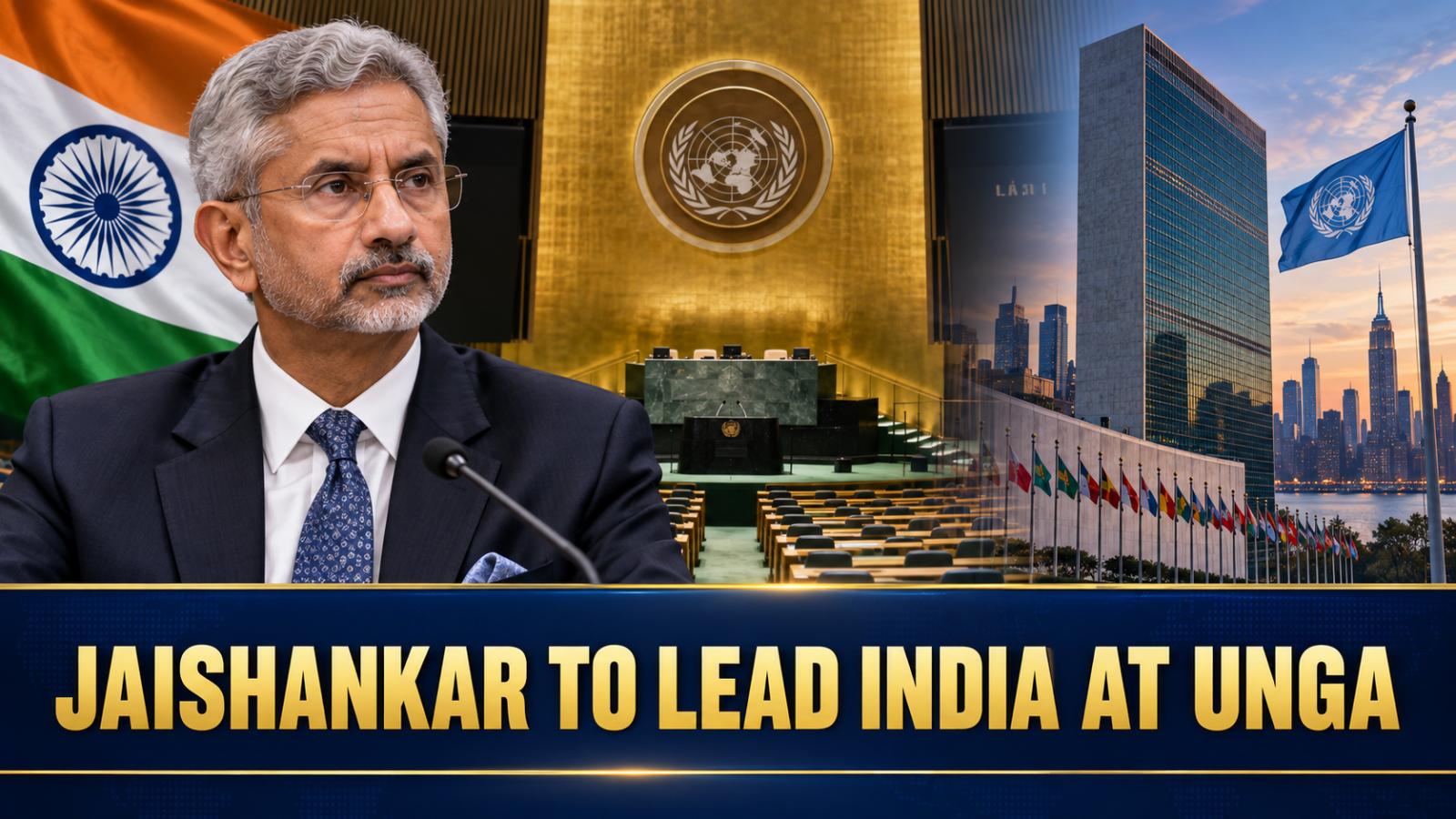
External Affairs Minister S. Jaishankar will lead India’s delegation during the high-level week of the 81st session of the United Nations General Assembly in New York, the government has announced.
Jaishankar is scheduled to address the UN General Assembly on September 26. During his visit, he will also participate in several bilateral and plurilateral meetings covering global security, economic cooperation, energy and other international issues.
The visit comes amid renewed tension between India and the United States over possible tariffs targeting countries that continue to purchase Russian oil. Reports suggest that Jaishankar could hold discussions with senior figures in the Trump administration, although India’s official announcement did not confirm any such meetings.
The Ministry of External Affairs said Jaishankar would lead the Indian delegation for the UNGA high-level week. His address is expected to outline India’s position on major international challenges and highlight New Delhi’s priorities in areas such as multilateral reforms, terrorism, regional security, sustainable development and cooperation among developing countries.
The UNGA visit will also provide India with an opportunity to engage with representatives from several countries on the sidelines of the session. The possibility of talks with US officials has gained attention because of the latest trade tensions between New Delhi and Washington.
The meetings could offer both sides a platform to discuss tariffs, energy security and the broader strategic relationship. However, no formal meeting with representatives of the Trump administration had been announced in the official statement.
The developments follow the passage of the Sanctioning Russia and Iran Act by the US Congress. The legislation gives President Donald Trump the authority to impose tariffs of up to 100 per cent on goods from countries that meet specified conditions related to purchases of Russian energy.
India and China, which remain major buyers of Russian oil, could face significant economic consequences if such tariffs are implemented. New Delhi has indicated that punitive trade measures could damage India-US relations and cause serious disruption in global oil markets.
Indian officials are also concerned about the impact on exporters. A tariff of up to 100 per cent could make several Indian products substantially more expensive in the American market, weakening their competitiveness and affecting businesses dependent on exports to the United States.
Jaishankar’s New York visit will therefore be closely watched for any diplomatic engagement aimed at reducing trade tensions. His UNGA speech and meetings on the sidelines could signal how India plans to protect its economic interests while maintaining its strategic partnership with Washington.