
US lawmakers filed competing amendments to a Russia sanctions bill, with one naming India and another seeking to remove its tariff provision.
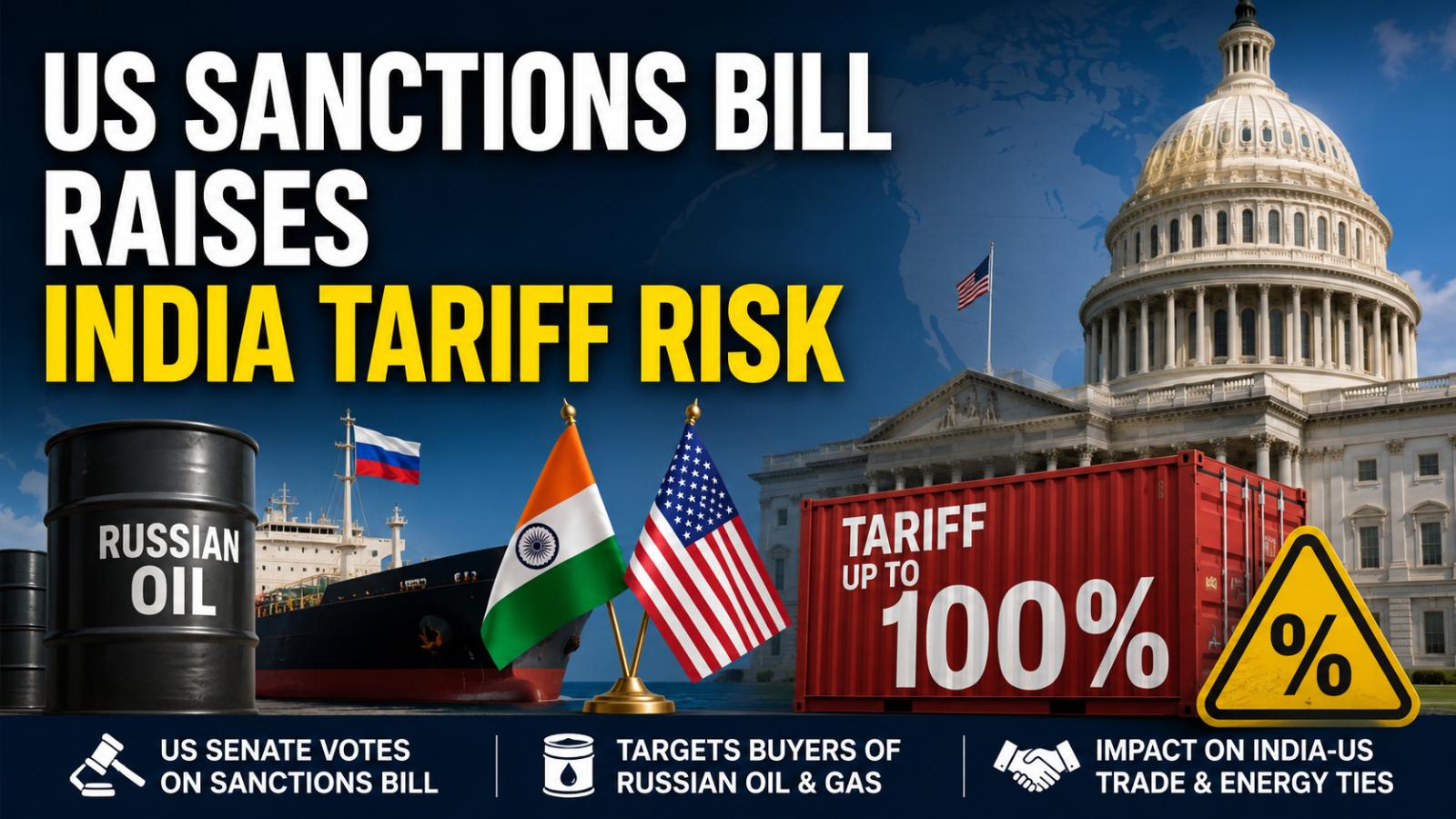
US lawmakers have introduced competing amendments to a major Russia sanctions bill, placing India’s energy trade with Moscow under renewed scrutiny. One amendment seeks to name India and several other countries as major buyers of Russian oil and gas that could face US tariffs of up to 100 per cent.
The amendments come as the US House of Representatives races to consider the legislation before beginning an early recess ahead of the November 3 midterm elections. The Senate passed the Lindsey O Graham Sanctioning Russia and Iran Act on August 7 by an overwhelming 86-11 vote, but House approval is required before the bill can reach President Donald Trump.
Democratic Congressman Steny Hoyer’s amendment seeks to name India, China, Turkiye, Azerbaijan, Hungary, the Slovak Republic, the UAE, Singapore, Kazakhstan and the Kyrgyz Republic as countries that could become eligible for tariffs of up to 100 per cent.
The Senate-approved version of the legislation does not identify individual countries. Instead, it refers to the five largest importers of Russian oil and gas by volume. Hoyer’s proposal would make the list of potentially affected trading partners more explicit.
The amendment is significant for India because New Delhi remains an important purchaser of Russian crude oil. India has maintained that its energy purchases are based on national interest, affordability, availability and the requirements of its large domestic market.
The Lindsey O Graham Sanctioning Russia and Iran Act seeks to increase economic pressure on Moscow over its continuing war against Ukraine. US officials argue that Russia’s crude oil exports provide revenue that helps finance the conflict.
Apart from targeting Russia’s political leadership and energy sector, the legislation proposes sanctions against the “shadow fleet” of vessels accused of helping Moscow avoid restrictions on oil deliveries.
The bill would also authorise President Trump to impose secondary tariffs of up to 100 per cent on leading buyers of Russian energy. If enacted with this provision intact, the measure could affect US trade relations with India, China and several other countries.
Democratic Congressman Gregory Meeks has introduced a rival amendment seeking to remove Section 113 from the bill. This section would grant the US president the authority to impose broad secondary tariffs on Russia’s major trading partners.
Meeks, who has opposed giving President Trump additional tariff powers, submitted the amendment with three co-sponsors. Its adoption would remove the provision posing the greatest direct economic risk to India and other purchasers of Russian oil.
The competing proposals reflect a wider disagreement in Washington. Some lawmakers want tougher economic measures against countries continuing significant trade with Russia, while others are concerned about granting the president sweeping tariff authority.
Meeks has also proposed allowing the president to waive sanctions against a foreign individual or entity for 90 days when such relief is considered vital to US national security. The waiver could be renewed for additional 90-day periods. Another amendment introduced by Meeks seeks to authorise $15 billion in direct loans to Ukraine for purchasing defence equipment and services.
The House Rules Committee made the amendments public on Monday. With only a few working days remaining before the House recess, the future of the legislation and its tariff provisions remains uncertain. The outcome will be closely watched in New Delhi because naming India in the law could increase diplomatic and trade pressure on the India-US relationship.