
U.S.-Russia Sanctions Bill Raises Tariff Concerns for India
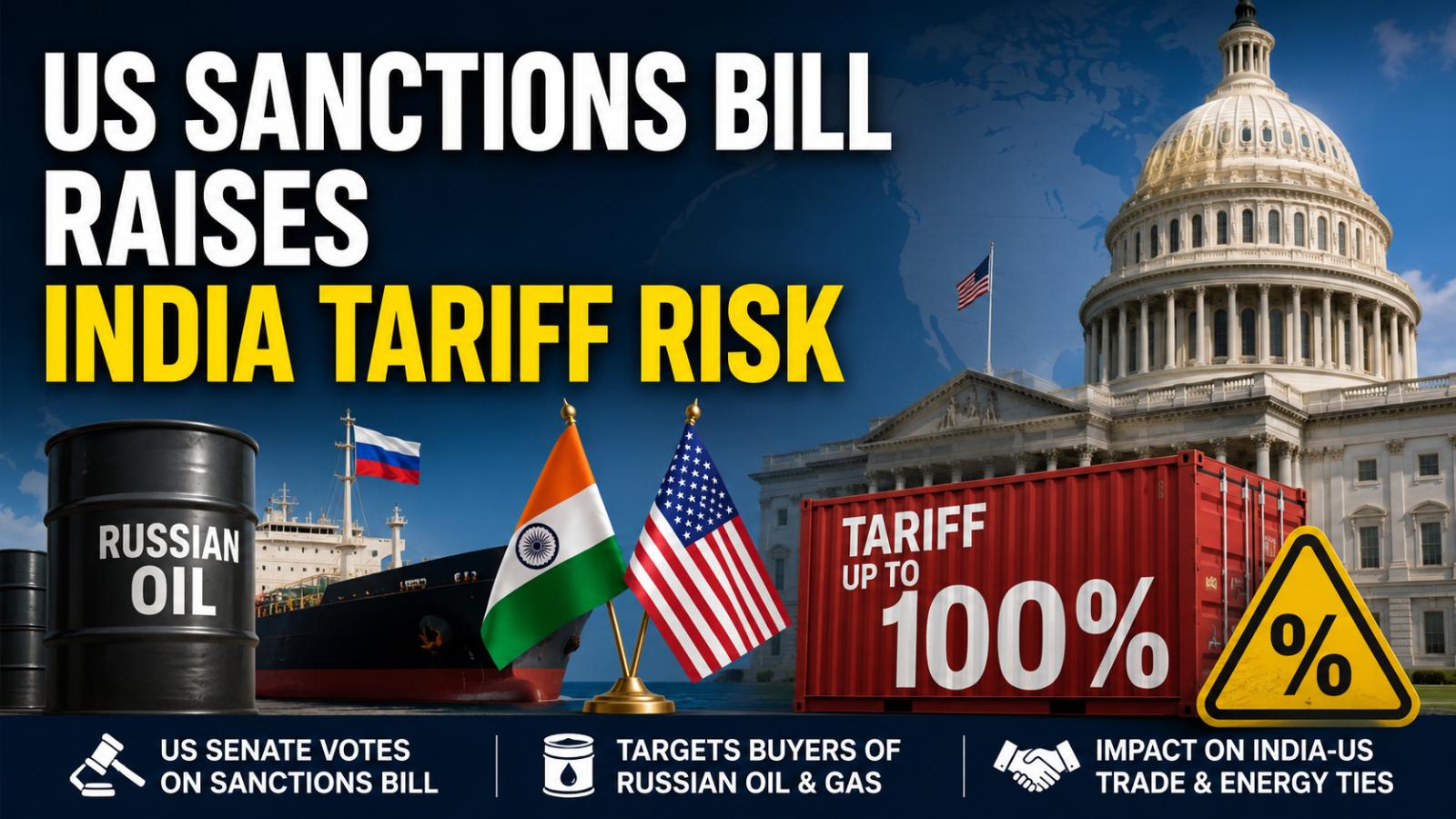
The proposed US sanctions bill could authorise tariffs of up to 100% on major buyers of Russian energy, including India. However, the measure is not yet law, and any tariff would depend on congressional approval and the US president’s decision.
US Russia Sanctions Bill: What It Could Mean for India
The Russia sanctions bill's impact on India has emerged as a major trade and energy issue after the United States Senate advanced legislation targeting Russia’s oil and gas revenues.
The proposal could authorise tariffs of up to 100% on goods from countries identified as major purchasers of Russian energy. However, India does not currently face an automatic 100% tariff, as the legislation still has several stages to clear before becoming law.
US Senate Advances Russia Sanctions Bill
The US Senate voted 86-12 on Tuesday, July 28, 2026, to advance the Lindsey O. Graham Sanctioning Russia and Iran Act of 2026. The vote was procedural and represented only the first major step towards the legislation’s possible passage.
The measure seeks to increase economic pressure on Moscow by targeting Russian officials, banks, energy projects, and vessels allegedly used to bypass existing oil sanctions.
It would also allow the US administration to impose targeted tariffs on countries purchasing a substantial share of Russia’s oil or natural gas.
Russia Sanctions Bill Impact on India
India is mentioned because it has become one of the largest buyers of Russian crude following changes in global energy trade after the Ukraine war began in 2022.
Discounted Russian oil has helped Indian refiners maintain crude supplies and improve refining margins. However, the proposed US legislation could complicate this arrangement if it becomes law and tariff powers are eventually used against India.
The latest version reportedly limits the tariff provisions to the five largest importers of Russian oil or gas and countries that play a major role in helping Moscow evade energy sanctions. India and China are among the countries most closely watched under these provisions.
Is a 100% US Tariff on India Confirmed?
No. A 100% tariff on Indian goods has neither been approved nor imposed under this bill.
The proposal must pass additional votes in the Senate before receiving final approval. It would then need to clear the House of Representatives and reach the US president’s desk.
Even after enactment, the maximum tariff would not automatically apply. The legislation gives the president discretion over whether to introduce, suspend, or waive restrictions, subject to the conditions included in the final law.
Possible Effect on India-US Trade
Any future tariff would depend on which Indian products were covered, how the tariff authority was implemented, and whether India changed its Russian energy purchases.
Heavy duties could make Indian goods more expensive in the US market, potentially affecting exporters and ongoing trade negotiations between New Delhi and Washington. They could also force Indian refiners to reassess the savings offered by discounted Russian crude against the risk of wider trade penalties.
At present, these remain possible scenarios rather than confirmed outcomes.
Why the Bill Faces Opposition
Supporters argue that restricting Russia’s energy income could weaken its ability to finance the war in Ukraine and encourage negotiations.
Some US lawmakers, however, are concerned that the legislation grants the president broad tariff authority. Critics say such powers could affect American allies, disrupt trade, and increase costs for US consumers.
The legislation also includes expanded measures relating to Iran’s energy, weapons, and nuclear activities.
What Happens Next?
The Senate must complete further debate and procedural votes before holding a final vote. The House of Representatives is expected to consider the legislation after it returns in September.
Until both chambers approve an identical version and the president signs it, the proposed tariffs remain only a legislative possibility. India’s actual exposure will depend on the final wording of the law and how the US administration chooses to exercise its tariff powers.