
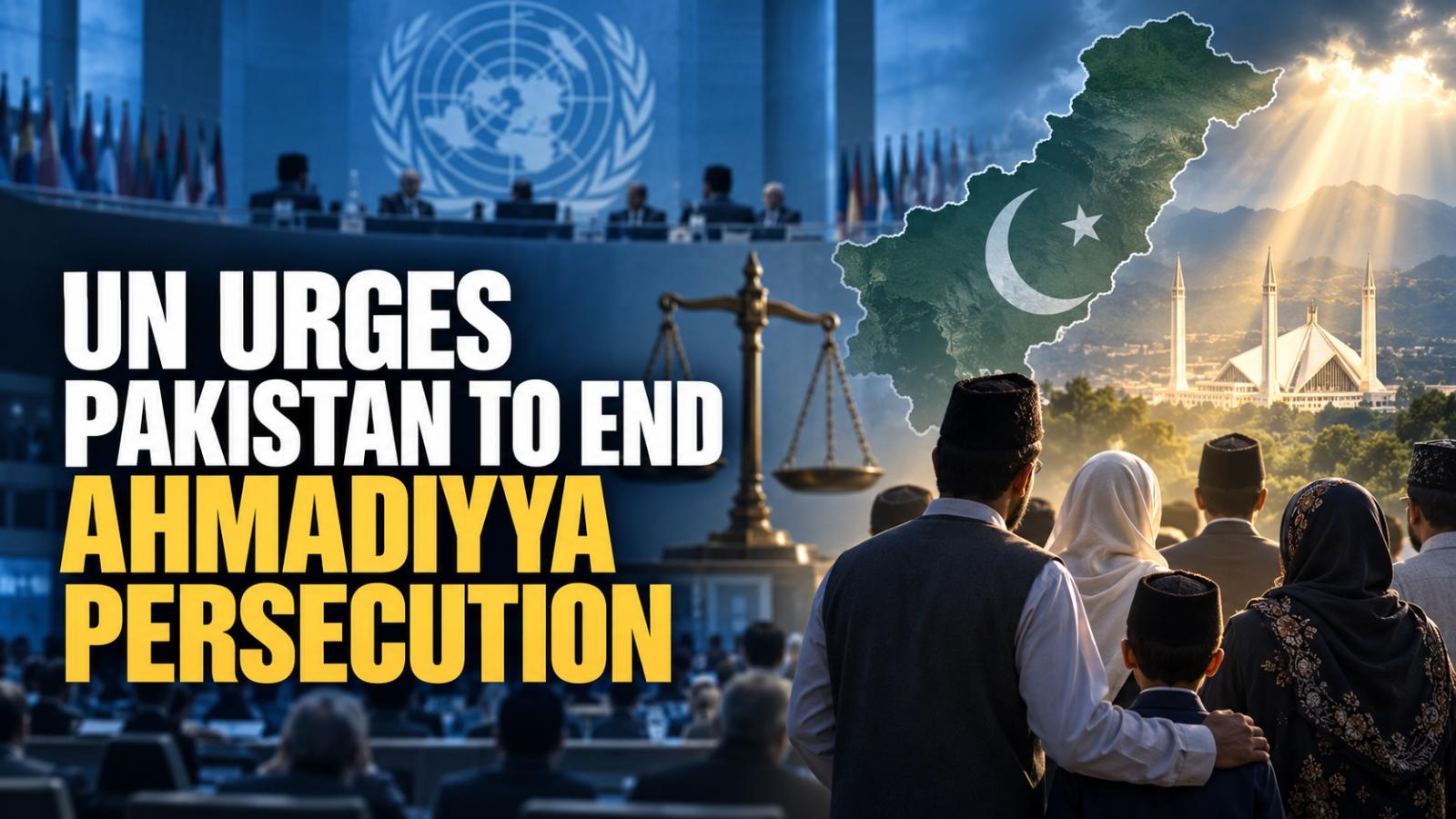
UN human rights experts issued the appeal from Geneva calling on Pakistan to protect its Ahmadiyya community. The statement raised concerns about harassment, prosecution, violence, religious restrictions and alleged impunity.
UN Experts Demand an End to Ahmadiyya PersecutionUnited Nations human rights experts have urged Pakistan to end reported discrimination and violence against the Ahmadiyya community and uphold the right to freedom of religion or belief.
In a statement issued from Geneva, the experts expressed serious concern over continuing reports that Ahmadis face harassment, criminal prosecution, violence and social exclusion because of their religious identity.
They called on Pakistani authorities to break what they described as a pattern of impunity that allows perpetrators of attacks and incitement to hatred to act without restraint. The experts also alleged that some abuses occurred with tacit official complicity, while fear prevented individuals and institutions from defending the rights and dignity of minorities.
The statement stressed that Pakistan has a responsibility under international human rights law to prevent violations, investigate allegations promptly and impartially, prosecute those responsible and provide effective remedies to victims.
Reports Detail Attacks, Arrests and Religious RestrictionsThe UN experts cited reports of attacks on Ahmadi places of worship, desecration of graves and interference with peaceful religious observances, including celebrations connected with Eid-ul-Fitr and Eid-ul-Adha.
They also raised concerns about arrests and prosecutions allegedly linked to religious practices or identity, as well as hate speech targeting the community. The experts said no person should face detention, surveillance or criminal proceedings merely for peacefully observing religious festivals and practices.
Pakistan’s Parliament amended the Constitution in 1974 to classify Ahmadis as non-Muslims. Ordinance XX, introduced in 1984, imposed additional restrictions on Ahmadis using Islamic terminology or publicly presenting themselves as Muslims.
These legal provisions remain central to international concerns about the community’s freedom of religion and expression. Pakistani authorities have defended the country’s laws as constitutional, but human rights organisations and UN mechanisms have repeatedly argued that their enforcement can produce discrimination and expose Ahmadis to prosecution.
Pakistan Asked to Review Laws and Ensure AccountabilityThe experts urged Islamabad to review legislation and administrative measures that may conflict with its international obligations concerning freedom of religion, expression, association and peaceful assembly.
They also called for equal protection under the law, regardless of a person’s religion or belief. According to the statement, responding to isolated incidents is insufficient when wider patterns of discrimination and intolerance remain in place.
Effective action would require preventing violence, holding offenders accountable and protecting places of worship, cemeteries and religious gatherings. Authorities would also need to address public incitement and ensure that police and administrative officials respond impartially to complaints.
The experts emphasised that every person has the right to freedom of thought, conscience, religion or belief. They said no individual should experience intimidation, violence or denial of other rights for peacefully manifesting a faith.
Experts Offer Dialogue to Strengthen Minority ProtectionThe statement was issued by UN special rapporteurs working on extrajudicial executions, freedom of religion, minority issues, freedom of expression and freedom of peaceful assembly and association.
They included Morris Tidball-Binz, Nazila Ghanea, Nicolas Levrat, Leopoldo Maldonado Gutiérrez and Gina Romero. UN special rapporteurs are independent experts appointed by the Human Rights Council and do not speak on behalf of the UN as an institution.
The experts said they were ready to engage constructively with Pakistani authorities and other stakeholders to support inclusion, tolerance and protection for all religious minorities.
They added that combating intolerance requires sustained work to promote respect for diversity and counter incitement to hatred. Their appeal places renewed international attention on Pakistan’s treatment of Ahmadis and increases pressure on the government to demonstrate that reported abuses will be investigated and addressed.