
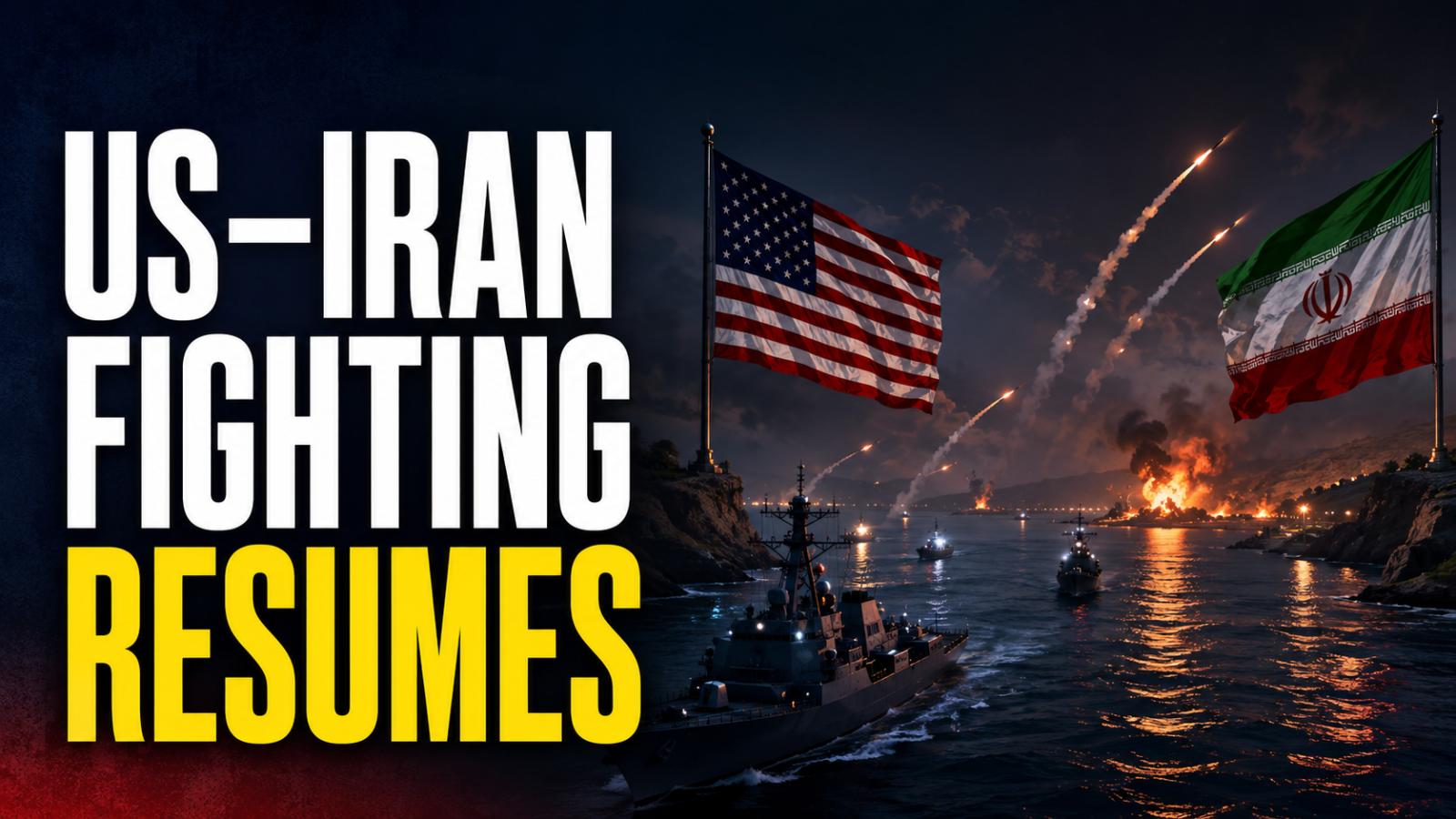
US forces struck two Iranian launchers near the Strait of Hormuz before Iran retaliated against American military sites in Jordan.
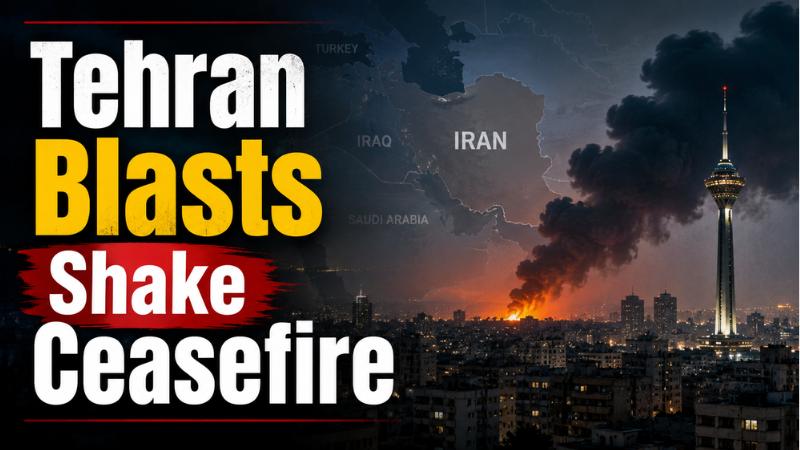
US-Iran conflict resumes after month-long military lullDirect fighting between the United States and Iran resumed on Sunday after a pause of nearly one month, renewing concerns about a wider Middle East escalation and disruption to global energy supplies.
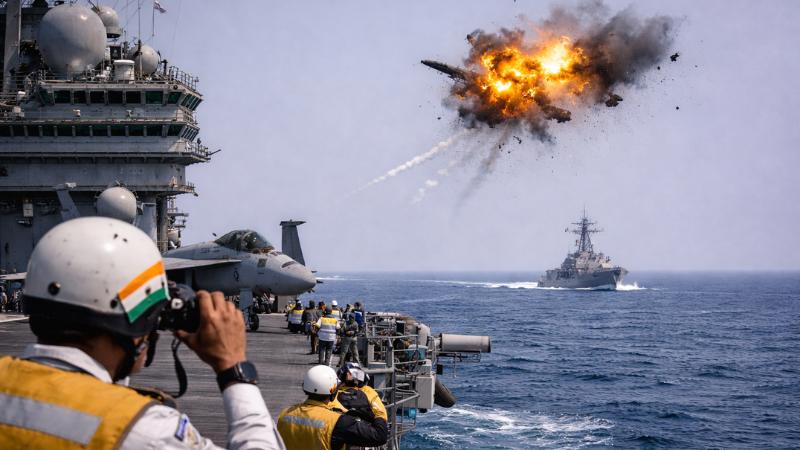
US forces struck two launchers operated by Iran’s Islamic Revolutionary Guard Corps on Larak Island, located near the strategically important Strait of Hormuz. The operation was the first known American attack on Iranian territory since late July.
Washington described the strikes as limited and precise. US officials said Iranian forces were preparing the launchers to deploy rockets carrying sea mines into the waterway, presenting what the military considered an imminent threat to international shipping.
Iran disputed the American justification and condemned the operation as an act of aggression. Iranian state media reported casualties among soldiers and civilians, although the figures could not immediately be independently verified.
Iran launches missiles at US military sites in JordanIran responded by firing ballistic missiles toward American military installations in Jordan. Jordanian defences intercepted nearly all the incoming missiles, and initial reports indicated that the attack caused no significant damage.
Iranian officials warned that the strikes on Larak Island would be met with further retaliation. The renewed exchange ended weeks of reduced direct military activity and raised questions about whether diplomatic efforts could prevent another sustained round of attacks.
Reports also circulated about explosions near other US positions in the Gulf. However, details regarding possible attacks in Qatar were not immediately confirmed by major official sources. The confirmed Iranian response centred on US sites in Jordan.
The United States said its operation was intended to counter an immediate maritime threat, while Tehran characterised the strike as a dangerous provocation. The conflicting accounts underline the continuing difficulty of independently establishing battlefield developments during the conflict.
Strait of Hormuz tensions threaten global shippingLarak Island’s location gives the latest confrontation global significance. It sits close to the Strait of Hormuz, one of the world’s most important maritime energy routes and a critical passage for oil and liquefied natural gas shipments.
Sea mines, missile attacks or further military operations in the area could restrict commercial movement and increase insurance and transportation costs. Shipping companies may also delay voyages or redirect vessels if security risks continue to rise.
Washington maintains that the targeted Iranian launchers posed a threat to vessels using the waterway. Iran, however, has repeatedly accused the United States of militarising the region and interfering with its security interests.
The latest strikes could further reduce already disrupted maritime traffic and complicate efforts to restore normal commercial operations through the strait. Any prolonged restriction would affect energy importers in Asia, Europe and other international markets.
Global oil prices rise amid renewed escalation fearsOil prices rose by nearly two percent following reports of the renewed attacks, reflecting concern that escalating military action could disrupt supplies passing through the Strait of Hormuz.
Energy markets are particularly sensitive to developments around the waterway because of the large volume of oil transported through it. Even without a complete closure, attacks, mines or shipping delays could place upward pressure on crude prices and fuel costs.
The immediate direction of the conflict will depend on whether Iran carries out its threat of stronger retaliation and whether Washington conducts additional operations. Further exchanges could increase risks for US forces, regional governments, civilians and commercial shipping.
The resumption of direct attacks has weakened hopes that the month-long military pause could develop into a lasting diplomatic arrangement. It has also placed renewed attention on efforts to prevent the confrontation from spreading across the Middle East.