
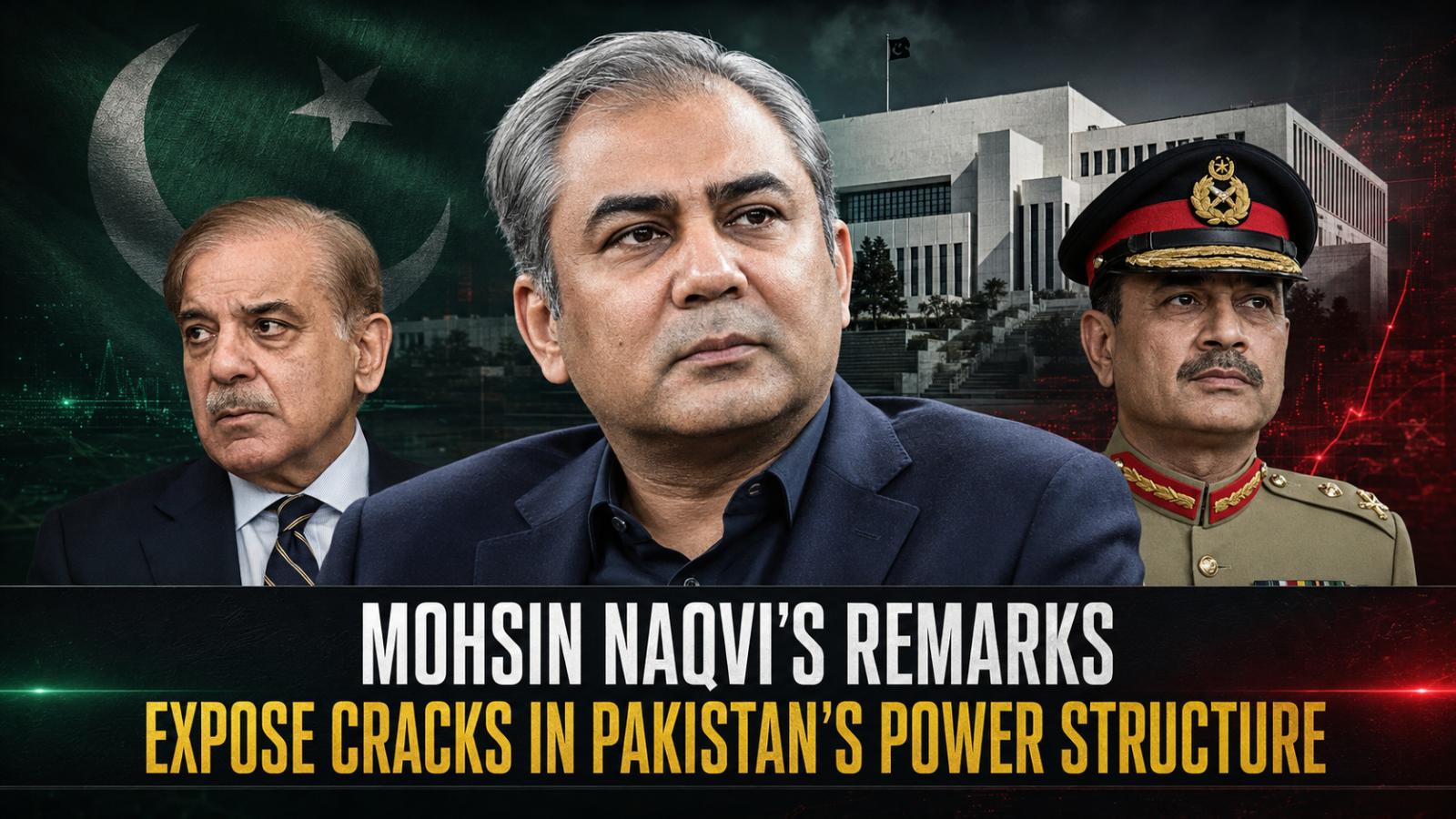
Mohsin Naqvi Pakistan governance remarks have renewed debate over administrative reforms and an alleged major scam. The Pakistan governance reform debate and Shehbaz Sharif cabinet tensions have also fuelled speculation about shifting political influence.
Pakistan governance reform debate intensifies
Pakistan Interior Minister Mohsin Naqvi has triggered a new political debate after claiming that he had uncovered one of the largest alleged scams in the country’s history. He said judges, bureaucrats, politicians and bankers were involved and alleged that bribes had been paid for 21 years.
Naqvi did not name the individuals or organisations allegedly connected to the case. He promised action against everyone found responsible, but detailed evidence and formal investigation findings were not immediately released publicly. His allegations therefore remain unproven.
The claim followed Naqvi’s recent speech at the Pakistan Economic Summit in Islamabad, where he said the country’s governance system had “collapsed.” He argued that the existing structure was no longer capable of delivering effective services, justice or employment opportunities.
Naqvi called for the creation of additional provinces or administrative units to improve accountability and bring government closer to citizens. The proposal revived a long-running debate about whether Pakistan’s existing provinces have become too large and centralised to govern efficiently.
The issue is politically sensitive because the PML-N and Pakistan Peoples Party draw substantial electoral strength from Punjab and Sindh. Any restructuring of provincial boundaries could affect political representation, resource allocation and administrative control.
Pakistan’s military spokesperson also supported a discussion about administrative restructuring, saying that governance reforms were important for both public administration and national security. This support contributed to speculation about the military’s position in the debate.
Shehbaz Sharif cabinet tensions emerge publicly
Defence Minister Khawaja Asif responded by pointing out that Naqvi had occupied a powerful position within the government for several years. He argued that meaningful reforms should be introduced through Parliament and the federal cabinet rather than announced at public events.
Asif also questioned Naqvi’s participation in cabinet and parliamentary proceedings. He advised the interior minister to begin the proposed changes within his own ministry and the Pakistan Cricket Board, which Naqvi also heads.
The exchange revealed differing views among members of Prime Minister Shehbaz Sharif’s government. While Asif agreed that Pakistan needed institutional reform, he challenged Naqvi’s method of raising the issue and questioned his own record within the system.
Naqvi is widely regarded as being close to army chief Asim Munir. That relationship has led analysts and political observers to speculate that his remarks may signal a broader shift in influence. However, there is no official evidence that the military plans to replace Sharif, elevate Naqvi or support an immediate leadership change.
Claims that Pakistan is approaching a major power shake-up should therefore be treated as speculation. The confirmed development is a visible disagreement between senior government figures over governance, accountability and the creation of new administrative units.
The controversy also reflects Pakistan’s longstanding struggle to balance civilian authority, military influence and provincial autonomy. Whether Naqvi’s proposals lead to constitutional reforms, a formal corruption investigation or further cabinet divisions will depend on evidence, parliamentary debate and the coalition government’s response.