
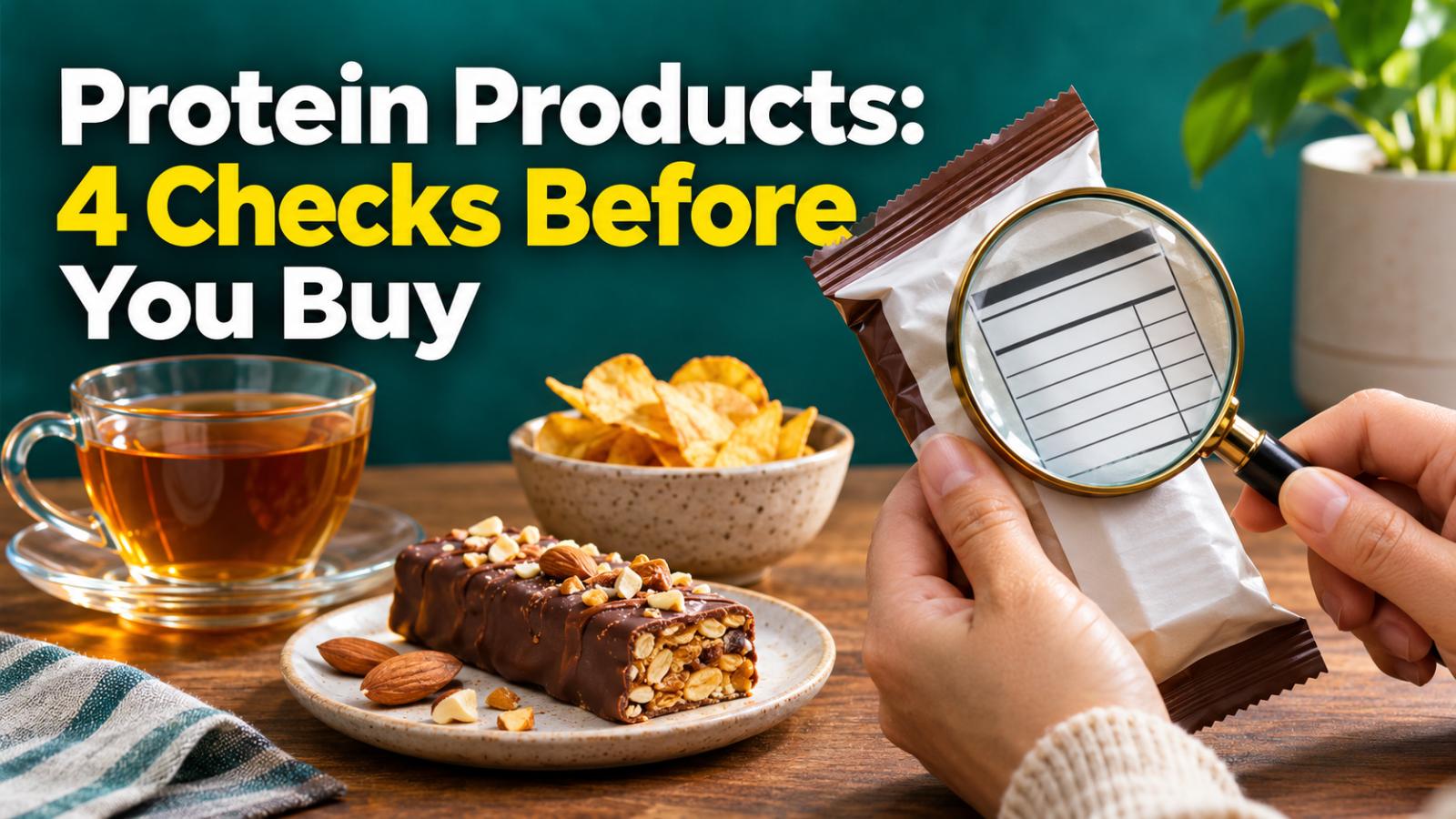
Protein claims are now common on everyday products, including tea, bread, cookies, chips and bottled water. While these foods may offer convenience, the word “protein” on a packet does not automatically make the product a nutritious choice. Nutritionist and health coach Ryan Fernando advises consumers to examine the label before buying.
His advice centres on four checks: the protein source, sugar content, calories compared with protein, and the difference between protein bars and energy bars. These details help shoppers understand what a product provides and whether it suits their needs.
Protein Products: Check The Source
The first step is to identify where the protein comes from. Fernando recommends looking for ingredients such as whey, milk, eggs and soya. For plant-based products, shoppers should examine the protein blend and its position in the ingredient list.
A packet may highlight protein prominently while providing only a modest amount per serving. Reading both the ingredients and the nutrition panel gives a clearer picture of its composition.
- Identify the named protein source in the ingredient list.
- Check how many grams of protein each serving provides.
- Examine the serving size and the number of servings in the packet.
- If refined flour, starch or palm oil appears prominently, assess the complete nutritional profile before buying.
- Compare similar products using the same serving quantity.
Protein Products: Look Beyond Sugar Claims
A protein-labelled snack is not necessarily low in sugar. Fernando advises consumers to check for ingredients such as liquid glucose, corn syrup and fructose syrup instead of relying entirely on claims printed on the front.
He also highlights maltodextrin, a rapidly digestible carbohydrate. Although it is not the same as sugar, its presence makes it useful to examine total carbohydrates alongside the sugar figures.
- Read the total sugar and added sugar values, where declared.
- Look for glucose and syrups in the ingredient list.
- Review total carbohydrates as well as protein.
- Check whether the nutrition values apply to one serving or the entire packet.
- Consider how much you will actually eat when calculating your intake.
Protein Products: Compare Calories And Protein
Fernando’s third recommendation is to compare the calories in a snack with the amount of protein it delivers. A product can contain protein while also supplying substantial energy from fats and carbohydrates.
The example discussed is a bar providing approximately 10–12 grams of protein within 150–180 calories. These figures are a comparison example rather than a requirement for every snack. A higher-calorie product may suit some needs, while someone specifically seeking additional protein may prefer a different option.
- Read the calories and protein grams together.
- Compare bars of similar size for a fair assessment.
- Consider whether the snack is intended to provide protein, energy or both.
- Account for portion size and the rest of the day’s food.
- Avoid treating one calorie-to-protein ratio as suitable for everyone.
Protein Products: Understand Bar Types And Whole Foods
The fourth check is to distinguish protein bars from energy bars. Protein bars generally emphasise protein, while energy bars may focus more on carbohydrates to supply energy. Similar packaging can make them appear interchangeable, so the nutrition panel matters more than the product name.
Fernando also encourages consumers to keep everyday protein sources in their diets. Eggs, chicken, fish, paneer, tofu, dairy, pulses and beans can all contribute. Packaged products may be useful while travelling or during busy periods, but they are not essential for everyone.
- Check whether the bar primarily supplies protein or carbohydrates.
- Choose according to the purpose of the snack.
- Include a variety of everyday protein-containing foods.
- Use packaged snacks when their convenience fits your routine.
- Assess the full label before deciding whether a protein claim offers value.