

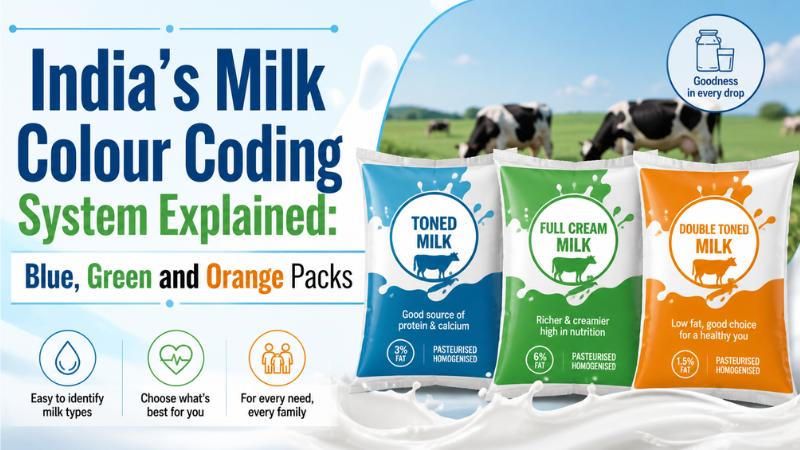
Milk packets in India are color-coded to help consumers easily identify the type of milk they are purchasing. These colours represent different fat contents and nutritional values, making it simpler for buyers to choose based on their dietary needs without having to read detailed labels.
The most commonly seen blue milk packets typically indicate toned milk. This variety has a moderate fat content, usually around 3%, and is one of the most widely consumed types in urban households. It offers a balance between nutrition and affordability, making it a popular daily choice.
Green packets usually represent standardized or full-cream milk, which has a higher fat content. This type of milk is richer and creamier, making it suitable for children, growing individuals, or those who require more energy and nutrients in their diet. It is also commonly used for making dairy-based products like curd, paneer, and sweets.
On the other hand, orange or yellow packets often indicate double-toned or low-fat milk. This variety contains reduced fat levels, making it ideal for people who are health-conscious or managing conditions like obesity or heart issues. It provides essential nutrients while keeping calorie intake lower.
The colour-coding system is followed by most dairy brands across India, though slight variations may exist depending on the region or company. Overall, this simple visual method helps consumers quickly differentiate between milk types and make informed choices suited to their lifestyle and health requirements.