
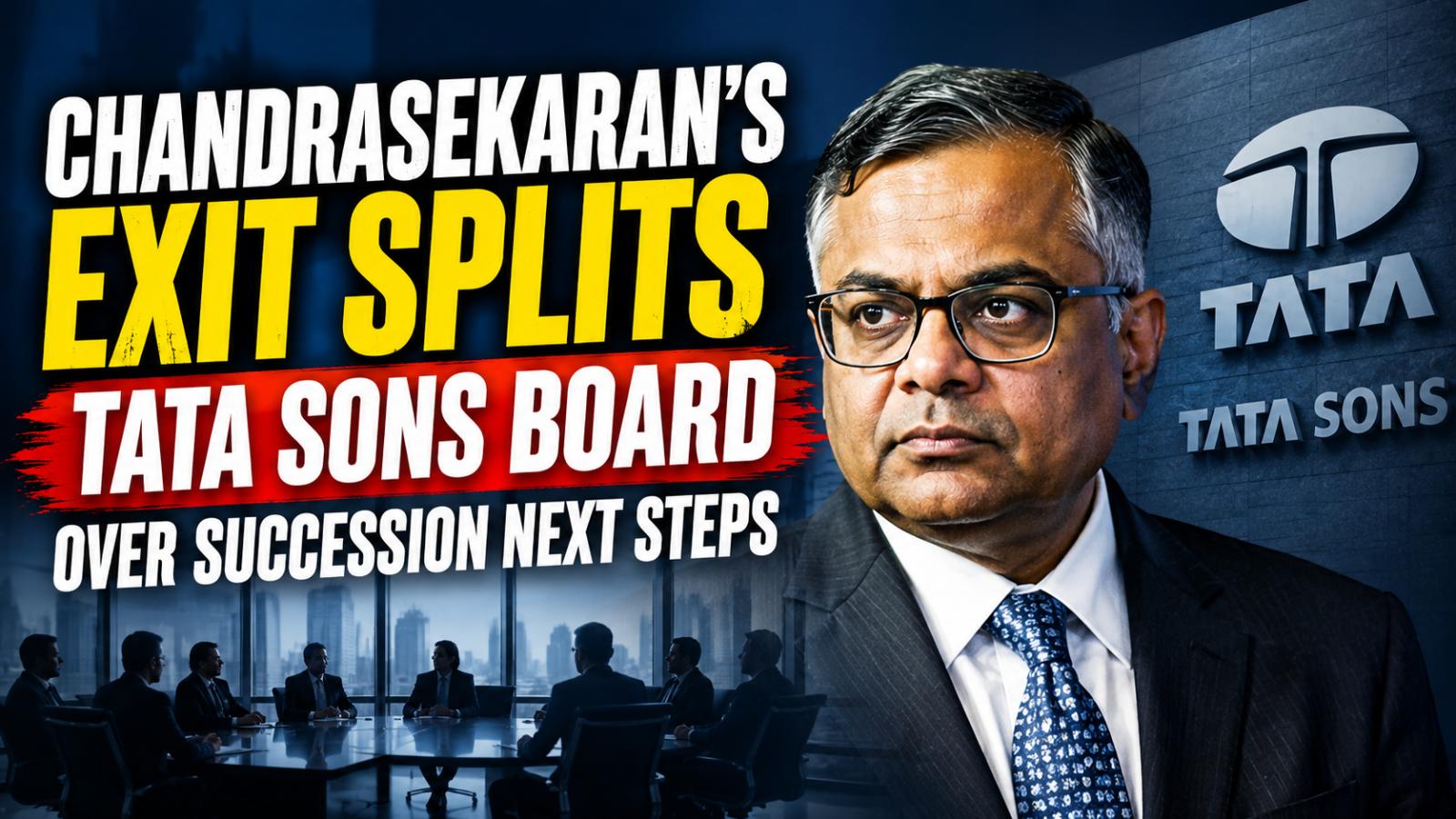
Tata Sons is facing a major leadership decision after chairman N Chandrasekaran informed the board that he does not intend to seek reappointment when his current term ends on February 20, 2027. His decision has reportedly divided directors over whether to persuade him to stay or immediately begin the process of identifying his successor.
The development comes after months of discussions over a possible third five-year term for Chandrasekaran, who has led Tata Sons since 2017. A lack of unanimous support for another term is reported to have played a key role in his decision not to continue.
Chandrasekaran Exit Divides Tata Sons BoardThe central issue before the Tata Sons board is not only who will become the next chairman but also how the company should formally respond to Chandrasekaran’s decision.
One section of the board reportedly believes that Chandrasekaran should be requested to reconsider, given his long tenure and role in steering the Tata Group through major acquisitions, restructuring and expansion.
Others argue that his decision is personal and should be respected, allowing the company to concentrate on ensuring a smooth transition before his term expires.
There has also been discussion over whether the matter could be put to a board vote. However, questions have been raised over whether directors can vote on a chairman’s voluntary decision not to seek reappointment.
Succession Planning Gains Urgency At Tata SonsThe leadership transition has gained momentum after the Sir Dorabji Tata Trust reportedly asked Tata Sons to take note of Chandrasekaran’s decision and begin constituting a selection committee to identify his successor.
This suggests that while some directors may still favour an attempt to retain Chandrasekaran, preparations for the next chairman are already moving forward.
The succession process is expected to attract significant attention because Tata Sons sits at the centre of one of India’s biggest corporate groups, with interests ranging from technology and automobiles to aviation, steel, consumer products and hospitality.
The next chairman will inherit responsibility for guiding the group through its next phase of expansion while managing relationships among Tata Sons, operating companies and the Tata Trusts.
Tata Trusts Role Becomes Central To Chairman SearchThe Tata Trusts hold a controlling stake in Tata Sons, making their role crucial in any leadership transition. The Sir Dorabji Tata Trust and Sir Ratan Tata Trust are the principal trustee shareholders, and Tata Sons’ Articles of Association provide them with an important role in the chairman selection process.
Reports of differences over representation between the two trusts have added another layer of complexity. Any disagreement could complicate the formation of the selection mechanism and potentially slow the succession process.
With Chandrasekaran’s current term continuing until February 2027, Tata Sons still has time to manage the transition, but the board will need clarity on the process well before the deadline.
Legal Questions Shape Board’s Next MoveA key legal issue is whether Tata Sons can formally reject Chandrasekaran’s decision or compel him to seek another term. Legal experts cited in reports have argued that a board generally cannot force a chairman to continue if he voluntarily chooses not to seek reappointment, unless specific provisions in the company’s governing documents provide otherwise.
That leaves Tata Sons with two possible paths: make another attempt to persuade Chandrasekaran to stay, or accept his decision and focus entirely on selecting the next chairman. Either way, the coming months could become one of the most closely watched leadership transitions in Tata Group history, with the board, Tata Trusts and succession committee all set to play decisive roles in shaping the conglomerate’s future.