
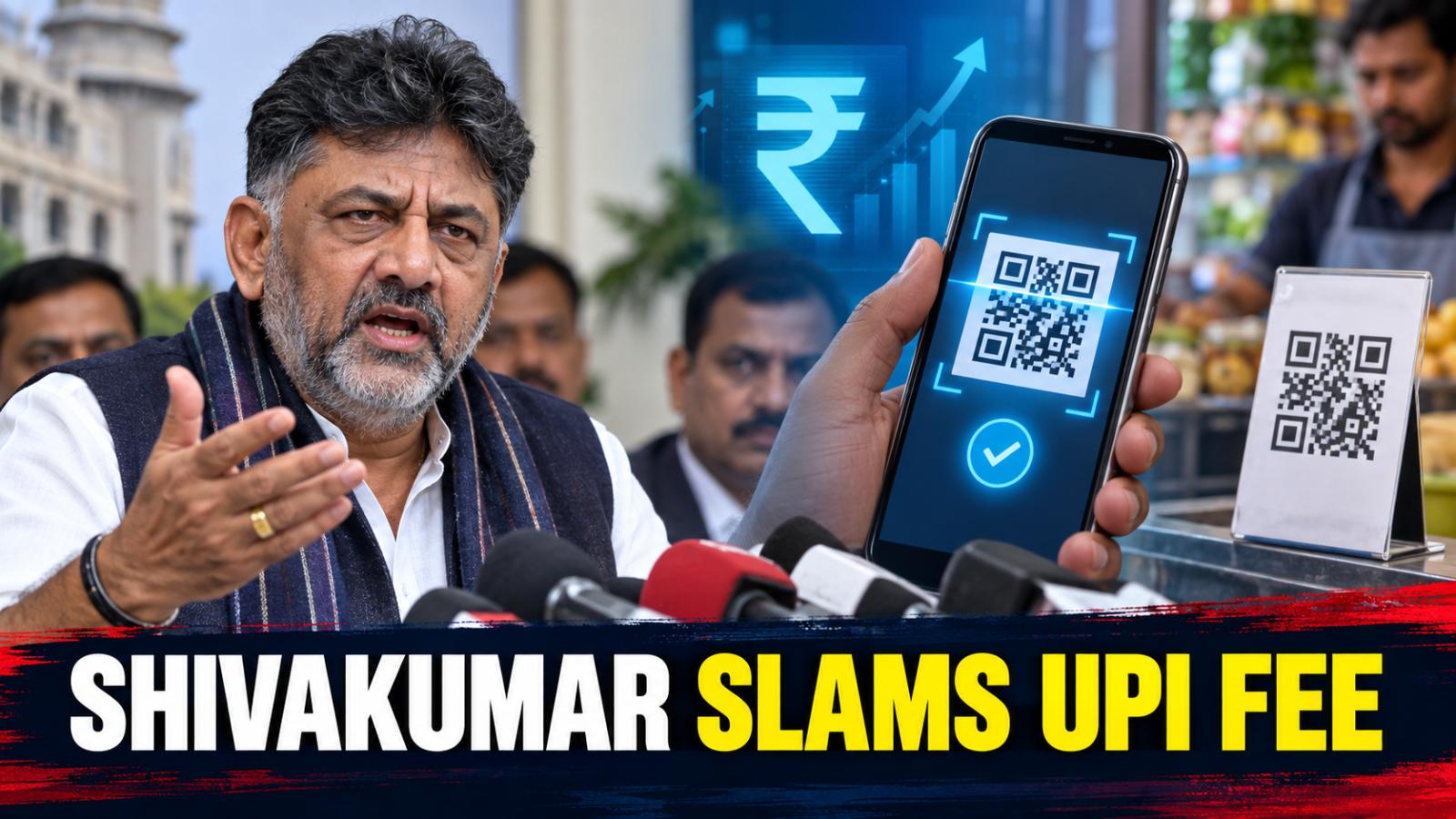
Karnataka Chief Minister DK Shivakumar has strongly criticised the introduction of charges on certain UPI merchant transactions, describing the move as “pickpocketing” of ordinary citizens and demanding that the earlier zero-charge system be continued.
Speaking to reporters in Kalaburagi on Thursday, Shivakumar argued that merchants could indirectly pass the additional payment-processing cost to customers. He said this would place a fresh financial burden on people who had been encouraged to adopt digital payments following demonetisation and the government’s push for a cashless economy.
India’s new Merchant Discount Rate framework will take effect on October 15, 2026. A fee of 0.4 per cent will apply to eligible person-to-merchant UPI transactions exceeding Rs 2,000, with the charge capped at Rs 300 for transactions of Rs 75,000 or more. Person-to-person payments and transactions of up to Rs 2,000 remain free. The government has also directed banks and payment providers not to pass the fee directly to consumers, according to theDepartment of Financial Services’ official UPI MDR FAQs.
Shivakumar said his government would oppose the new fee and called for its immediate withdrawal. He questioned the logic of introducing charges after years of promoting UPI as a free and convenient alternative to cash. “Why did they call it Cashless India? Why was demonetisation carried out? Why are people now being made to go back towards the old system?” he asked.
He also claimed that NPCI had earned tax-free profits of Rs 6,119 crore and alleged that the revised system would benefit large and foreign-linked payment companies while placing pressure on Indian consumers. His remarks came amid wider concerns that merchants may eventually recover the cost through higher product or service prices, even though direct pass-through has been prohibited.
The government says the new fee will support investment in UPI infrastructure, cybersecurity, innovation and customer service. It also says more than 95 per cent of person-to-merchant UPI transactions fall within the Rs 2,000 exemption and will therefore remain unaffected.
Shivakumar also addressed concerns over the alleged excessive use of Bhima river water in Maharashtra. He said legislators from Karnataka’s border districts had raised complaints about drinking-water shortages and added that he would discuss the matter with the Maharashtra Chief Minister.
On the Tungabhadra, he said Karnataka, Andhra Pradesh and Telangana had reached an understanding on preventing the wastage of nearly 33 TMC of water flowing downstream. He also referred to a consensus among the three states on proposals related to linking the Godavari, Krishna and Kaveri rivers.
According to Shivakumar, the proposed Navale balancing reservoir would be built in Karnataka and benefit all three states. He described the agreement as an important step for the development of the Kalyana Karnataka region. On attracting large industries, Shivakumar said he would hold discussions with Union Heavy Industries Minister HD Kumaraswamy and that Karnataka was prepared to provide land for suitable projects.
Responding to demands for farm-loan relief in drought-affected taluks, he said the government would consult banks and invited Opposition parties to offer suggestions during the legislature session. He added that surveys were continuing in areas yet to be officially declared drought-hit and that cloud-seeding operations had been conducted wherever weather conditions permitted.