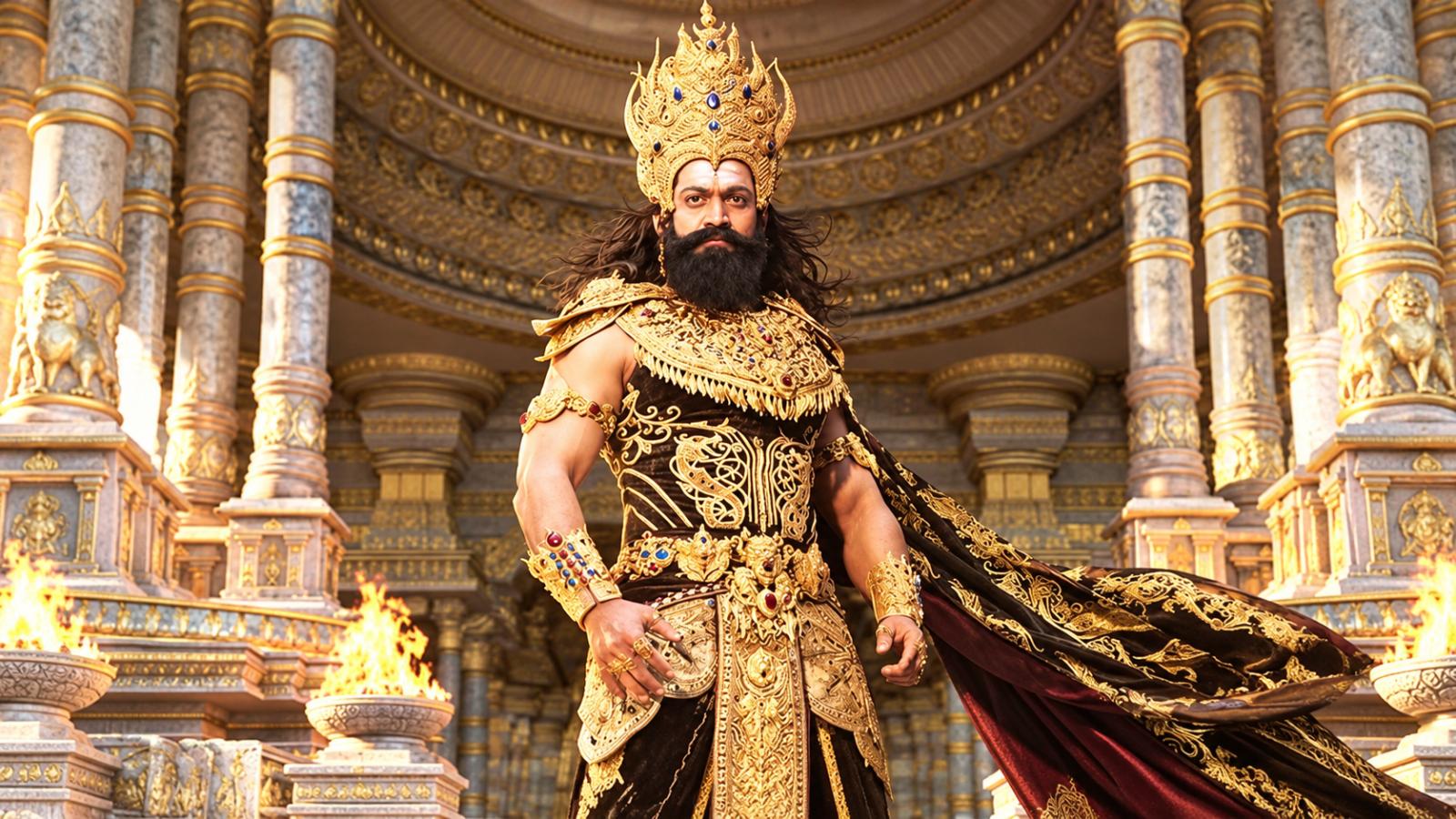
Yash has asked audiences to watch Ramayana: Part One with an open mind and avoid focusing on minor visual-effects flaws. His remarks at the film’s Hyderabad pre-release event on October 19 have prompted a broader discussion: should the ambition behind a large-scale production affect how viewers judge the finished film?
Yash Asks Audiences to Support Ramayana
Yash, who plays Ravana and is also a co-producer, praised producer Namit Malhotra’s commitment to the project. He said that losing filmmakers willing to back productions of this scale could set Indian cinema back by years, and urged audiences to give the film a fair chance. He also said Malhotra had been receptive to criticism and corrections as the project developed.
The appeal is understandable: Ramayana is being made as a two-part epic intended to reach audiences beyond India. But asking viewers to approach the film with an open mind does not settle the question of whether its visual effects—or any other part of its execution—will meet their expectations.
The Reported ₹4,000-Crore Budget Raises Expectations
The reported ₹4,000-crore investment covers both instalments, with Yash citing visual effects, international marketing and distribution among the project’s major costs. The figure reflects the scale of the filmmakers’ plans, but it also raises expectations.
Audiences can recognise the ambition behind a film and still assess what appears on screen. A large budget does not guarantee effective storytelling, performances or visual effects, just as criticism of those elements does not mean a viewer rejects ambitious Indian filmmaking.
Ramayana’s Visual Effects Have Drawn Mixed Reactions
Questions about the film’s visuals surfaced after early promotional material featuring Ranbir Kapoor as Rama and continued with later trailers. Reactions have varied: some viewers have praised the film’s scale and imagery, while others have criticised aspects of the visual effects and character design. The July trailer also drew mixed responses, and the international trailer released in October prompted both praise and disappointment.
Some viewers may feel that later material shows improvements, but the filmmakers have not confirmed that audience criticism directly prompted changes. Until the film is released, trailer reactions remain an early—and incomplete—measure of its finished effects.
Ambition Does Not Remove the Right to Criticise
Ramayana: Part One, starring Ranbir Kapoor as Rama, Sai Pallavi as Sita and Yash as Ravana, is scheduled to release worldwide on November 5, 2026. Its scale and cultural significance make the visual presentation especially important to many viewers.
Yash’s call to support ambitious Indian films is a valid appeal. It need not mean that audiences should set aside their judgment. They can appreciate the effort involved, offer constructive criticism and decide for themselves whether the film succeeds. Ultimately, Ramayana will have to earn that appreciation through its storytelling, performances and technical execution.