
Supreme Court Blocks Trump Mail Ballot Restrictions
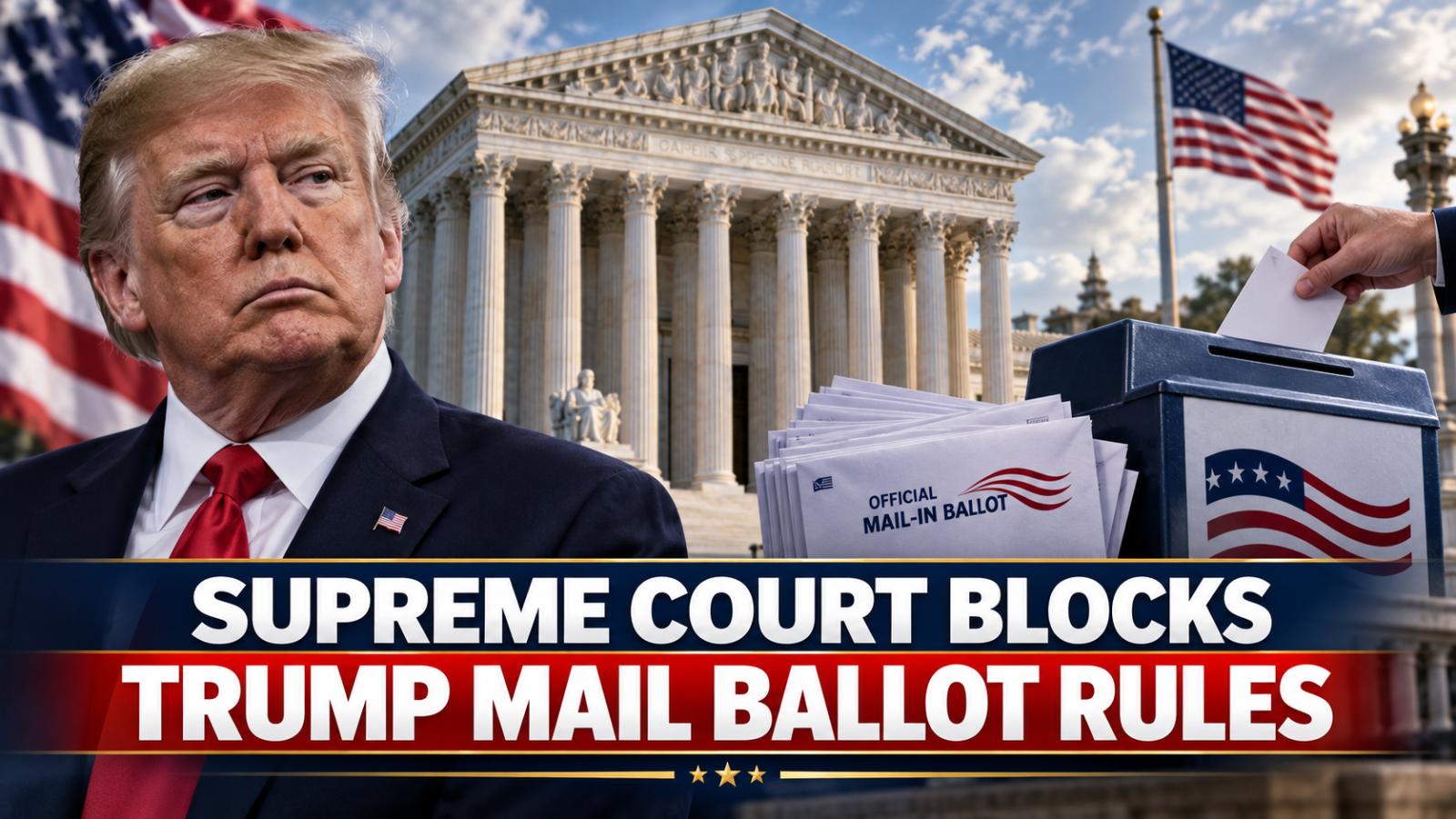
The US Supreme Court on Monday rejected President Donald Trump’s attempt to impose new restrictions on mail ballots ahead of the 2026 midterm elections, allowing states to continue using their existing vote-by-mail procedures.
The brief order represented a major legal defeat for the Trump administration as voting activities were already underway in several states. Mail ballots have accounted for nearly one-third of votes cast in recent US elections, making any last-minute changes potentially disruptive for election officials and voters.
The court’s majority did not explain its reasoning, a common practice in cases decided through its emergency docket. Justices Samuel Alito and Clarence Thomas publicly dissented. Alito argued that the US Postal Service has broad authority to regulate mail and could potentially enforce the administration’s proposed requirements. Justice Brett Kavanaugh agreed that the restrictions should not apply during the approaching midterms. However, he indicated that he could support the administration’s position if the legal question returns to the Supreme Court in a future case.
Mail Ballot Procedures Remain Unchanged
The Trump administration wanted states to use a uniform ballot-envelope design and upload lists of eligible voters to an online portal. Under the proposed system, the Postal Service could refuse to deliver ballots to states that failed to follow the requirements.
Election officials warned that implementing the system only weeks before the midterms would create confusion and threaten the timely distribution of ballots. Alabama, North Carolina and Wisconsin had already begun sending mail ballots while the proposed system remained inactive.
The impact could have been particularly significant in states that conduct elections primarily through the mail. Washington Secretary of State Steve Hobbs said the ruling would allow officials to continue preparing for a secure and accurate election without being forced to meet unrealistic last-minute mailing requirements.
Arizona Secretary of State Adrian Fontes said access and security should not be treated as opposing goals in election administration. Utah Lieutenant Governor Deidre Henderson, the state’s chief election officer, said voters could be confident that the election would proceed normally.
States and Voting Groups Challenge Trump Plan
Democratic state officials and voting-rights organisations challenged the restrictions, arguing that the president lacked the constitutional power to establish election rules that could severely limit mail voting immediately before a national election.
A whistleblower report also warned that technical problems with the proposed online portal could prevent millions of ballots from being mailed. According to the report, a single barcode error could result in an entire batch of ballots being rejected.
Lower courts agreed with the challengers and blocked the administration’s plan, including through a preliminary injunction issued by a federal judge appointed by Trump. The administration then appealed to the Supreme Court, arguing that federal control over the Postal Service provided the authority to regulate the handling of election mail.
Although the federal government previously secured an early procedural victory at the Supreme Court, the justices did not decide the broader legality of the proposal. Monday’s order ensures that the restrictions will not take effect for the 2026 midterms, though similar questions could return to the court later. Trump has repeatedly criticised mail voting and continued to link it to his 2020 election defeat despite the absence of evidence showing widespread mail-ballot fraud. He has also used mail voting himself, including during recent elections.