
Why FSSAI Wants Energy Drink Labels Changed
FSSAI has reportedly given high-caffeine beverage companies 90 days to remove the term “energy drink” and similar claims from labels. The move affects major brands and could reshape product marketing in India’s fast-growing caffeinated drinks market.FSSAI Energy Drink Label Rule 2026: Brands Get 90 Days
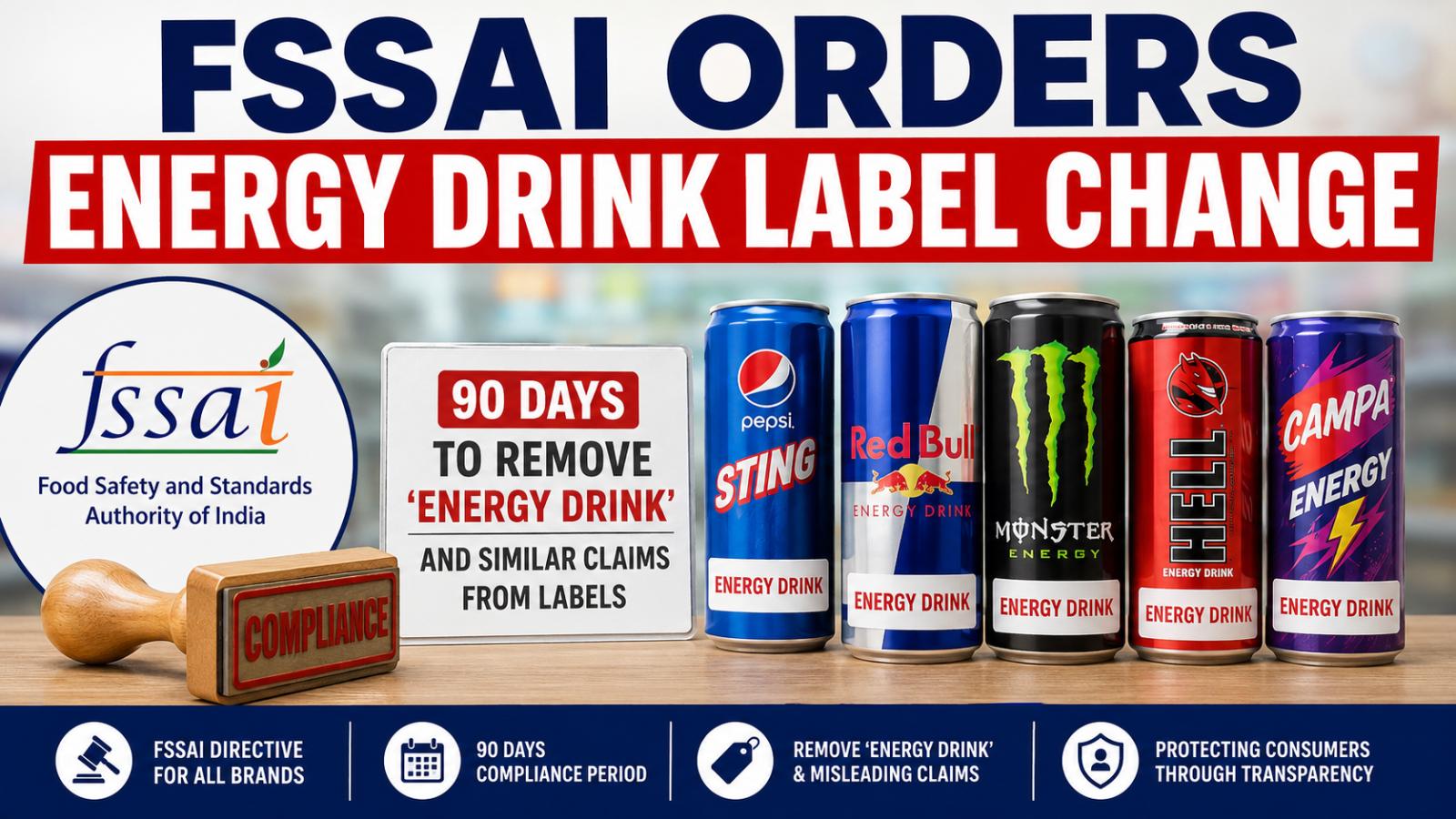
The FSSAI energy drink label rule 2026 could significantly change how high-caffeine beverages are marketed across India. Major companies, including PepsiCo, Red Bull, Monster Beverage, Reliance Consumer Products, and Hell Energy, have reportedly been given 90 days to remove the term “energy drink” and similar descriptions from their product labels.
The direction follows concerns that the category name and certain promotional claims may mislead consumers about the benefits of these beverages.
What the FSSAI Energy Drink Label Rule 2026 Means
The Food Safety and Standards Authority of India has reportedly told companies that “energy drink” is not a separately recognised product category under Indian food standards.
However, this does not mean India has no regulations for such beverages. FSSAI’s official records include standards for products classified as caffeinated beverages. The present dispute is mainly over the use of the marketing description “energy drink” and claims suggesting that the products can instantly improve strength, alertness, or general well-being.
The reported direction should therefore not be interpreted as a nationwide ban on the sale of all high-caffeine drinks. It primarily requires companies to modify their labels, category descriptions, and potentially misleading promotional statements.
Beverage Companies Given 90 Days to Change Labels
According to Reuters, FSSAI officials met senior beverage-industry representatives before confirming the compliance period.
FSSAI Chief Executive Rajit Punhani reportedly rejected arguments that removing the category description could damage established brands or affect sales. Companies were also told that they could challenge the regulator’s interpretation before a court.
A government source cited in the report said the companies eventually agreed to comply and were given 90 days to make the necessary changes. The affected products reportedly include PepsiCo’s Sting, Red Bull, Monster Energy, Reliance’s Campa Energy and Hell Energy.
The exact replacement terminology has not yet been publicly detailed. Companies may have to market the products under the broader regulatory description of caffeinated beverages or another compliant category.
Industry Seeks More Consultation from FSSAI
The Indian Beverage Association has asked the food regulator to follow a more consultative and risk-based approach when introducing major labelling changes.
In a July 6 communication, the association reportedly argued that publicly announcing preliminary notices could damage corporate reputations, interrupt business operations, and confuse customers.
It also called for regular discussions between regulators and manufacturers before significant changes in the interpretation of existing rules. The association nevertheless said its members remained committed to regulatory compliance and science-based policymaking.
Why India’s Caffeinated Drinks Market Is Under Scrutiny
Regulatory attention has increased as India’s market for high-caffeine beverages continues to expand rapidly.
PepsiCo’s low-priced Sting drink, launched in India in 2017, helped take the category beyond urban supermarkets and into smaller towns and rural markets. It also gained popularity among teenagers and young adults.
Euromonitor estimates cited by Reuters project that India’s market could reach $1.6 billion by 2028, with annual growth of approximately 12.6%. Sales volumes reportedly increased by nearly 100% annually between 2018 and 2023.
Authorities have also raised concerns about products containing high levels of caffeine, sugar, and other stimulating ingredients being promoted as sources of instant strength or energy.
Rajasthan Begins Enforcement Against Energy Drink Claims
Enforcement has already begun in Rajasthan, where authorities reportedly seized thousands of bottles of Sting, Campa Energy, and Red Bull during July 2026.
On July 8, the state also instructed online platforms such as Amazon, Flipkart, Blinkit, and Swiggy Instamart to ensure that covered products were not advertised using the “energy drink” description.
The new labelling direction could force beverage companies to redesign packaging, revise advertisements, and change online product listings throughout India. Consumers may continue seeing the drinks in stores, but the wording used to describe and promote them is likely to change once the 90-day compliance period ends.