
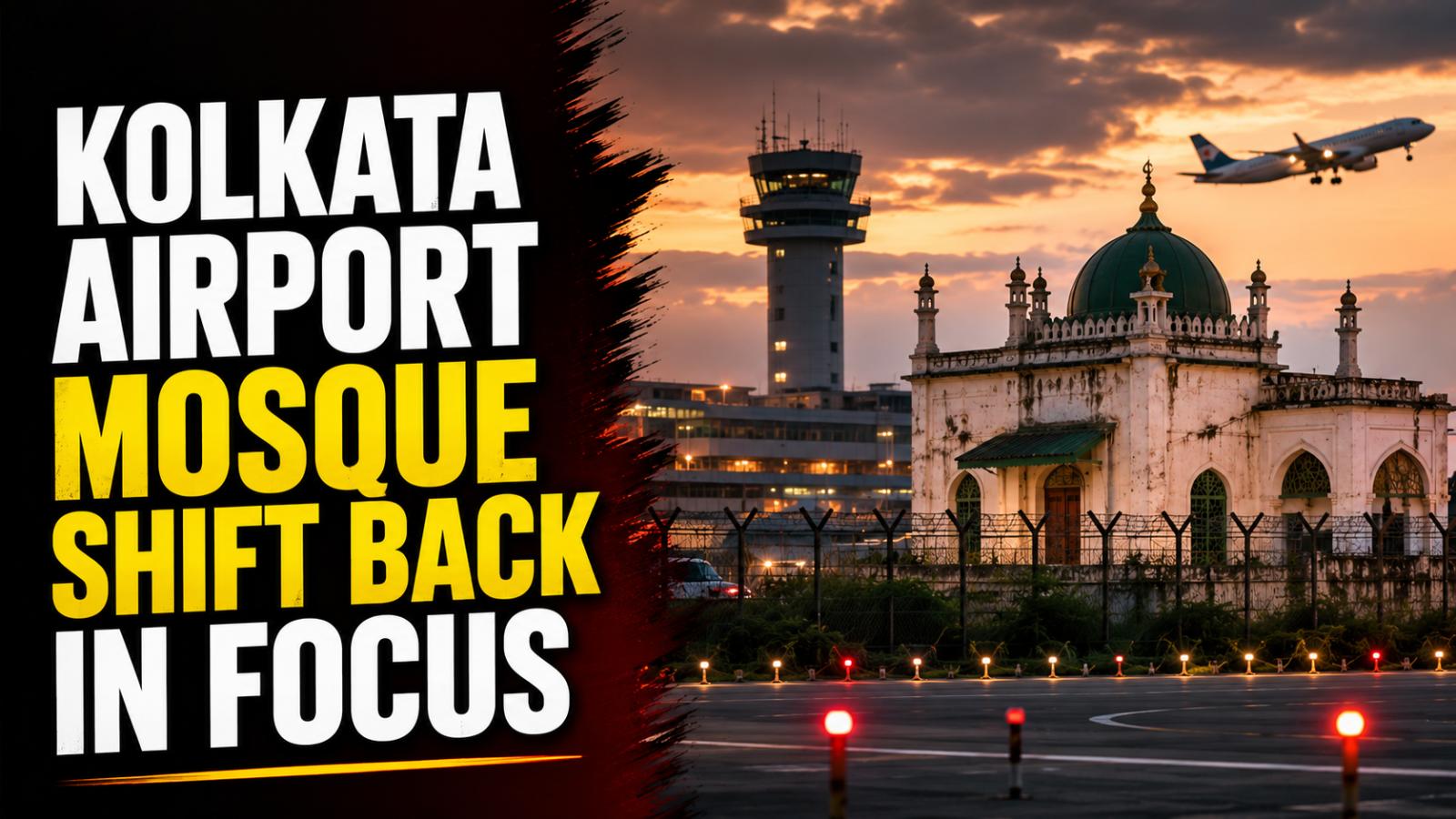
The proposal to relocate the Bankra Mosque from inside Kolkata’s Netaji Subhas Chandra Bose International Airport has again become a major public issue as aviation authorities review security arrangements and the future use of the airport’s secondary runway.
The mosque, also known as Gouripur Jame Masjid, is believed to have been built in the late nineteenth century, before the Dum Dum aerodrome was developed during British rule. Although surrounding settlements changed as the airport expanded, the religious structure remained near the operational runway area.
Access for worshippers was earlier permitted through identity checks and security screening. That arrangement was later suspended after concerns were raised about allowing regular civilian movement through a restricted airport zone. Authorities are now examining whether access can continue under stricter protocols or whether relocation is the more practical long-term solution.
Aviation safety and runway limitations
The mosque is located close to one end of the airport’s secondary runway. Aviation officials say its position has required the runway threshold to be shifted, reducing the usable landing and take-off distance.
The runway remains operational and is used by several aircraft. However, its full capacity cannot be utilised, especially during poor visibility, strong crosswinds, maintenance work or temporary disruption on the primary runway.
Officials have also said that the structure affects the installation of certain Instrument Landing System components. These navigation facilities help pilots align aircraft safely during low-visibility approaches. Improving the secondary runway could provide the airport with greater flexibility and reduce dependence on the main runway.
Security agencies have separately reviewed the earlier system under which worshippers entered the airport premises after verification. The Bureau of Civil Aviation Security has reportedly sought stronger clearance procedures because the mosque lies within a highly sensitive operational area.
Relocation proposal and local concerns
The idea of shifting the mosque is not new. The Airports Authority of India, civil aviation officials, state authorities and community representatives have discussed the issue on several occasions, but no final agreement has been implemented.
The latest discussions have received support from the West Bengal government and BJP leaders, who argue that airport safety and infrastructure development should receive priority. It has also been suggested that nearby religious structures of other communities may be shifted if they obstruct future airport projects.
Mosque representatives and local community members have stressed that the structure existed before the airport and cannot be removed without legal procedures and proper consultation. They have sought suitable replacement land, construction of an alternative mosque and guarantees that worshippers will continue to have access to a religious facility.
Some community elders have reportedly advised worshippers to avoid confrontation and resolve the issue through dialogue and legal channels. This has created room for negotiations, although no publicly confirmed settlement has yet been reached.
Authorities have not announced a final relocation date, approved replacement site or construction schedule. Until these details are formally confirmed, the matter will remain a sensitive debate involving aviation safety, airport expansion, religious rights and preservation of a historic structure.