

India’s Homegrown HPV Test Validated For Cervical Cancer Screening
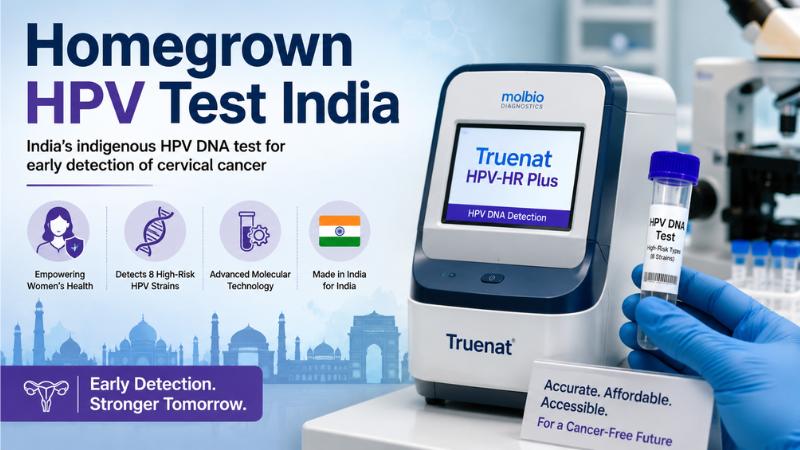
India has taken an important step in cervical cancer prevention with the validation of its first indigenous HPV DNA test, Truenat HPV-HR Plus. The test has been developed by Molbio Diagnostics and is designed to detect high-risk human papillomavirus strains linked to cervical cancer.
Why This HPV Test Matters
The validation is being seen as a major public health development because cervical cancer remains one of the leading cancer-related health concerns among women in India. Early screening plays a key role in identifying high-risk HPV infections before they develop into serious disease.
Meets International Screening Standards
According to researchers, the Truenat HPV-HR Plus test meets international validation standards for cervical cancer screening. The findings were published in the International Journal of Cancer, and the test was evaluated against criteria laid down by the International Agency for Research on Cancer, the cancer research arm of the World Health Organization.
Focus On High-Risk HPV Strains
What makes this test significant is that it focuses on eight high-risk HPV types that are strongly associated with cervical cancer. Unlike broader tests that may detect several temporary infections which often clear naturally, this reduced-valency approach concentrates on the strains most likely to cause serious disease.
How The Test Works
The test uses automated molecular technology to detect viral DNA. This helps reduce dependence on manual interpretation seen in older screening methods, such as Pap smears or visual inspection. Researchers believe this can improve accuracy while reducing unnecessary follow-up procedures, costs, and anxiety for patients.
Useful For Rural And Low-Resource Areas
Since the Truenat platform is already used in India for several infectious disease diagnostics, health experts say the HPV test could be integrated into existing healthcare systems more easily. This may be especially useful in smaller towns, rural areas, and low-resource settings where advanced laboratory facilities are limited.
Support For India’s Cervical Cancer Prevention Goals
The validation comes at a time when India is strengthening HPV vaccination and cervical cancer screening programmes for women, especially those above 30 years. Wider access to affordable and reliable testing can help identify women at risk earlier and support India’s long-term goal of reducing cervical cancer deaths.
Doctors Still Recommend Regular Screening
Doctors continue to stress that screening should be done through proper medical guidance. HPV vaccination, regular screening, and timely follow-up remain the most important steps in preventing cervical cancer.
With an affordable, homegrown, and internationally validated HPV test now available, India could make cervical cancer screening more accessible to millions of women and strengthen early detection across the country.