
Bhutan E20 Petrol Report: Centre Denies Rejection Claim, Says No Offer Was Made
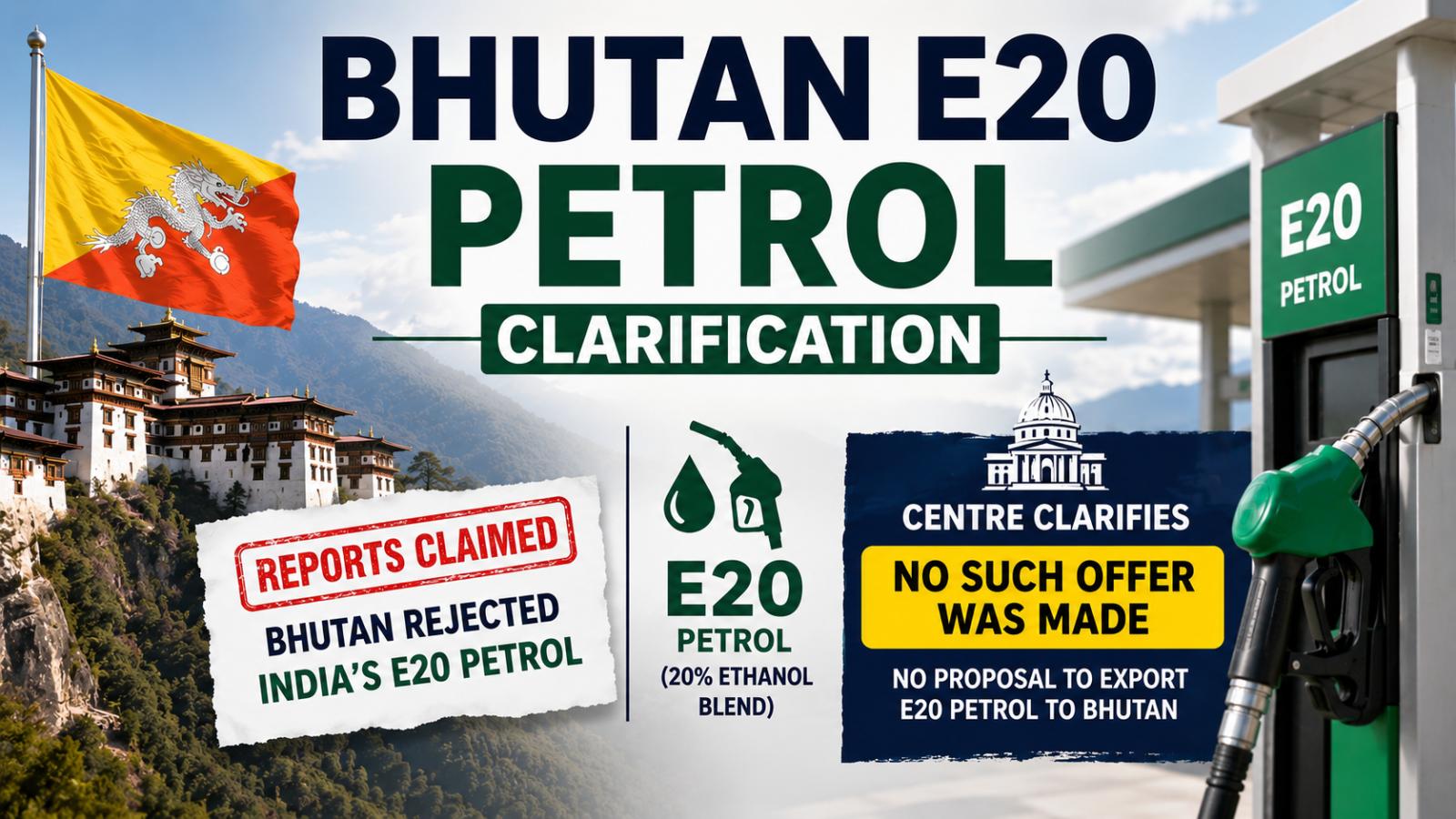
The Centre has rejected reports claiming that Bhutan turned down India’s E20 petrol, stating that no such offer was made by Indian oil marketing companies. The clarification came after reports suggested that Bhutan had declined the import of E20 fuel from India over technical and storage-related concerns.
According to the Ministry of Petroleum and Natural Gas, there is no proposal under consideration for exporting E20 petrol to Bhutan. The ministry described the claim as incorrect and urged people to rely on official information from the government and oil marketing companies.
What Was The Report About?
The controversy began after reports claimed that Bhutan had refused to import E20 petrol, a fuel blend containing 20% ethanol and 80% petrol. Some reports said Bhutan wanted to continue receiving regular petrol due to concerns linked to fuel storage systems and vehicle compatibility.
However, the Indian government has denied the central claim of the report. It said no offer was made by oil marketing companies, and therefore, the question of Bhutan rejecting the fuel does not arise.
Centre Issues Fact Check
The Petroleum Ministry issued a fact-check, saying claims that Bhutan declined an offer to import E20 petrol from India are incorrect. The ministry added that Indian oil marketing companies have not made such an offer and that there is no export proposal for E20 petrol to Bhutan.
The clarification is important because the E20 rollout has already become a topic of discussion in India. Questions have been raised by some vehicle owners about mileage, older vehicle compatibility and fuel choice at petrol pumps.
What Is E20 Petrol?
E20 petrol is a blend of petrol with 20% ethanol. India has been expanding ethanol blending as part of its broader biofuel and energy security policy. The Ethanol Blended Petrol programme aims to reduce crude oil dependence, support domestic ethanol production, and lower environmental impact.
The government has said the automobile industry has been aligning vehicles with prescribed ethanol-blending standards. At the same time, public debate continues over how the transition affects older vehicles and fuel efficiency.
Why This Matters
The clarification helps separate official policy from unverified claims. Since India’s ethanol-blending programme is a major energy initiative, reports about neighbouring countries rejecting E20 fuel can create confusion among consumers and fuel-sector stakeholders.
For now, the government’s position is clear: India has not offered E20 petrol to Bhutan, and there is no current proposal to export it there.