
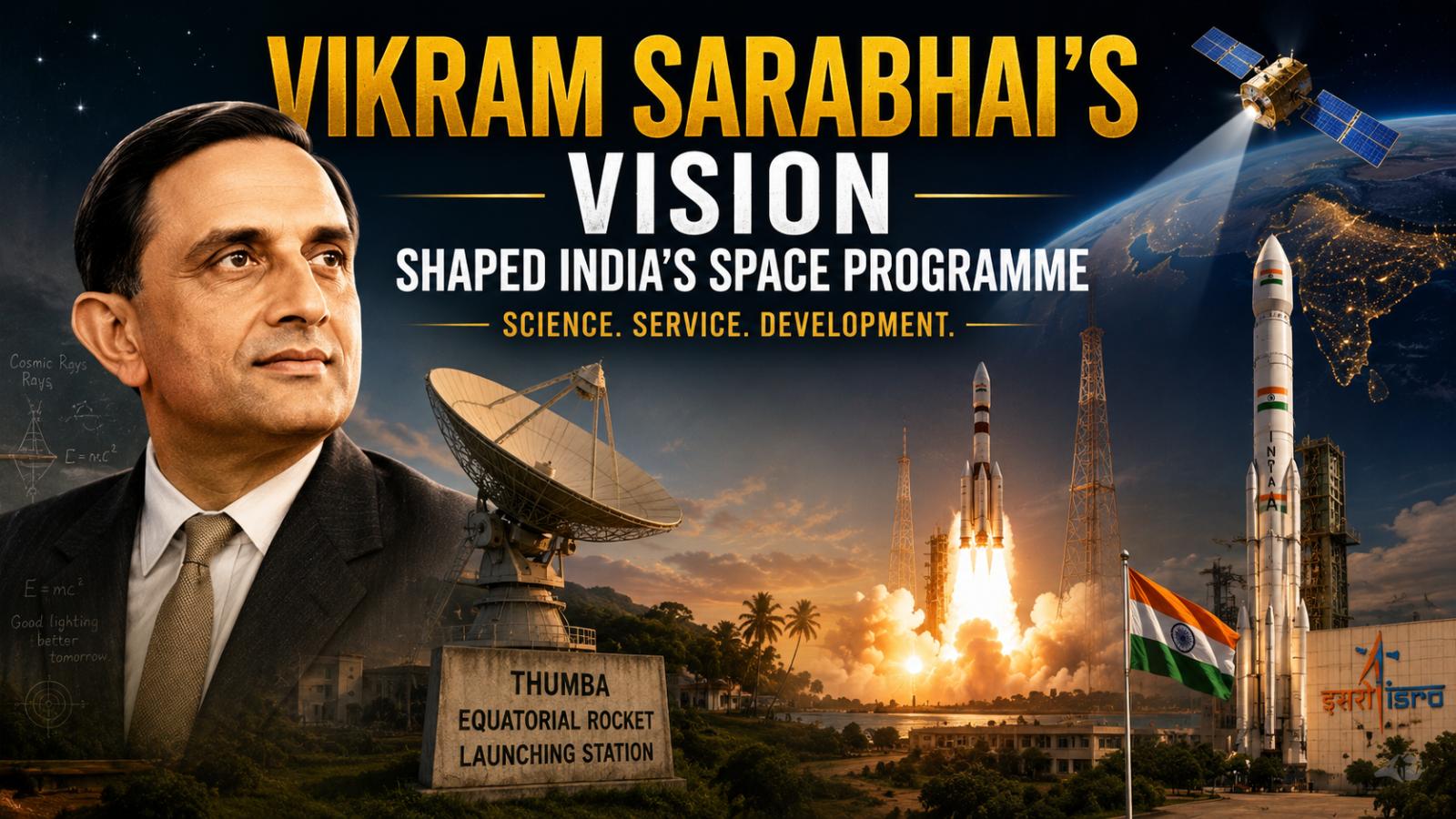
On Vikram Sarabhai’s birth anniversary, India remembers the scientist who transformed the idea of a space programme from a symbol of prestige into a tool for national development. His vision laid the foundation for ISRO and shaped India’s use of satellites for communication, education, weather forecasting and resource management.
Vikram Sarabhai Saw Space Technology as a Tool for Development
Born on August 12, 1919, in Ahmedabad, Vikram Sarabhai is widely regarded as the founding father of India’s space programme. At a time when India was dealing with poverty, food shortages, weak infrastructure and limited access to education, Sarabhai argued that advanced science should directly address the needs of ordinary people. Unlike the Cold War space race between the United States and Soviet Union, his priority was not prestige through human spaceflight or lunar competition. Instead, he believed India should become highly capable in using advanced technology to solve practical social and economic problems.
INCOSPAR to ISRO: Sarabhai Built the Institutional Foundation
India’s organised space research effort began with the creation of the Indian National Committee for Space Research, or INCOSPAR, in 1962. Under Sarabhai’s leadership, early activities included sounding rocket launches from Thumba, but his ambitions went far beyond experimental rocketry. He envisioned satellites supporting communication, education, meteorology and natural-resource management. INCOSPAR was eventually replaced by the Indian Space Research Organisation in August 1969, creating the institutional structure that would later support India’s expanding satellite and launch-vehicle programmes.
Satellite Communication Became Central to Sarabhai’s Vision
Sarabhai understood early that satellite communication could help bridge gaps between India’s cities and rural communities. His engagement with international space organisations helped advance ideas that later contributed to satellite-based educational experiments such as the Satellite Instructional Television Experiment. The broader philosophy was simple but transformative: India should not pursue space merely to leave Earth, but use space-based technology to improve life on Earth. That approach ultimately influenced programmes in television broadcasting, telecommunications, weather monitoring, navigation and Earth observation.
His Legacy Continues in India’s Modern Space Ambitions
Sarabhai died on December 30, 1971, at the age of 52, before India launched its first satellite and decades before the country reached the Moon. Yet the institution he helped establish continued to grow into a programme spanning communication satellites, navigation, meteorology, Earth observation and planetary exploration.
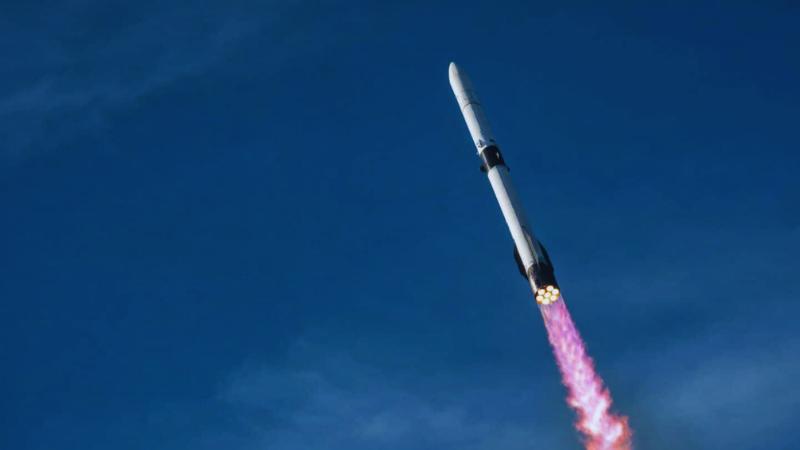
His influence also extends into India’s private space sector. Skyroot Aerospace named its Vikram series of launch vehicles after him; the company launched Vikram-S in 2022 as India’s first privately developed rocket mission and prepared Vikram-1 for its first orbital launch attempt in 2026. Sarabhai’s enduring achievement was not simply starting a space agency, but establishing the principle that advanced technology should ultimately serve national development and the everyday needs of society.