
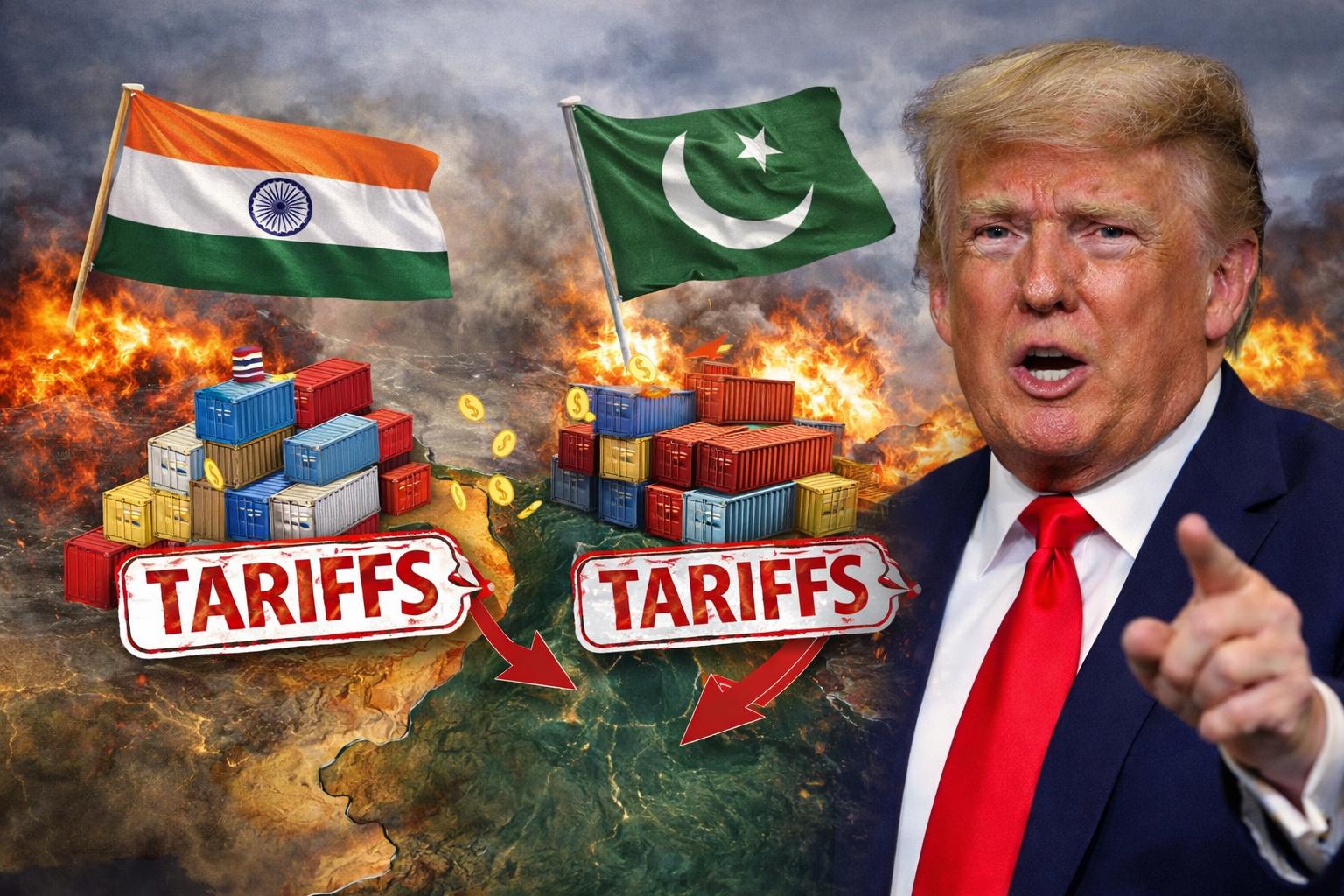
US President Donald Trump has once again asserted that the threat of trade tariffs played a significant role in halting several international conflicts, including the recent military tensions between India and Pakistan. Speaking in a televised interview on Tuesday, Trump claimed that economic pressure through tariffs helped bring rival nations to the negotiating table and prevented further bloodshed.
Referring specifically to the four-day confrontation between the two nuclear-armed neighbours, Trump said his administration warned both sides that continued hostilities could result in increased tariffs and trade restrictions. According to him, the message was clear: settle the dispute or face economic consequences. He maintained that such pressure contributed to the pause in fighting and may have prevented the situation from escalating into a much larger conflict.
Trump described the standoff as extremely volatile, claiming that multiple aircraft were shot down and that the risk of wider escalation was high. In his assessment, the tensions could have spiraled into a nuclear confrontation if diplomacy had not intervened quickly. He said the United States used trade diplomacy as leverage to encourage both countries to step back.
However, India has firmly distanced itself from these claims. New Delhi has not acknowledged any external role in its decision-making and has maintained that all strategic and military choices were taken independently, in line with national security considerations. Officials have reiterated that India’s actions are guided by its own assessments rather than outside pressure.
Pakistan, on the other hand, has publicly credited Trump for helping ease tensions. Trump cited remarks from Prime Minister Shehbaz Sharif thanking him for preventing further escalation and saving lives. These contrasting positions have highlighted differing narratives about the circumstances surrounding the ceasefire.
The US president framed tariffs as an effective diplomatic tool, arguing that economic leverage can often achieve results faster than traditional negotiations or military involvement. He claimed that of the eight conflicts he said were resolved during his tenure, at least six were settled after the United States threatened trade penalties. Trump said the approach demonstrates how trade policy can influence geopolitics and shape outcomes beyond commerce.
Trump has repeatedly referenced the India–Pakistan episode in public appearances and social media posts, presenting it as an example of his foreign policy strategy. Observers note that he often revisits the incident to underline what he sees as the success of tariff-based diplomacy. The remarks also formed part of his broader pitch for global recognition, including discussions around international peace efforts.
For India, the episode has once again drawn attention to the complex interplay between regional security, global diplomacy and economic tools. While the United States remains an important strategic partner, India continues to emphasise its independent foreign policy and sovereign decision-making in matters of defence and conflict management.
As debates continue over the effectiveness of tariffs in resolving geopolitical disputes, Trump’s statements have reignited conversations about the limits of economic pressure and the realities of regional security dynamics in South Asia.