
Meenakshi Natarajan Nomination Row Reaches Supreme Court
Meenakshi Natarajan’s rejected Rajya Sabha nomination has now become a major legal and political issue ahead of the Madhya Pradesh Rajya Sabha election.
Meenakshi Natarajan Supreme Court Plea Escalates MP Rajya Sabha Row
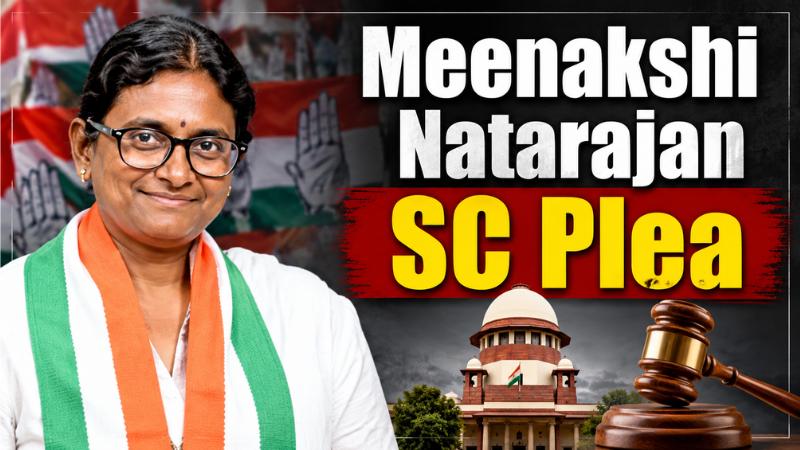
Congress leader Meenakshi Natarajan has moved the Supreme Court after her nomination for the Rajya Sabha election from Madhya Pradesh was rejected, turning the issue into a major political and legal controversy.
The case has gained attention because it could directly affect the Rajya Sabha contest in Madhya Pradesh and may also raise questions over how nomination disclosure rules are applied during elections.
Congress Challenges Rejection
The Congress has strongly objected to the Returning Officer’s decision to reject Natarajan’s nomination papers. A senior Congress delegation met the Election Commission in New Delhi and sought urgent intervention, arguing that the rejection was legally incorrect.
Senior advocate and Congress leader Abhishek Manu Singhvi said the ground used to reject the nomination was not valid under the election law. According to the party, the matter cited against Natarajan had not reached the stage where it was required to be disclosed as a pending criminal case.
Congress has argued that there was no cognisance taken by a competent court and no charges had been framed. The party said that a legal notice or preliminary proceeding cannot be treated the same as a criminal case that must be declared in an election affidavit.
BJP Defends Its Objection
The BJP has defended the objection raised against Natarajan’s nomination. Party leaders said the Congress candidate should have disclosed information related to a legal matter in Telangana.
BJP leader Sudhanshu Trivedi said the case was connected to a complaint filed by a woman Congress worker in Telangana against a party leader, in which Natarajan’s name was also mentioned. The BJP argued that candidates are expected to disclose relevant legal information while filing election papers.
Congress, however, rejected the BJP’s charge and called the rejection a political move aimed at weakening its chances in the Rajya Sabha election from Madhya Pradesh.
Why The Dispute Matters
The controversy is important because Madhya Pradesh has three Rajya Sabha seats in the current election cycle. With Natarajan’s nomination rejected, the BJP is expected to gain a major advantage in the contest.
The BJP candidates from Madhya Pradesh include Tarun Chugh, Rajneesh Agarwal, and Mahesh Kewat. If the rejection remains unchanged, the ruling party could move closer to securing all three seats without a serious contest from Congress.
For Congress, the issue is about more than one candidate. The party has framed the matter as a question of democratic fairness, election transparency, and the proper use of legal rules during nomination scrutiny.
Supreme Court Battle Ahead
Natarajan has said she continues to have faith in constitutional institutions and democratic processes. The Congress is now looking to the Supreme Court for relief after also placing its arguments before the Election Commission.
The Supreme Court plea is expected to be closely watched because the final decision could influence the Rajya Sabha contest in Madhya Pradesh before polling.
The row has now become one of the key political flashpoints in the state, with Congress claiming unfair rejection and the BJP insisting that the nomination was rightly cancelled over non-disclosure concerns.