
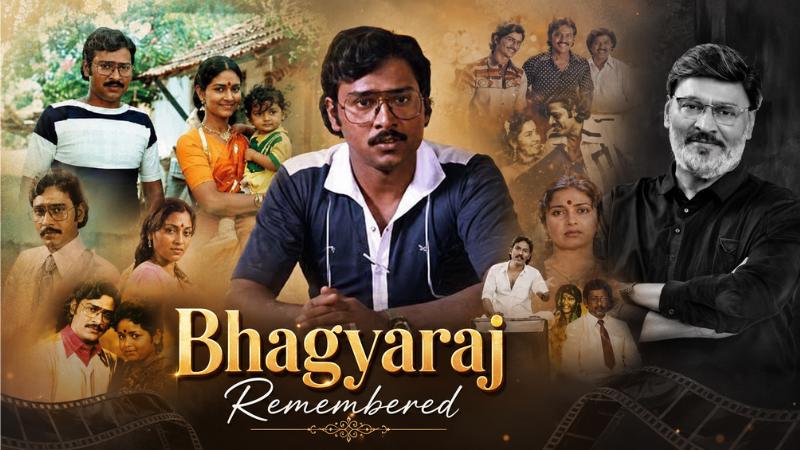
K Bhagyaraj Remembered: How The Screenplay King Changed Tamil Cinema
Chennai, June 29: Tamil cinema bid an emotional farewell to K Bhagyaraj, the celebrated “Screenplay King”, as the veteran filmmaker, actor, and writer was cremated with state honours in Chennai.
Bhagyaraj, who died on June 27 at the age of 73 after suffering a heart attack, leaves behind a five-decade legacy built on sharp screenplays, relatable characters, humour, family emotions, and stories rooted in everyday Tamil life.
His films, such as Mundhanai Mudichu, Andha 7 Naatkal, Mouna Geethangal, Chinna Veedu, and Thooral Ninnu Pochu, continue to be remembered for their strong writing, memorable characters, and lasting impact on Tamil cinema.
Final Farewell With State Honours
The last rites of K Bhagyaraj were held at the Besant Nagar crematorium in Chennai, where family members, film personalities, political leaders, and fans gathered to pay their final respects.
Tamil Nadu Chief Minister C. Joseph Vijay had earlier announced that state honours would be accorded to Bhagyaraj’s final journey in recognition of his contribution to Tamil cinema. The gesture reflected the respect and affection the filmmaker earned across generations.
CM Vijay also paid floral tributes to Bhagyaraj and offered condolences to his wife, former actor Poornima Bhagyaraj, and their children.
Rajinikanth and the Film Industry Pay Tribute
Superstar Rajinikanth was among the prominent personalities who paid tribute to Bhagyaraj. Several leading actors, directors, and film industry members also remembered him as one of Tamil cinema’s finest creative minds.
The mood across the film fraternity was one of shock and grief. Bhagyaraj’s passing came just weeks after the death of his mentor Bharathiraja, making it an especially emotional moment for Tamil cinema lovers.
For many fans and filmmakers, Bhagyaraj was not just a successful director. He was a writer who showed how strong a screenplay, humour, and ordinary characters could hold the audience without depending only on star power.
From Bharathiraja’s Assistant To Screenplay King
Bhagyaraj began his cinema journey as an assistant director to Bharathiraja and later created a unique identity as a writer-director-actor. He made his directorial debut with Suvarilladha Chiththirangal in 1979 and soon became known for films that placed the screenplay at the centre of storytelling.
Unlike many films of his time that relied heavily on larger-than-life heroes, Bhagyaraj often built stories around ordinary people, family problems, personal conflicts, and emotional choices. His screenplays moved with humour, drama, and carefully placed twists that felt natural to the story.
This rare command over writing earned him the popular title “Screenplay King”.
Films That Defined His Legacy
Bhagyaraj’s major works include Mouna Geethangal, Andha 7 Naatkal, Indru Poi Naalai Vaa, Thooral Ninnu Pochu, Mundhanai Mudichu, Dhaavani Kanavugal, Chinna Veedu, Enga Chinna Raasa, Idhu Namma Aalu, and Aararo Aariraro.
Many of his films were later remade in other languages, showing the strength of his stories beyond Tamil audiences. His writing worked because it came from familiar homes, villages, relationships, and social situations.
He had a special ability to turn simple moments into engaging cinema. A family argument, a romantic misunderstanding, a moral dilemma or a small comic situation could become the heart of a film in his hands.
How Bhagyaraj Wrote Memorable Women Characters
One of the most important parts of Bhagyaraj’s writing was the space he gave to women characters. Though he worked during a period when male stars dominated Tamil cinema, many of his films featured women who had strong personalities, clear emotions, and an important role in the story.
In films such as Mouna Geethangal, Andha 7 Naatkal, Chinna Veedu, and Dhaavani Kanavugal, women were not just supporting characters. They shaped the story, challenged the male lead, made difficult choices, and carried major emotional moments.
This helped his films connect strongly with family audiences, especially women viewers. His writing style belonged to an earlier era, but many of his characters are still discussed for the way they balanced humour, emotion, and dignity.
A Filmmaker Who Balanced Humour And Emotion
Bhagyaraj’s biggest strength was his ability to make audiences laugh while keeping them emotionally invested. His films rarely depended on one dramatic moment alone. Instead, he built situations slowly through humour, embarrassment, romance, family pressure, and social expectations.
His own screen image also helped. He often played the simple, innocent, or self-effacing man-next-door, making his characters easy for viewers to relate to.
That natural screen presence, combined with his writing, made him one of the most distinctive actor-directors in Tamil cinema.
Why Bhagyaraj Still Matters
Bhagyaraj’s contribution goes beyond box office success. He influenced a generation of filmmakers by proving that a screenplay could be the real hero of a film.
His stories were entertaining, but they also reflected family relationships, rural life, social values, and human behaviour. He understood how ordinary people spoke, argued, loved, and made mistakes. That understanding gave his films a lasting emotional connection.
For young writers and directors, his work remains a lesson in how to build scenes, hold audience attention, and make simple stories memorable.
Tamil Cinema Remembers Its Screenplay King
K Bhagyaraj’s death has left a deep void in Tamil cinema. For filmmakers, he remains a masterclass in screenplay writing. For actors, he remains an example of how performance and writing can work together. For audiences, he remains the storyteller behind films filled with laughter, emotion, and everyday truth.
As Tamil cinema remembers K Bhagyaraj, his legacy stands as a reminder that strong writing can outlive trends, stars, and generations.
His final journey ended with state honours, but his stories will continue to live on in Tamil cinema’s memory.