
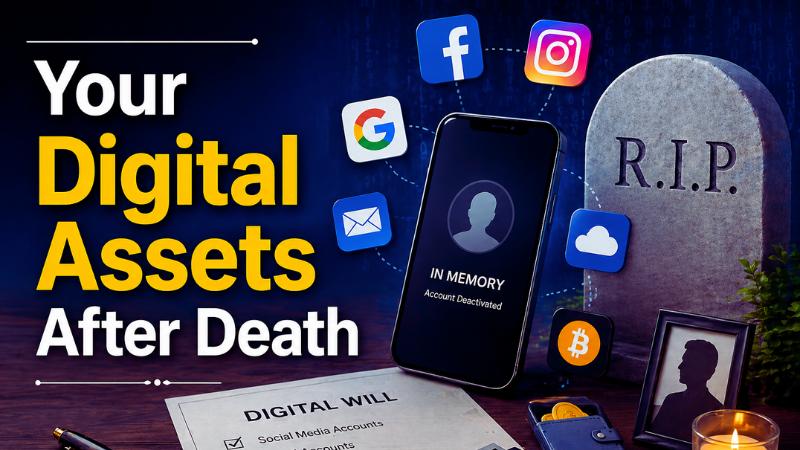
In today’s digital world, a significant part of our lives exists online—from social media accounts and emails to cloud storage and cryptocurrency investments. While people carefully plan the inheritance of physical assets like property and savings, digital assets are often overlooked. The question of what happens to accounts on platforms like Facebook and Instagram, or to crypto holdings, is becoming increasingly important.
To address this concern, India’s Ministry of Electronics and Information Technology is exploring the concept of a “digital legal heir.” This proposed framework would allow individuals to nominate someone who can legally access and manage their digital accounts after death, similar to how physical assets are passed on.
Digital assets today include social media profiles, email accounts, cloud storage, online businesses, and cryptocurrencies. These can carry both emotional and financial value. However, due to privacy protections, passwords, and security systems like OTP verification, families often struggle to access such accounts after a person’s death.
Cryptocurrency poses one of the biggest challenges. Without private keys or recovery phrases, funds can be permanently lost. Unlike traditional banking systems, there is no central authority to recover access, making prior planning essential for anyone holding digital currency.
Experts recommend simple steps such as enabling account recovery options, using platform-specific legacy tools, and securely documenting important access details. As our digital presence continues to grow, creating a digital will is becoming a necessary step to ensure that both memories and valuable assets are preserved and passed on without complications.