
India Approves QDENGA Dengue Vaccine for People Aged 4–60
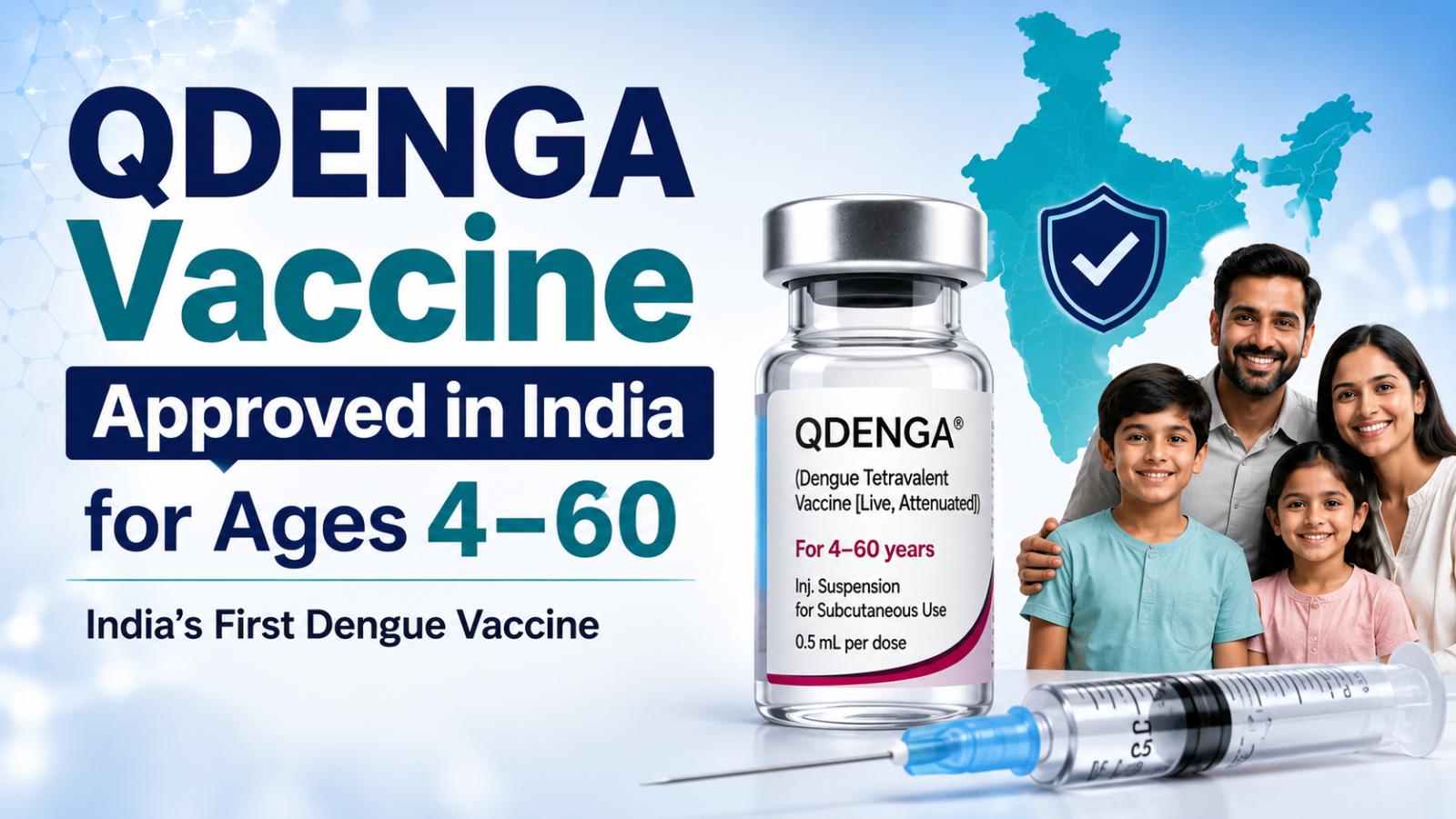
India has approved Takeda’s QDENGA as its first authorised dengue vaccine for people aged 4–60. The live-attenuated vaccine targets all four dengue virus serotypes and is administered in two doses, three months apart.India has approved QDENGA, making it the country’s first authorised vaccine for preventing dengue. The Drug Controller General of India has granted market authorisation for its use among people aged 4 to 60 years, marking an important development in India’s efforts to reduce dengue infections and hospitalisations.
Developed by Japanese pharmaceutical company Takeda, QDENGA is designed to protect against disease caused by all four dengue virus serotypes. The Indian approval allows the vaccine to be administered regardless of whether a person has previously had dengue, without requiring a pre-vaccination dengue exposure test.
QDENGA Vaccine India Age Limit
Under the approval granted by the Indian drug regulator, the QDENGA vaccine India age limit is from four to 60 years. This means eligible children, adolescents, and adults may receive the vaccine in accordance with its approved prescribing information and medical advice.
The Indian authorisation is broader than the World Health Organization’s public programme recommendation. WHO currently recommends considering QDENGA for children aged six to 16 years in places with high dengue transmission and a heavy disease burden. India’s regulatory approval, however, covers individuals aged four to 60 years.
How the QDENGA Vaccine Works
QDENGA, also known as TAK-003, is a tetravalent live-attenuated vaccine. It contains weakened versions of dengue virus serotypes 1, 2, 3, and 4, with the dengue type 2 strain forming the vaccine’s genetic backbone.
The vaccine is intended to prepare the immune system to recognise the virus and reduce the risk of symptomatic dengue and serious outcomes. Although it targets all four serotypes, protection may differ according to virus type, age, previous exposure, and local transmission conditions.
QDENGA Two-Dose Schedule in India
The approved vaccination course consists of two 0.5 mL injections administered three months apart. The vaccine is given as a subcutaneous injection, meaning it is injected beneath the skin.
People should complete both doses according to the recommended schedule unless a qualified healthcare professional advises otherwise. WHO’s information on TAK-003 also describes a two-dose series with a three-month interval.
What the Clinical Trials Found
India’s approval was supported by Takeda’s clinical-development programme, which included Phase 1, Phase 2, and Phase 3 studies involving more than 28,000 participants.
In the pivotal Phase 3 TIDES trial, the vaccine showed 80.2% efficacy against virologically confirmed dengue during the first year after the second dose. At 18 months, it showed 90.4% efficacy against dengue-related hospitalisation in the studied population.
Longer-term findings reported by Takeda showed 84.1% efficacy against dengue-related hospitalisation after four-and-a-half years. The company has also reported continued protection and no new safety signals during extended follow-up lasting up to seven years.
These percentages describe results from particular clinical-trial populations and follow-up periods. They should not be interpreted as a guarantee that every vaccinated individual will receive the same level of protection.
No Previous Dengue Test Required
A notable feature of the approval is that QDENGA may be used regardless of previous dengue exposure. Eligible recipients, therefore, do not need a blood test confirming an earlier dengue infection before receiving the vaccine.
This distinguishes QDENGA from some earlier dengue-vaccine approaches that were restricted to people with evidence of previous infection.
Availability and Price in India
DCGI market authorisation clears the regulatory path for QDENGA in India, but detailed information regarding its retail price, hospital availability, and possible inclusion in government immunisation programmes had not been officially announced at the time of approval.
Takeda has said it will work with Indian regulators, healthcare providers, and public-health stakeholders on the vaccine’s delivery and availability. The company also has a manufacturing partnership with Hyderabad-based Biological E., intended to expand global production capacity.
Vaccine Will Not Replace Mosquito Control
The approval offers India an additional tool against dengue, but vaccination alone cannot eliminate outbreaks. Preventing mosquito breeding, using repellents, covering water containers, and seeking timely medical attention will remain important.
Medical specialists have cautioned that the continued circulation of Aedes mosquitoes means vaccination must be combined with surveillance, community awareness, and vector-control programmes.
People considering QDENGA should consult a doctor or authorised vaccination centre to confirm eligibility, precautions and the appropriate dose schedule. Regulatory approval does not mean the vaccine will be suitable for every person within the approved age group.