
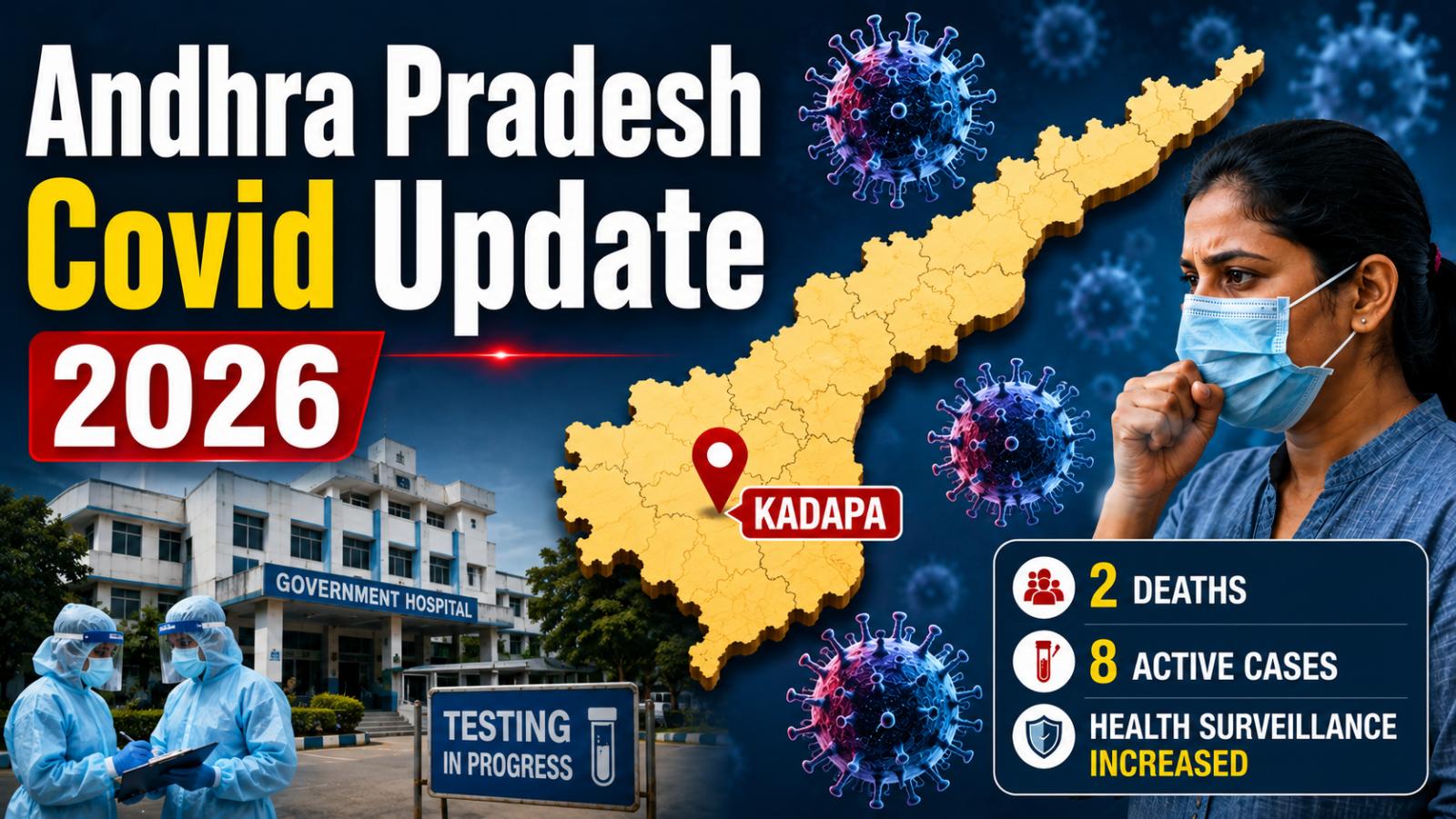
Kadapa Covid Cases Prompt Increased Health Surveillance in Andhra Pradesh
Updated: July 15, 2026, Andhra Pradesh has strengthened Covid-19 surveillance after two people who tested positive for the virus died and eight active cases were reported in YSR Kadapa district. State health officials have described the infections as sporadic and said the situation should not be treated as evidence of a fresh outbreak.
Rapid response teams have been deployed, close contacts are being tested, and samples have been sent for genome sequencing. Officials said on July 14 that no additional cases had been reported for six consecutive days, indicating that the infections had remained limited at that stage.
Two Deaths Reported Among Covid-Positive Patients
The first patient was a 60-year-old man from Rajampet who had underlying health conditions, including diabetes and kidney disease. He died on June 28 while receiving treatment at Christian Medical College in Vellore after initially being admitted to a hospital in Tirupati. A postmortem RT-PCR test confirmed that he was positive for COVID-19.
The second patient was a 46-year-old man admitted to the Government General Hospital in Kadapa with persistent coughing, severe breathlessness and a serious lung infection. He died on July 7 after developing pneumonia and extensive damage to both lungs.
Although both patients tested positive, COVID-19 may not have been the only factor involved in their deaths. Existing illnesses and other medical complications are also considered when doctors assess the cause and severity of a patient’s condition.
Eight Active Covid Cases Identified in Kadapa
Health officials reported eight active COVID-19 cases in YSR Kadapa district.
According to Andhra Pradesh Health Secretary S Suresh Kumar, five cases were detected in Kadapa, and the remaining three were identified among their contacts. Authorities began testing people in the affected localities and monitoring those who had recently interacted with the patients.
Samples were collected from around 40 people. Eighteen tested negative, while the remaining results were awaited at the time of reporting. Officials also instructed infected patients to isolate where necessary to prevent further transmission.
Rapid Response Teams and Control Room Activated
The Andhra Pradesh Health Department deployed rapid response teams to carry out contact tracing, testing, and local surveillance.
A round-the-clock command-and-control room was established in Kadapa to coordinate the response. Hospitals were directed to maintain isolation facilities, follow infection-control procedures, and remain prepared to manage suspected cases.
Public-awareness programmes and sanitation measures were also increased in the affected areas. Officials have urged residents to report respiratory symptoms and follow medical advice rather than relying on unverified information circulated through social media.
Samples Sent for Genome Sequencing
Throat and nasal swabs from the affected patients, including the two people who died, were sent to the National Institute of Virology in Pune for genome sequencing.
The testing is intended to identify the circulating lineage and determine whether the infections are connected to an existing Omicron descendant or another variant. The sequencing results were still awaited on July 14.
State officials said a committee of five specialists had found no immediate evidence of a new subvariant. However, continued monitoring is necessary until laboratory analysis and contact-tracing investigations are completed.
Do the Andhra Pradesh Cases Indicate a New Covid Wave?
The available information does not currently indicate a widespread COVID-19 wave in Andhra Pradesh or across India.
Health Secretary S Suresh Kumar said no new cases had been reported for six days and described the Kadapa infections as a sporadic incident rather than an outbreak. The cases had also not been linked to a rapid increase in hospital admissions or widespread community transmission at the time of reporting.
COVID-19 continues to circulate, and isolated cases or small clusters can occur without developing into a major wave. Health authorities generally examine test positivity, hospital admissions, severe illness, deaths, and geographical spread before determining whether a larger outbreak is underway.
Odisha Increases Border Surveillance
Neighbouring Odisha increased Covid-19 surveillance following reports of the Kadapa cases.
Districts bordering Andhra Pradesh were asked to strengthen monitoring, testing, and healthcare preparedness. Odisha health officials said the measures were precautionary and intended to detect infections early, particularly during increased interstate travel and large public gatherings.
No travel restrictions or border closures were announced in the reports reviewed for this update.
Who Should Take Extra Precautions?
Most people infected with COVID-19 experience mild or moderate illness. However, older adults and people with certain underlying health conditions face a greater risk of severe complications.
Additional caution is advised for:
- Senior citizens
- Pregnant women
- People with weakened immune systems
- Patients with diabetes or kidney disease
- People with chronic heart or lung conditions
- Cancer patients and transplant recipients
People in these groups should seek medical advice promptly if they develop fever, coughing, breathing difficulties or other worsening symptoms.
COVID-19 Symptoms to Monitor
Common Covid-19 symptoms include fever, coughing, tiredness, and changes in taste or smell. Some patients may also experience a sore throat, headache, body pain, diarrhoea, or nasal congestion.
Serious warning signs include:
- Difficulty breathing or shortness of breath
- Persistent chest pain
- Confusion
- Loss of speech or mobility
- A rapid worsening of respiratory symptoms
People experiencing serious symptoms should seek immediate medical attention.
Precautions People Can Follow
People who develop a fever, cough, cold symptoms, or breathing problems should stay home whenever possible and avoid close contact with others until they recover or receive medical guidance.
Practical precautions include wearing a properly fitted mask in hospitals or poorly ventilated crowded spaces, keeping indoor areas ventilated, washing hands regularly and covering the mouth and nose while coughing or sneezing.
Symptomatic individuals should also avoid unnecessary contact with elderly people and those with weakened immunity. WHO advises people who feel unwell to stay home and follow the guidance issued by local health authorities.
Situation Remains Under Observation
The Andhra Pradesh Covid alert reflects increased preparedness following a small cluster of cases in Kadapa. Officials have not declared a new outbreak, and the absence of additional infections for several days is an encouraging sign.
However, contact tracing, laboratory testing, and genome sequencing remain important for understanding the cluster and preventing further transmission.
The appropriate public response is caution rather than panic. People should monitor symptoms, protect vulnerable family members, and follow updates issued by government health departments and qualified medical professionals.
Medical Disclaimer: This article is intended for general informational purposes only. It is not a substitute for medical diagnosis, testing, or treatment from a qualified healthcare professional.