














#liquor
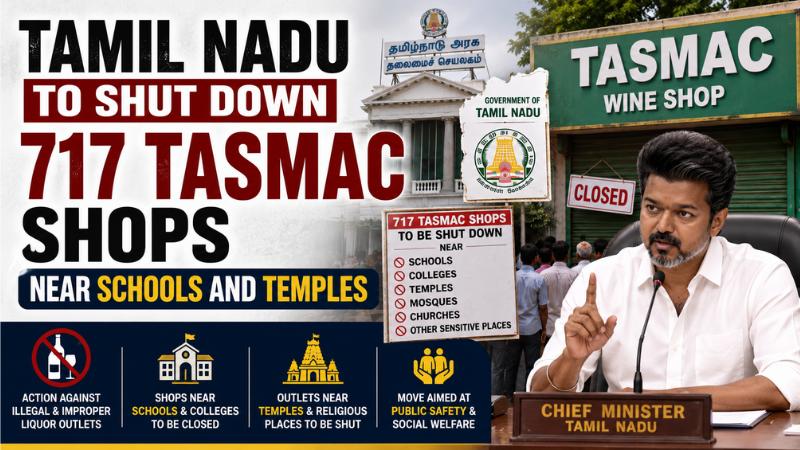
Tamil Nadu To Shut Down 717 TASMAC Shops Near Schools And Temples
Tamil Nadu To Shut Down 717 TASMAC Liquor Shops Near Schools And Temples CM Vijay Orders Major Crackdown On Liquor Outlets Across State Tamil Nadu Chief Minister Vijay has ordered the closure of 717 TASMAC liquor outlets located near schools, colleges, temples, mosques, churches, and other sensitive public places across the state. The decision is being seen as a major government policy move aimed at improving public safety and reducing the social impact of liquor sales near educational and religious institutions. Officials said the action follows increasing public complaints regarding liquor shops operating close to schools and places of worship. The Tamil Nadu government has directed authorities to immediately identify and shut down outlets violating distance and location norms. The move is expected to affect several districts where TASMAC outlets were functioning in densely populated residential and public areas. Government Focuses On Public Welfare And Safety The Vijay-led administration stated that the decision was taken to protect students, women, and local communities from disturbances linked to liquor consumption near sensitive zones. Authorities also stressed that public welfare and social responsibility remain key priorities of the government. The closure of TASMAC shops is likely to impact state liquor revenue temporarily, but officials indicated that the government is prioritising public interest over commercial considerations. Residents and social organisations across Tamil Nadu have welcomed the decision, calling it a positive step toward improving the social environment near schools and religious places. The government is also expected to strengthen monitoring mechanisms to ensure future liquor outlets comply with state regulations and location restrictions.
Tamil Nadu To Shut Down 717 TASMAC Shops Near Schools And Temples
Tamil Nadu To Shut Down 717 TASMAC Liquor Shops Near Schools And Temples CM Vijay Orders Major Crackdown On Liquor Outlets Across State Tamil Nadu Chief Minister Vijay has ordered the closure of 717 TASMAC liquor outlets located near schools, colleges, temples, mosques, churches, and other sensitive public places across the state. The decision is being seen as a major government policy move aimed at improving public safety and reducing the social impact of liquor sales near educational and religious institutions. Officials said the action follows increasing public complaints regarding liquor shops operating close to schools and places of worship. The Tamil Nadu government has directed authorities to immediately identify and shut down outlets violating distance and location norms. The move is expected to affect several districts where TASMAC outlets were functioning in densely populated residential and public areas. Government Focuses On Public Welfare And Safety The Vijay-led administration stated that the decision was taken to protect students, women, and local communities from disturbances linked to liquor consumption near sensitive zones. Authorities also stressed that public welfare and social responsibility remain key priorities of the government. The closure of TASMAC shops is likely to impact state liquor revenue temporarily, but officials indicated that the government is prioritising public interest over commercial considerations. Residents and social organisations across Tamil Nadu have welcomed the decision, calling it a positive step toward improving the social environment near schools and religious places. The government is also expected to strengthen monitoring mechanisms to ensure future liquor outlets comply with state regulations and location restrictions.
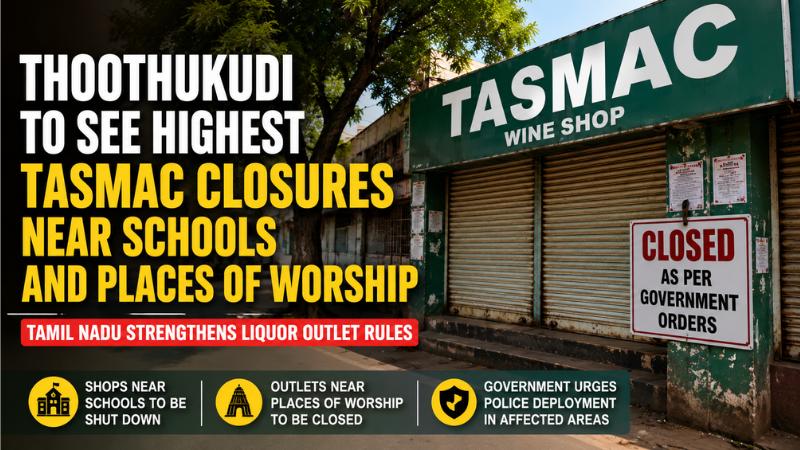
Thoothukudi Faces Highest Tasmac Shop Closures Near Schools & Temples
Thoothukudi is expected to witness the highest number of Tasmac liquor shop closures in Tamil Nadu as authorities move forward with shutting down outlets located near schools, colleges, and places of worship. The action comes as part of ongoing efforts to enforce regulations regarding the placement of state-run liquor shops in sensitive public areas. According to reports, several outlets across the Madurai region are likely to be affected by the closure drive. Employees working at T
Thoothukudi Faces Highest Tasmac Shop Closures Near Schools & Temples
Thoothukudi is expected to witness the highest number of Tasmac liquor shop closures in Tamil Nadu as authorities move forward with shutting down outlets located near schools, colleges, and places of worship. The action comes as part of ongoing efforts to enforce regulations regarding the placement of state-run liquor shops in sensitive public areas. According to reports, several outlets across the Madurai region are likely to be affected by the closure drive. Employees working at T
Liquor Prices Set To Increase As Karnataka Revamps Excise Policy
The Karnataka government has proposed a major overhaul of its excise policy, introducing wide-ranging changes that could reshape the state’s liquor industry. The draft amendments aim to modernise regulations, simplify processes, and revise taxation, but have also raised concerns about transparency and consumer awareness. One of the most debated prop
Liquor Prices Set To Increase As Karnataka Revamps Excise Policy
The Karnataka government has proposed a major overhaul of its excise policy, introducing wide-ranging changes that could reshape the state’s liquor industry. The draft amendments aim to modernise regulations, simplify processes, and revise taxation, but have also raised concerns about transparency and consumer awareness. One of the most debated prop
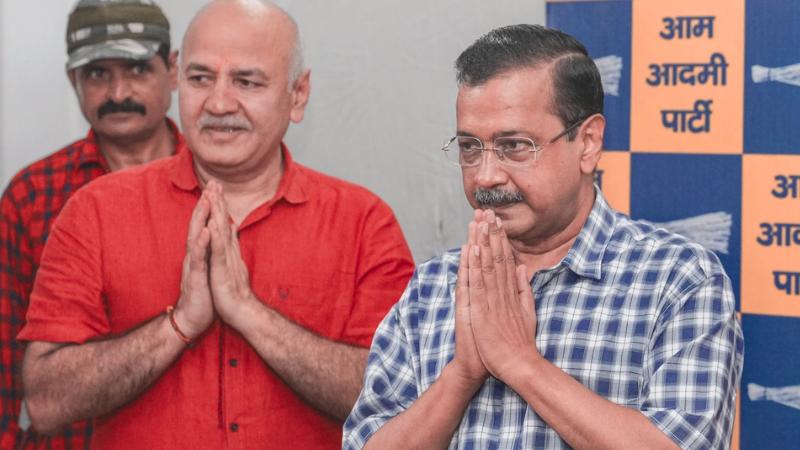
Delhi Excise Policy Case: Arvind Kejriwal, Manish Sisodia Receive Court Relief
In a significant legal development, Delhi Chief Minister Arvind Kejriwal and former Deputy Chief Minister Manish Sisodia have been discharged from the controversial Delhi excise policy case. A Delhi court ruled that the Central Bureau of Investigation (CBI) had failed to present substantial evidence to support the serious charges against the two leaders, effectively clearing them of the allegations. The court's decision highlighted the absence of material evidence to support the claim that Kejriwal played a central role in the alleged corruption surrounding the excise policy. The judge emphasized that such serious accusations, especially involving a prominent figure like the Chief Minister, required solid, verifiable evidence. Without this, the prosecution's claims could not be sustained. The court further noted that accepting unproven allegations could erode public trust in the office of the Chief Minister and in the political process as a whole. Manish Sisodia was also discharged by the court, which found that the prosecution's case did not hold up under judicial scrutiny. There was no evidence suggesting criminal intent on his part. The documents and statements related to the formulation of the excise policy were primarily administrative in nature and did not point to corruption or wrongdoing, weakening the prosecution's narrative. The prosecution’s conspiracy theory, which alleged an overarching plot involving both Kejriwal and Sisodia, was found to be lacking. The court identified internal contradictions within the claims and concluded that the policy formulation process had involved consultations at various government levels and institutional deliberations, none of which indicated illicit activity. This breakdown further undermined the prosecution's case. The court's ruling marks a major setback for the prosecution, underscoring the challenges in proving political and administrative corruption cases when key allegations lack corroborated evidence. The acquittals of Kejriwal and Sisodia raise questions about the strength of charges against political figures and the use of public office in such investigations. For Arvind Kejriwal, the discharge clears his name in this high-profile case, which has attracted significant attention from both political observers and the public. Kejriwal has long argued that the case against him was politically motivated, aimed at damaging the Aam Aadmi Party’s (AAP) image ahead of elections. This ruling could prove to be a pivotal moment in his political career, potentially strengthening his position as a leader who has been unjustly targeted.
Delhi Excise Policy Case: Arvind Kejriwal, Manish Sisodia Receive Court Relief
In a significant legal development, Delhi Chief Minister Arvind Kejriwal and former Deputy Chief Minister Manish Sisodia have been discharged from the controversial Delhi excise policy case. A Delhi court ruled that the Central Bureau of Investigation (CBI) had failed to present substantial evidence to support the serious charges against the two leaders, effectively clearing them of the allegations. The court's decision highlighted the absence of material evidence to support the claim that Kejriwal played a central role in the alleged corruption surrounding the excise policy. The judge emphasized that such serious accusations, especially involving a prominent figure like the Chief Minister, required solid, verifiable evidence. Without this, the prosecution's claims could not be sustained. The court further noted that accepting unproven allegations could erode public trust in the office of the Chief Minister and in the political process as a whole. Manish Sisodia was also discharged by the court, which found that the prosecution's case did not hold up under judicial scrutiny. There was no evidence suggesting criminal intent on his part. The documents and statements related to the formulation of the excise policy were primarily administrative in nature and did not point to corruption or wrongdoing, weakening the prosecution's narrative. The prosecution’s conspiracy theory, which alleged an overarching plot involving both Kejriwal and Sisodia, was found to be lacking. The court identified internal contradictions within the claims and concluded that the policy formulation process had involved consultations at various government levels and institutional deliberations, none of which indicated illicit activity. This breakdown further undermined the prosecution's case. The court's ruling marks a major setback for the prosecution, underscoring the challenges in proving political and administrative corruption cases when key allegations lack corroborated evidence. The acquittals of Kejriwal and Sisodia raise questions about the strength of charges against political figures and the use of public office in such investigations. For Arvind Kejriwal, the discharge clears his name in this high-profile case, which has attracted significant attention from both political observers and the public. Kejriwal has long argued that the case against him was politically motivated, aimed at damaging the Aam Aadmi Party’s (AAP) image ahead of elections. This ruling could prove to be a pivotal moment in his political career, potentially strengthening his position as a leader who has been unjustly targeted.


