
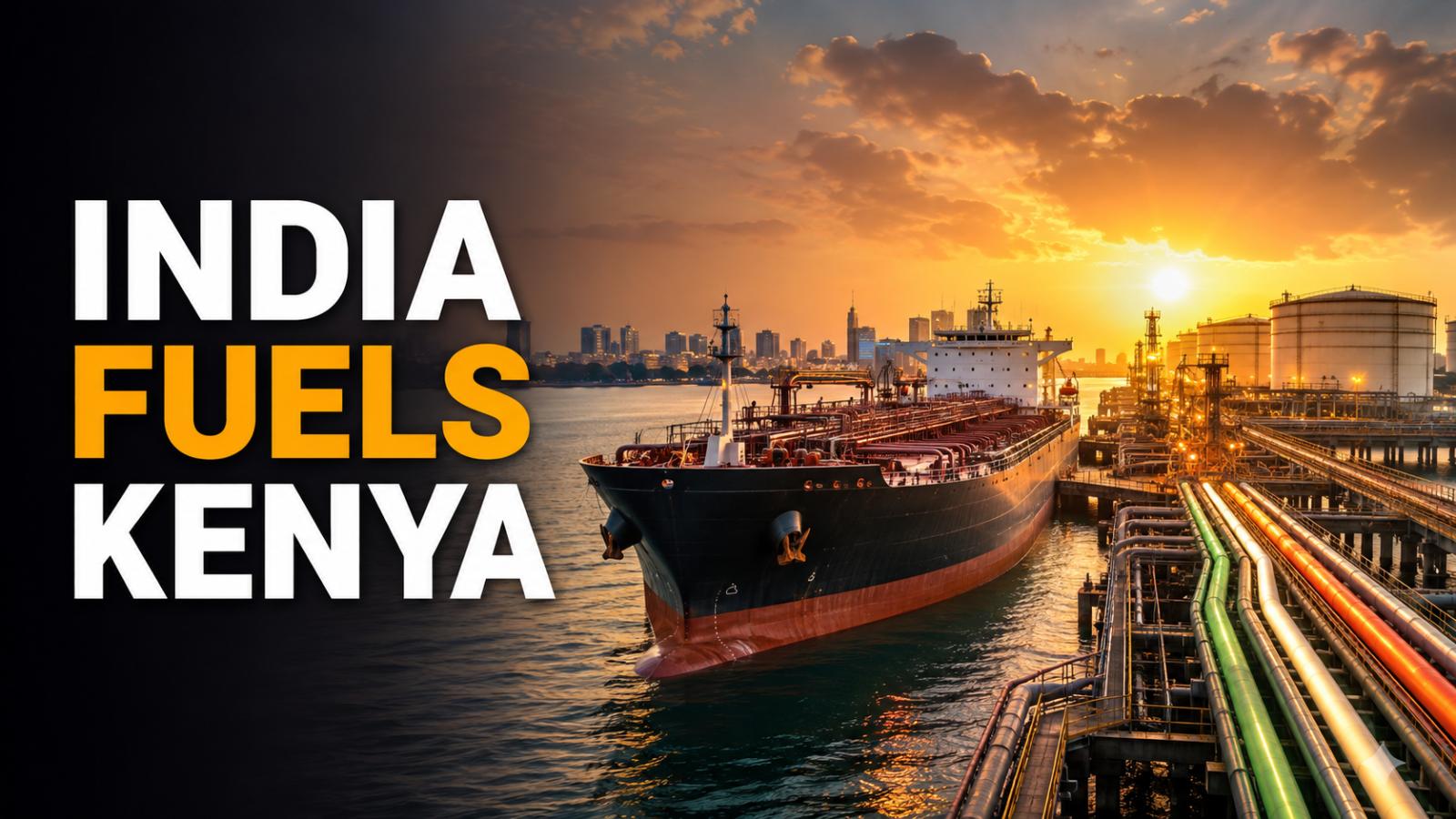
Nairobi, Kenya: India has emerged as a major fuel supplier as Kenya replaces declining Gulf shipments without suffering a significant import shortage.
India Fuel Exports To Kenya Rise As Gulf Shipments Decline
India has emerged as one of Kenya’s leading suppliers of refined petroleum products as conflict-related disruptions in West Asia reshape established energy trade routes.
Shipping and commodity-market data indicate that Indian refiners supplied increasing volumes of petrol, diesel, jet fuel and fuel oil to Kenya during the first eight months of 2026. The shift has reduced Kenya’s dependence on Gulf producers, particularly the United Arab Emirates and Saudi Arabia.
Kpler data cited by energy economist Anas Alhajji indicated that India had effectively displaced the two Gulf countries as Kenya’s leading supplier across several major fuel categories. The change reflects the ability of Indian refiners to redirect cargoes quickly when geopolitical disruptions affect traditional markets.
India’s overall exports to Kenya increased by 151.41 per cent in value in July 2026 compared with the same month in 2025. The increase included multiple product categories, with petroleum products contributing significantly to the broader trade growth.
Kenya Fuel Imports Remain Stable Despite Supplier Reshuffle
The UAE had been Kenya’s dominant fuel supplier for years, shipping around 90,000 barrels per day to the East African country in January 2026. By August, UAE shipments had fallen to approximately 15,000 barrels per day, according to market-tracking estimates.
Despite that steep decline, Kenya’s total petroleum-product imports did not collapse. The country imported approximately 200,000 barrels per day in July and 185,000 barrels per day in August.
These volumes suggest that Kenya experienced a major change in suppliers rather than a severe nationwide fuel shortage. Cargoes from India and other markets helped replace supplies previously sourced from Gulf producers.
Vortexa data cited in industry reports showed that approximately 60,000 tonnes of gasoline moved from India to Kenya in April alone. The shipment highlights the growing role of Indian refineries in maintaining Kenya’s petrol supplies during a period of uncertainty across global energy markets.
West Asia War Redirects Indian Fuel Cargoes Towards Africa
Conflict in West Asia has disrupted shipping, fuel production and established supply arrangements across the region. Kenya temporarily eased petrol and diesel quality standards in May to widen its sourcing options during the supply disruption.
Indian refiners benefited from strong refining margins and growing demand from African buyers. India exported an estimated 1.526 million barrels per day of refined fuels in July, reaching a one-year high and standing 27 per cent above the previous 12-month average.
Africa captured 37.6 per cent of India’s refined-product exports in July, making it the most attractive overseas market for Indian fuel suppliers. India’s petroleum-product exports to the continent reportedly rose 66 per cent year-on-year during the month.
The changing trade pattern strengthens India’s position as a flexible refining and export hub. It also gives Kenya a new supply channel at a time when deliveries from its traditional Gulf partners remain uncertain.
Dangote Kenya Refinery Could Transform Future Import Needs
Kenya’s reliance on imported petroleum products could change again if the proposed Dangote refinery moves forward. Dangote Industries is planning a large refinery at Lamu that could supply Kenya and neighbouring East African markets.
The proposed facility is expected to have a processing capacity of about 700,000 barrels per day. The company has selected a site, started soil testing and begun design and engineering work, but construction and financing must still progress before production can begin.
Dangote Industries plans to finance the project through internal cash flow, bonds and proceeds from a proposed initial public offering. Until the facility becomes operational, Kenya will remain dependent on overseas refineries. India is therefore positioned to retain a significant role in the country’s fuel supply, particularly if instability continues to affect production and shipping in West Asia.