
What the Seven-Year Green Card Proposal Means
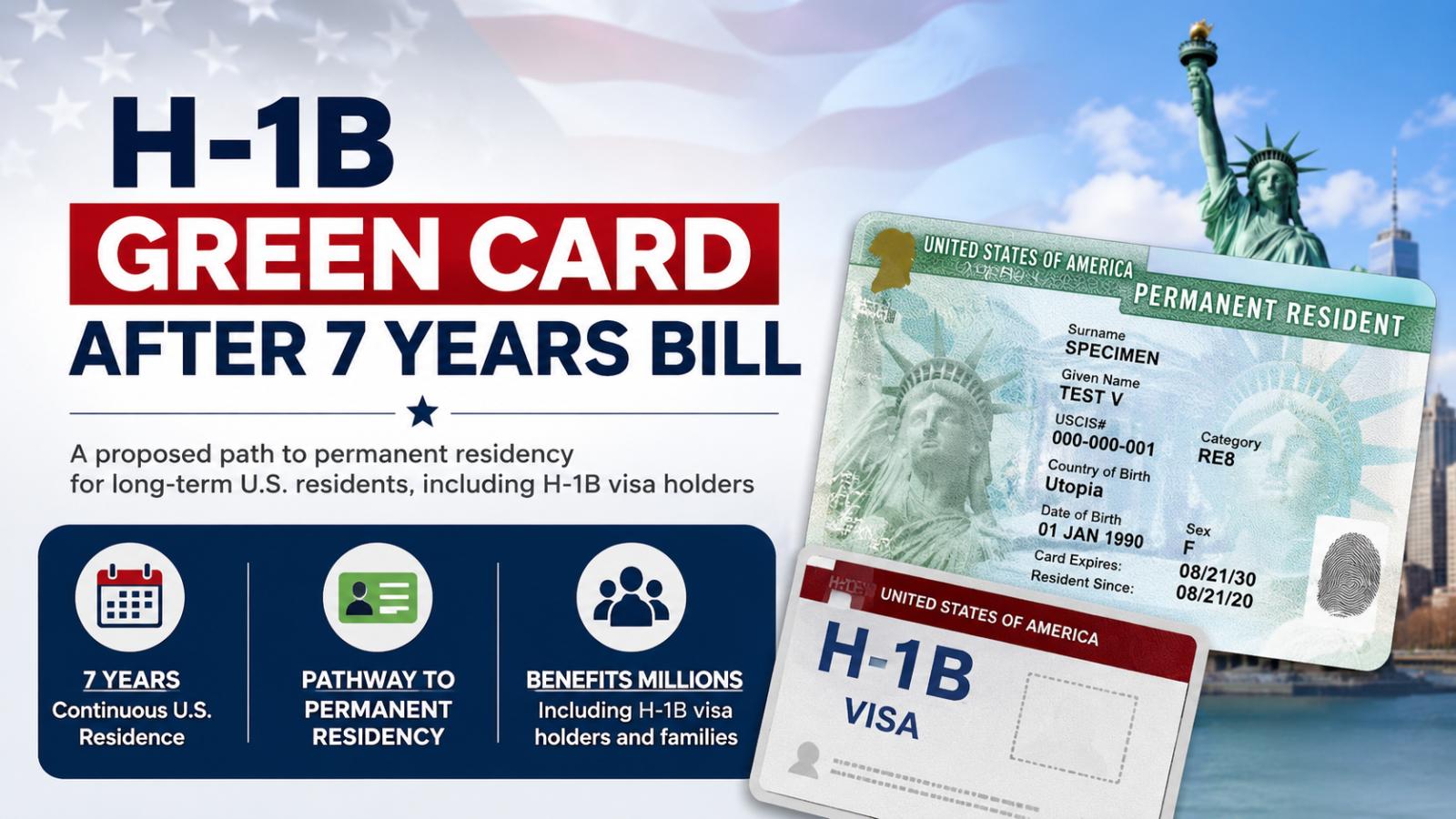
A US senator has renewed efforts to establish a rolling seven-year residency requirement under the immigration Registry system. The proposal could allow qualifying H-1B professionals and other long-term residents to apply for permanent residency.
US Senator Revives 7-Year Green Card Pathway for H-1B Holders
The H-1B green card after 7 years bill has returned to the spotlight after California Senator Alex Padilla renewed his campaign for a major change to the United States immigration Registry system.
The proposal could allow qualifying immigrants who have continuously lived in the US for at least seven years to apply for lawful permanent resident status. However, it remains proposed legislation and has not created a new green card rule for H-1B visa holders.
Padilla renewed his call on July 27, 2026, for Congress to approve the Renewing Immigration Provisions of the Immigration Act of 1929. His office said the measure could potentially create a green card pathway for more than eight million long-term residents.
What Is the H-1B Green Card After 7 Years Bill?
The legislation seeks to amend Section 249 of the Immigration and Nationality Act, commonly known as the Registry provision.
Under existing law, the Registry may permit certain people who entered the US before January 1, 1972, and maintained continuous residence to seek permanent residency, provided they satisfy the remaining legal requirements. The cutoff was last updated by Congress in 1986 and now benefits very few applicants.
Padilla’s proposal would replace the fixed 1972 date with a rolling requirement. An individual could potentially qualify after entering the United States at least seven years before filing an application. The draft states that the amendment would take effect 60 days after enactment.
This does not mean that every person completing seven years in the country would automatically receive a green card. Applicants would still need to meet applicable eligibility, admissibility, and character requirements.
Who Could Benefit From the Seven-Year Residency Proposal?
The proposal is not limited to H-1B professionals. Padilla’s office says potential beneficiaries could include Dreamers, Temporary Protected Status holders, children of long-term visa holders, essential workers, and highly skilled foreign professionals.
H-1B visa holders are specifically mentioned because many have spent years in the US while waiting for an employment-based immigrant visa number to become available.
The seven-year requirement could provide an alternative route for some qualifying workers instead of relying entirely on the conventional employment-based green card process.
Eligibility would nevertheless depend on the final wording of the legislation, an applicant’s immigration history and the rules applied if the measure becomes law.
Why the Proposal Matters to Indian H-1B Professionals
Indian technology, healthcare, engineering, and scientific professionals form an important part of the H-1B workforce. Many remain in temporary visa status for long periods while their permanent-residency applications progress.
A rolling Registry date could therefore be significant for Indian professionals who have established long-term residence in the US. It could also help some dependent children of employment visa holders who face uncertainty as they approach the age limit for dependent status.
However, the legislation should not be presented as an approved shortcut or automatic green card programme. It would first need to complete the US legislative process, and qualifying applicants would still have to submit applications and satisfy the relevant legal conditions.
What Happens Next?
The measure is backed by several Democratic senators, while companion legislation is being led in the House of Representatives by Representative Zoe Lofgren. More than 30 labour, immigration, and community organisations have also endorsed the proposal.
Its future remains uncertain because congressional support and approval would be required before the Registry rules could change.
For now, H-1B holders should continue following their existing visa and green card procedures. The renewed campaign represents a potentially important immigration reform proposal, but it does not yet change anyone’s immigration status or current eligibility.