
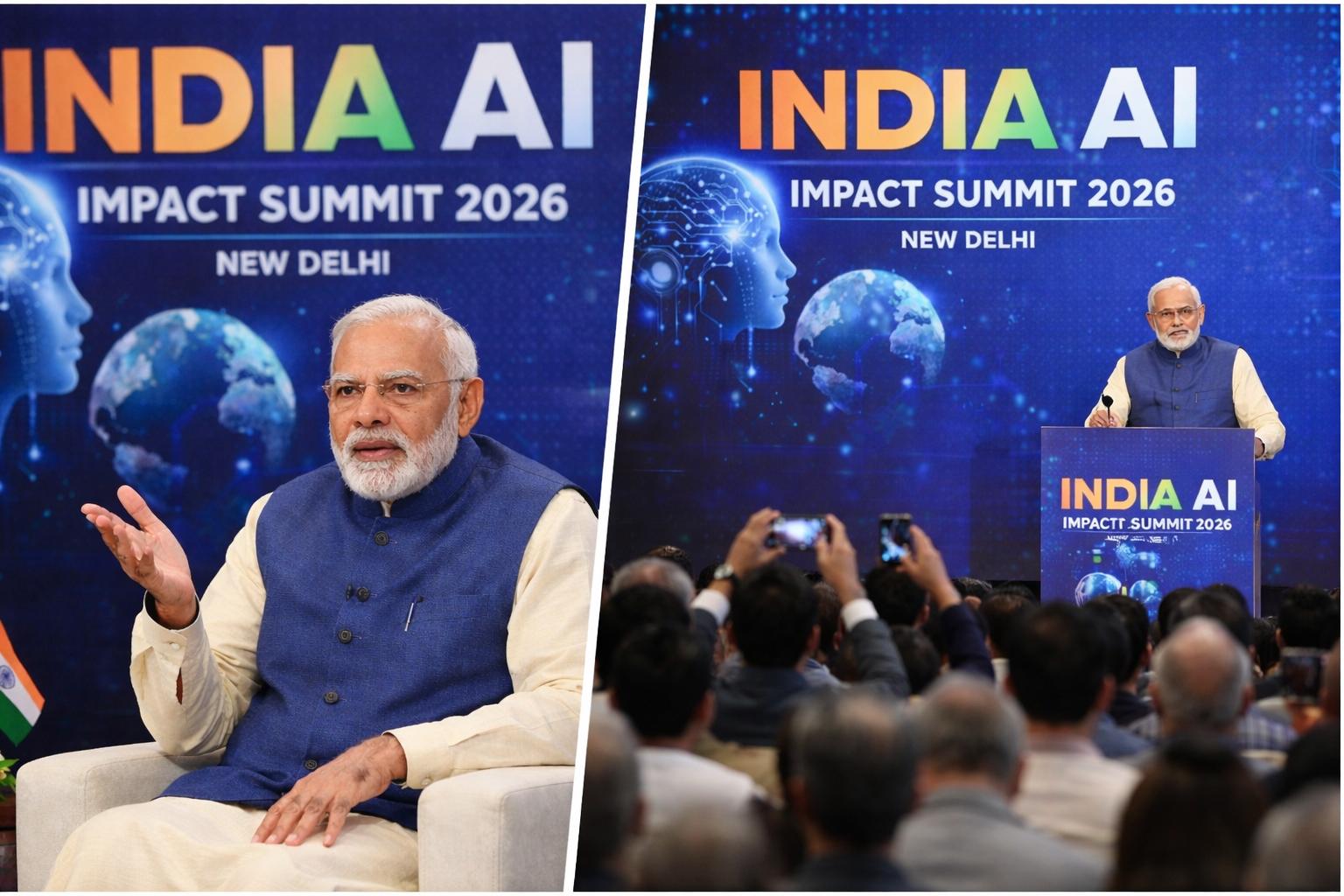
The high-profile summit, being hosted in the Global South for the first time at this scale, has brought together policymakers, technology leaders, and industry experts from across the world. In an interview with ANI, the Prime Minister laid out a clear vision for India to rank among the top three artificial intelligence powers globally, guided by the principles of innovation, technological sovereignty, and inclusive growth.
Modi said the idea of Aatmanirbhar Bharat is rooted in building strong domestic capabilities in critical technologies like artificial intelligence. He emphasized that India’s vast pool of skilled youth, thriving startup ecosystem, and expanding digital infrastructure provide a strong foundation for AI leadership. According to him, Indian-developed AI models should not only solve domestic challenges but also serve global markets.
Highlighting the potential impact on everyday life, the Prime Minister noted that AI can significantly boost manufacturing productivity, improve governance delivery, and create new employment opportunities. He urged young innovators and entrepreneurs to focus on building AI tools that address India’s unique needs, particularly in sectors such as agriculture, small businesses, and women-led enterprises.
Modi pointed to successful early examples already underway. He cited the dairy cooperative Amul, which is using artificial intelligence to deliver real-time advisory services in Gujarati to more than 36 lakh women dairy farmers, helping them monitor cattle health and improve milk productivity. He also referred to the Bharat Vistaar initiative, which integrates AI into crop advisory, soil analysis, and weather intelligence systems to support farmers in making more informed local decisions.
At the same time, the Prime Minister flagged concerns about potential bias in artificial intelligence systems. He warned that AI tools trained largely on English-language or urban datasets may not effectively serve India’s diverse rural population and regional language speakers. Addressing these gaps, he said, will require sustained global cooperation, ethical AI frameworks, and continuous dialogue among nations.
The India AI Impact Summit 2026 continues to focus on building such collaborative approaches, with India positioning itself as a key voice in promoting responsible, inclusive, and innovation-driven artificial intelligence for the world.