

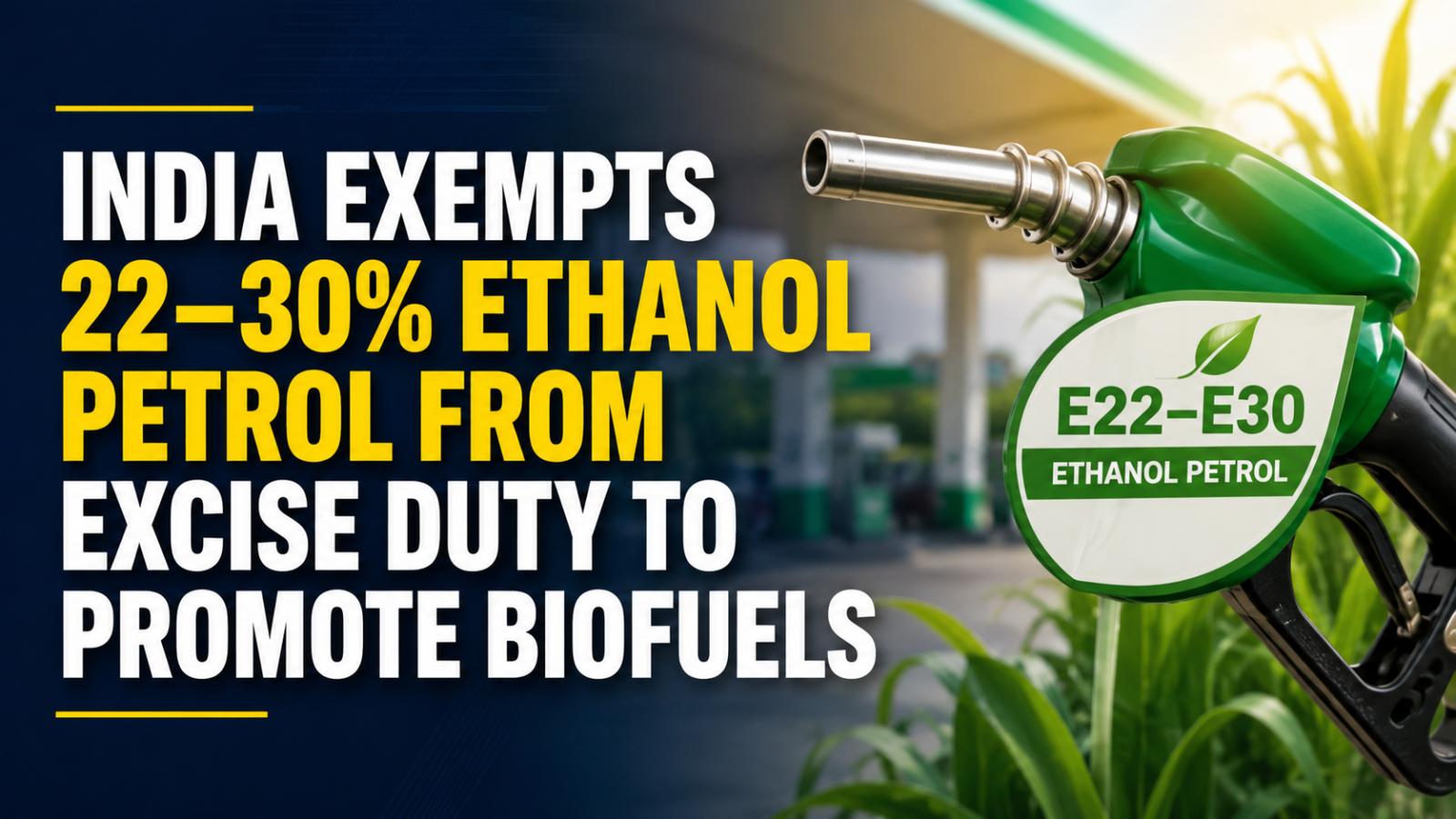
Excise Relief For High-Ethanol Petrol
India has exempted petrol blended with 22% to 30% ethanol from central excise duty, giving a major push to the country’s biofuel adoption strategy. The exemption covers higher ethanol fuel blends such as E22, E25 and E30. By reducing the tax burden on these blends, the government aims to make ethanol-rich petrol more attractive for fuel producers, distributors and future consumers while reducing reliance on imported crude oil.
Support For Domestic Biofuel Production
The policy supports India’s broader plan to expand the use of locally produced renewable fuels and improve energy security. Ethanol in India is largely produced from sugarcane and other agricultural feedstocks, creating additional demand for farm-based raw materials. As crude oil prices remain uncertain in global markets, increasing ethanol blending can help India manage import costs, promote domestic fuel alternatives and provide a stronger market for farmers and ethanol producers.
No Immediate Change For Most Consumers
The excise duty exemption does not mean petrol prices will immediately fall for regular motorists. Most petrol currently sold at retail fuel stations contains lower ethanol levels and will continue under existing pricing rules. The wider rollout of E22, E25 and E30 petrol will depend on blending capacity, distribution infrastructure, fuel station availability and vehicle compatibility. Many vehicles on Indian roads are not yet approved for petrol blends above 20%, making large-scale adoption a gradual process.
Long-Term Shift In India’s Fuel Market
The move sends a clear message that higher ethanol petrol will play a bigger role in India’s transport fuel future. If oil companies expand supply chains and automakers support compatible engines, E22, E25 and E30 fuels could become more widely available over time. In the long run, the policy may help reduce crude oil imports, support cleaner fuel choices, strengthen rural economies linked to ethanol production and build a more resilient domestic biofuel ecosystem.