
H-1B Visa Rules From August: Indians Face Fresh Hurdles
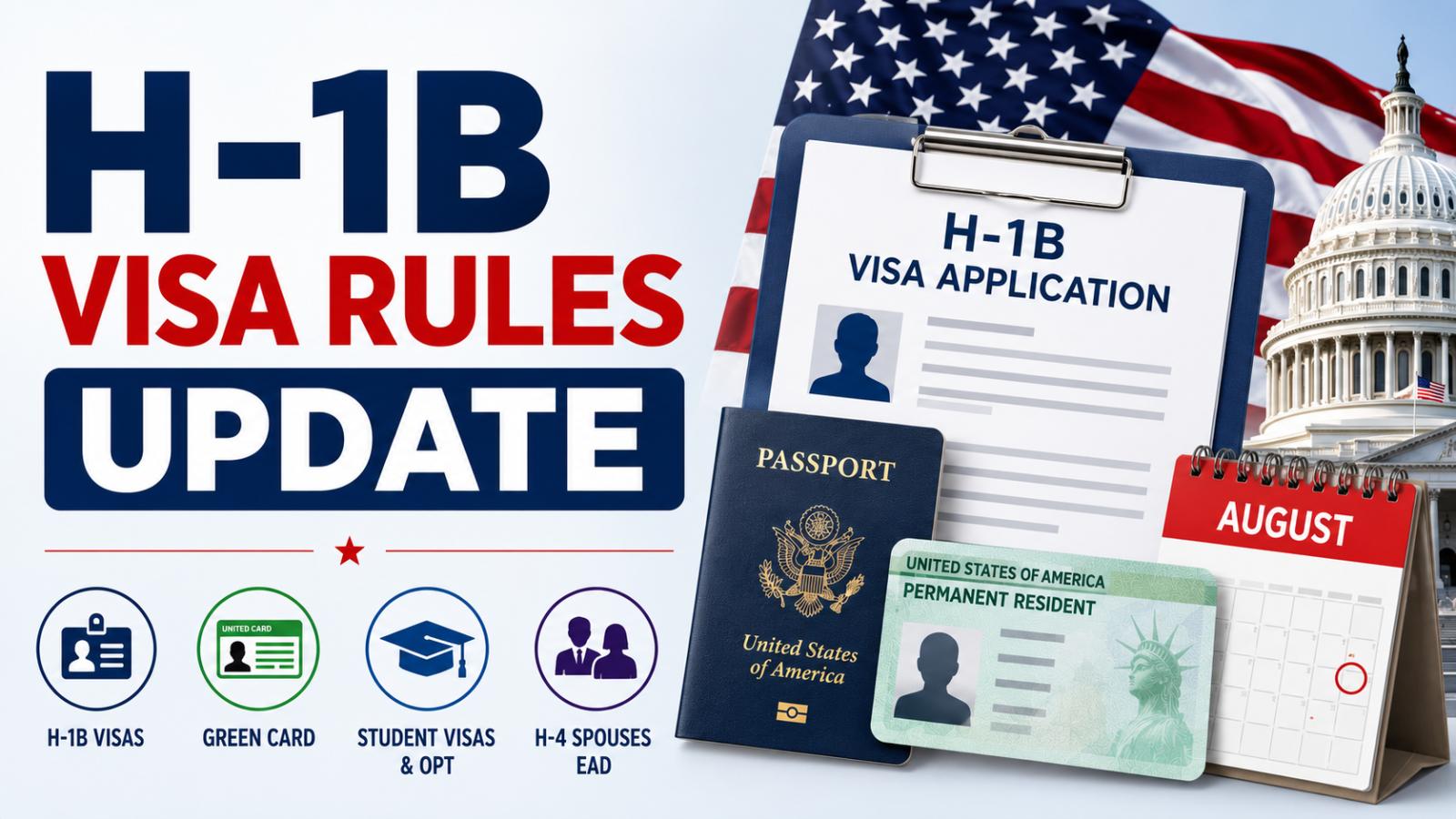
The proposed H-1B visa rules from August could create fresh uncertainty for Indian professionals, students, and employers using key US immigration routes. The Trump administration is preparing changes that may tighten H-1B visa processing, Green Card sponsorship, student visa stay rules, OPT work permits, and H-4 spouse work authorization.
The proposed changes are part of the latest US regulatory agenda and have not become final law yet. However, if implemented, they could raise costs for employers, increase documentation requirements, and make the immigration process more difficult for many Indians seeking to study, work, or settle in the United States.
H-1B Visa Rules From August May Get Stricter
The H-1B visa programme is one of the most important work routes for Indian technology professionals, engineers, consultants, and skilled workers. Under the annual cap, the US usually allows 65,000 regular H-1B visas and another 20,000 for applicants with US advanced degrees.
The Department of Homeland Security has listed a proposed rule to reform the H-1B programme by revising cap-exemption eligibility, increasing scrutiny of employers with past violations, and expanding oversight of third-party placements.
This means stricter H-1B visa rules for Indians could particularly affect IT and consulting companies that place employees at client sites. Employers may need to prove a stronger employer-employee relationship and show that the worker will perform specialised duties at the third-party location.
Green Card Rules Could Raise Sponsorship Costs
The proposed changes are not limited to H-1B visas. Green Card rules may also become tougher because the US Department of Labor has proposed changes to prevailing wage methodology for H-1B and PERM visa programmes. The Department said the updated methodology would use percentile thresholds from the Bureau of Labor Statistics’ Occupational Employment and Wage Statistics survey.
For Indian professionals already facing long employment-based Green Card backlogs, a Green Card sponsorship cost increase could make the process more uncertain. Employers may have to offer higher minimum wages, follow stricter recruitment standards and handle more compliance checks during the PERM labour certification process.
US Student Visa Rules And OPT Work Permit Under Focus
The proposed US student visa rules may also affect Indian students planning to study in America. According to the source report, India sent about 3.6 lakh students to the US in the 2024-25 academic year, making it the largest source of international students.
A major proposal would replace the current “duration of status” system with fixed end dates for students and exchange visitors. NAFSA notes that the proposed DHS rule would require students and exchange visitors to file formal extension applications if they need to remain beyond the fixed period.
This student visa fixed stay rule could make planning harder for students whose courses, research, internships, or training periods extend beyond the approved stay. The OPT work permit route, including STEM OPT and Curricular Practical Training, is also expected to face closer review.
H-4 Spouses EAD May See Work Gaps
Another important concern is the H-4 spouses' EAD issue. Many Indian spouses of H-1B workers depend on Employment Authorisation Documents to work legally in the US while waiting for Green Card processing.
The proposed end of automatic EAD extensions could create work gaps if renewals are delayed. This means the H-4 EAD automatic extension change may temporarily affect the legal work status of some spouses even when renewal applications are filed on time.
What It Means For Indians
The new US immigration rules for Indians could affect four major groups: H-1B professionals, Indian IT companies, Green Card applicants, and students planning a US education. The biggest impact may be higher costs, longer paperwork, more scrutiny, and less predictability.
However, it is important to note that these proposals are not final yet. They must go through the official rulemaking process, including draft publication, public comments, and final approval. Legal challenges are also possible before any major change takes effect.
For now, Indian professionals and students should closely track updates on H-1B visa rules from August, Green Card sponsorship changes, student visa fixed-stay proposals, OPT work permit rules, and H-4 spouse EAD renewals.