

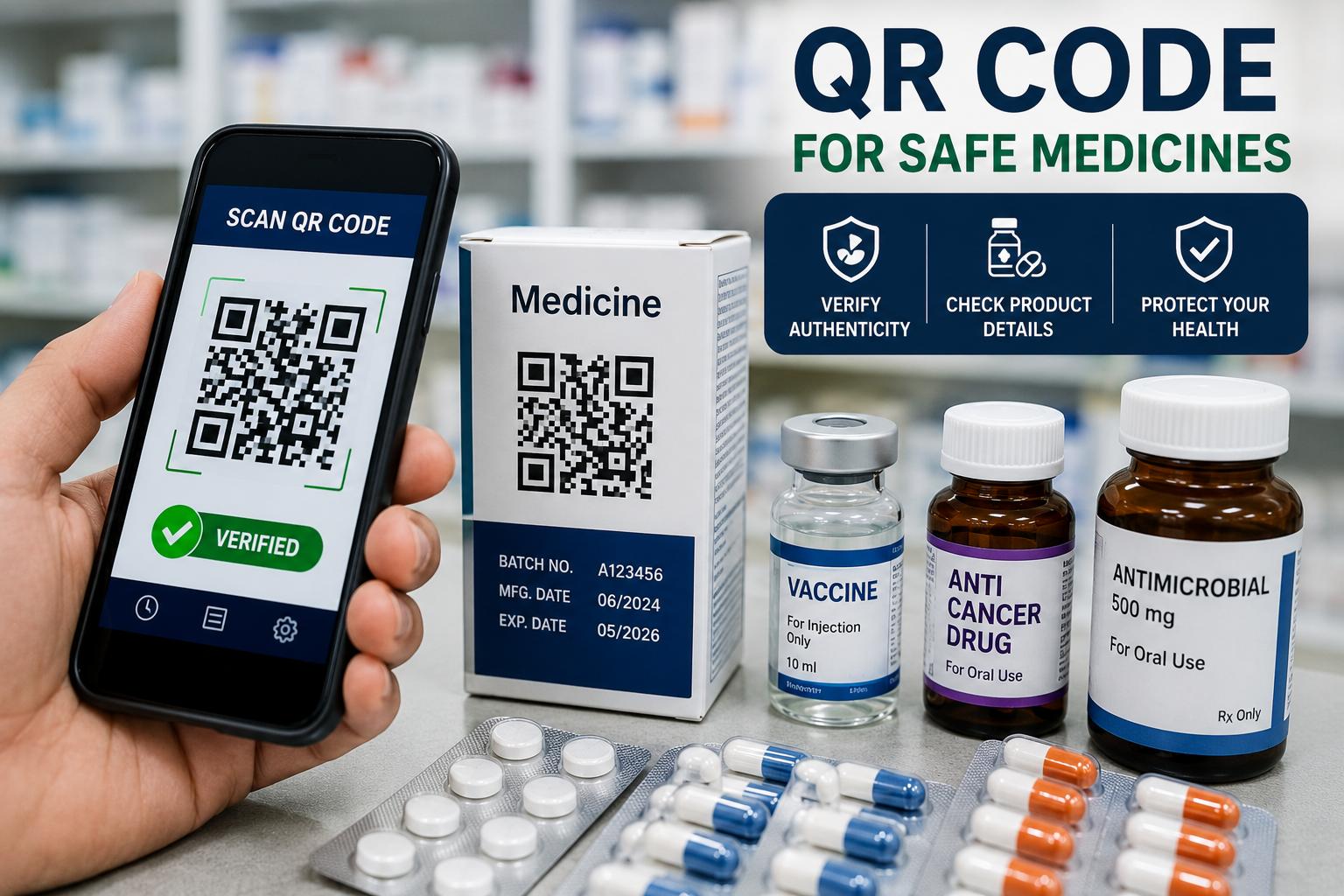
New Delhi: In a significant move aimed at strengthening medicine safety and improving supply chain transparency, the Centre has expanded its QR code-based tracking system to include vaccines, anti-cancer medicines, antimicrobials, and narcotic and psychotropic drugs.
The Union Health Ministry has amended the Drugs Rules, 1945, by placing these categories of medicines under Schedule H2. The amendment makes it mandatory for manufacturers to include QR codes or barcodes on medicine packaging, enabling easier identification and authentication of pharmaceutical products.
Under the new guidelines, manufacturers will be required to print or affix QR codes on the primary packaging of medicines. If space limitations exist, the code may be placed on the secondary packaging. The QR code will provide detailed information, including the product's generic and brand names, batch number, manufacturing and expiry dates, manufacturer details, licence number and other relevant information.
The government had earlier introduced the QR code requirement for the country's top 300 pharmaceutical brands. With the latest amendment, the scope has been expanded considerably to cover a much wider range of critical medicines.
Why The New Rule Matters
The initiative is expected to improve traceability throughout the pharmaceutical supply chain and make it easier to detect counterfeit and substandard medicines. Fake medicines remain a major concern in the healthcare sector, often posing serious risks to patient safety and treatment outcomes.
Health experts believe that better tracking mechanisms can also support efforts to tackle antimicrobial resistance by helping identify poor-quality antibiotics and other medicines that fail to meet standards.
Implementation Timeline
The government has introduced the rules in phases. The QR code requirement for vaccines, anti-cancer medicines and narcotic and psychotropic drugs will come into effect on July 1, 2026. The provisions related to antimicrobials will become mandatory from July 1, 2028.
The latest policy is expected to boost consumer confidence in India's pharmaceutical sector by making medicine verification easier and enhancing transparency across the healthcare ecosystem. The move also aligns with broader efforts to modernize drug regulation and strengthen safeguards against counterfeit medicines in the country.