

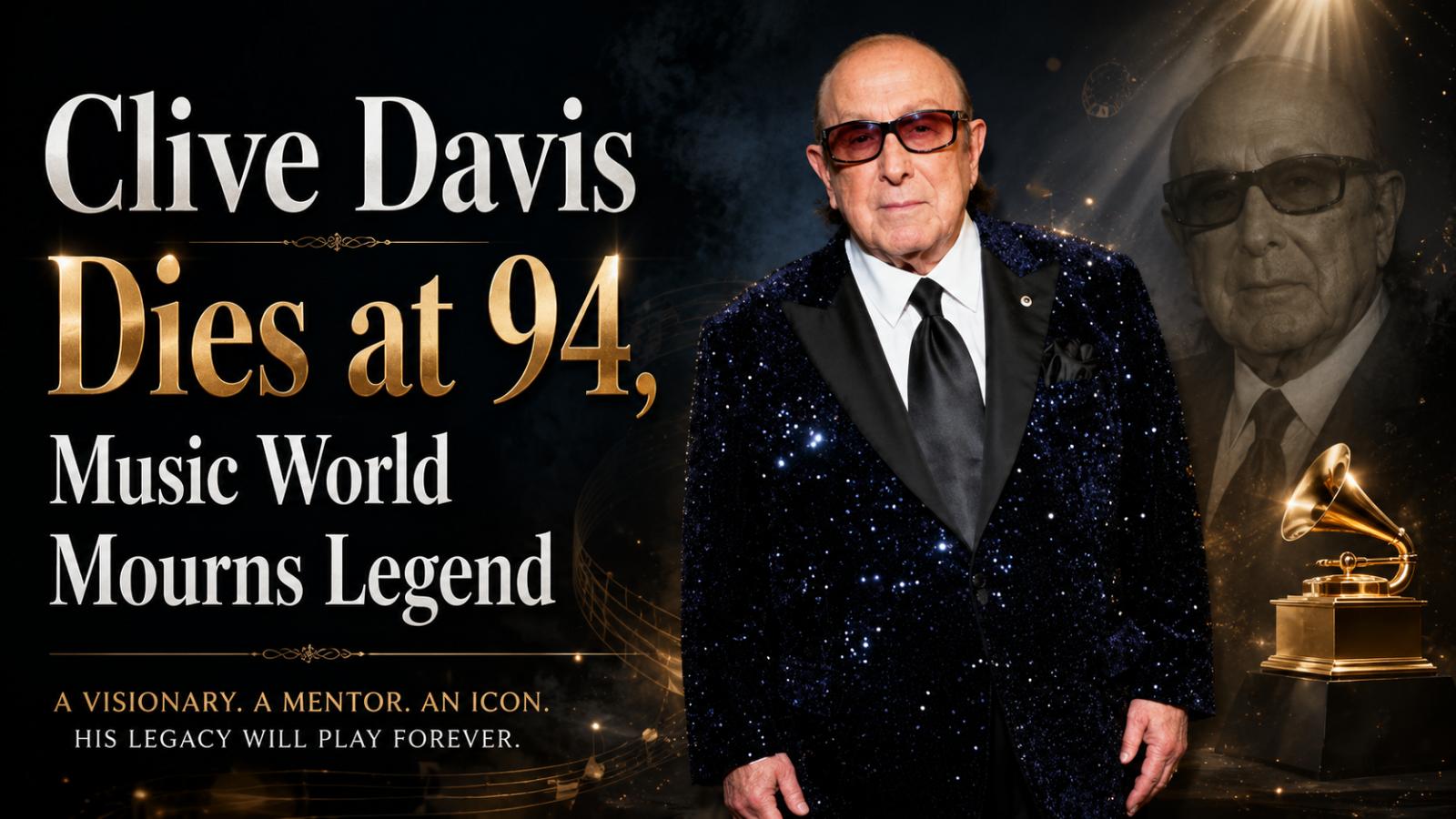
Grammy-winning record producer and music executive Clive Davis, the industry force behind several generations of global music stars, has died at 94.
A towering music figure dies at 94: Clive Davis, one of the most influential record producers and music executives in modern entertainment history, has died at the age of 94, bringing an extraordinary chapter in popular music to a close. Davis died at his Manhattan residence after a career that stretched across more than five decades and helped define the sound of rock, pop, R&B, soul and contemporary music for millions of listeners worldwide. Known across the industry simply as “Clive,” he was more than a label executive. He was regarded as a sharp listener, a patient mentor and a powerful tastemaker who could identify not only a strong voice but also the long-term career potential behind it. His death has led to tributes from artists, executives and music followers who credit him with shaping the careers of performers whose songs became part of everyday life. From concert stages to radio playlists, award functions and Grammy night celebrations, Davis remained a constant presence in the music world. His passing is being remembered as the end of an era built on talent, discipline, instinct and a rare belief that popular music could be both commercially powerful and emotionally lasting. For many fans, the scale of his influence is best understood through the songs he helped carry into homes across generations.
From lawyer to music power broker: Born in Brooklyn, New York, Clive Davis did not enter the music world through the usual path of performance or songwriting. He studied at New York University and later graduated from Harvard Law School, beginning his professional life as a lawyer before moving into the business side of recorded music. That legal and corporate background later became one of his greatest strengths. At Columbia Records, where he rose to become president in the late 1960s, Davis helped move the label more deeply into the changing rock era. At a time when American youth culture was transforming music, fashion and politics, he recognized that rock music was no longer a passing trend but a commercial and cultural force. His decisions helped bring wider attention to artists including Janis Joplin, Santana and Bruce Springsteen, while also strengthening Columbia’s place in a rapidly shifting industry. Davis combined boardroom discipline with creative curiosity, a rare mix that allowed him to speak the language of executives while still earning trust from artists. His early years proved that successful music leadership required more than budgets and contracts; it required timing, belief and the courage to back new sounds before they became safe bets. That approach later became a model for executives who wanted to build labels around both artistry and mass appeal.
The Arista comeback and Whitney Houston era: After leaving Columbia in the 1970s under controversial circumstances, Davis rebuilt his career with remarkable speed and confidence. His next major act came through Arista Records, where he again proved that his ear for talent and his understanding of mainstream audiences were difficult to match. Arista became home to a wide range of major performers across pop, rock and R&B, but his work with Whitney Houston remains one of the defining achievements of his career. Davis helped guide Houston from a gifted young vocalist into one of the most celebrated singers of all time, shaping a recording career that crossed generations and international markets. He was known for paying close attention to song selection, image, timing and long-term positioning, treating an artist’s career as something that had to be carefully built rather than quickly exploited. His impact also extended to Barry Manilow, Aretha Franklin, Dionne Warwick and many others who benefited from his ability to match the right song with the right performer. The Arista years cemented Davis as one of the rare executives whose public identity became almost as famous as the stars he helped promote. In an industry where trends often change overnight, Davis showed unusual patience, repeatedly choosing career durability over quick headlines.
A career built on reinvention and instinct: Davis’ influence did not stop with one label, one decade or one musical style. Over time, he remained relevant by adapting to new generations of listeners and new business models. After Arista, he continued his run through J Records and other senior roles connected with major music groups, supporting artists who reached audiences in the CD era, the television talent-show era and the early digital transition. His name became linked with Alicia Keys, Jennifer Hudson and other performers whose success showed that Davis could still recognize star quality long after his first wave of historic signings. He also played a role in career revivals, including projects that brought established artists back to younger audiences. This ability to balance heritage and freshness made him a distinctive figure in an industry often divided between nostalgia and novelty. Davis understood that great voices needed great songs, but he also understood that great songs needed the right moment. His annual pre-Grammy gala became one of the most watched private events in the music business, attracting legendary performers, emerging talent and powerful industry figures. The event reflected his larger role as a connector who brought generations of music people into the same room. It also showed how much influence he retained even as the industry moved from physical albums to streaming platforms.
Awards, legacy and the soundtrack he leaves behind: Clive Davis leaves behind a legacy that is difficult to measure only through sales figures, awards or executive titles. He won major Grammy honours, received the Recording Academy’s Trustees Award and was inducted into the Rock & Roll Hall of Fame as a non-performer, recognition that underlined how deeply a behind-the-scenes figure could shape public culture. His story was also captured in books and documentaries, including work that presented his life as a soundtrack of modern music. What made Davis remarkable was not simply that he signed famous names, but that he repeatedly understood what different eras needed before the market fully knew it. He helped open doors for artists, revived careers that others might have dismissed and kept faith in the emotional power of a memorable voice. For listeners, his influence can be heard in rock classics, soulful ballads, pop anthems and Grammy-winning albums that continue to travel across languages and generations. As the music world mourns his death, Davis is being remembered not only as a producer or executive but as a builder of careers, a guardian of songs and one of the defining architects of popular music history. His work will continue to live wherever those recordings are played, studied, rediscovered and passed on to new listeners.