

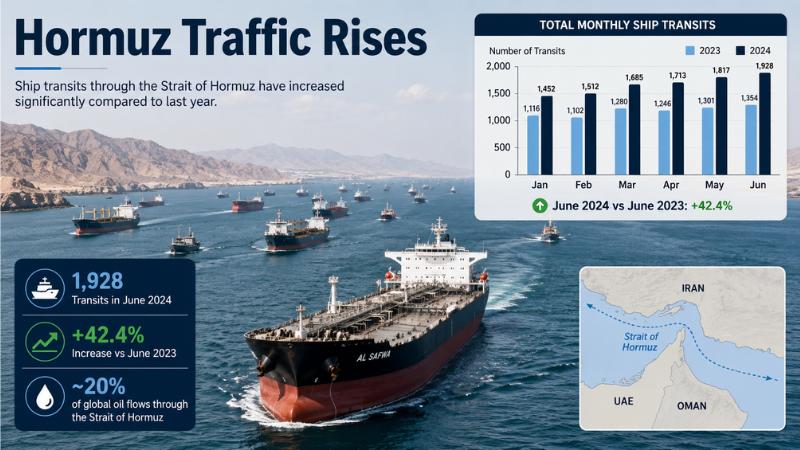
Strait of Hormuz 25 Ships Cross in One Day as Traffic Rises
Commercial traffic through the Strait of Hormuz showed a sharp rise on Thursday, with 25 verified vessels crossing the newly reopened route in a single day, according to maritime tracking firm AXSMarine.
The Strait of Hormuz 25 ships crossing marked the highest single-day movement since April 18 and pointed to a cautious recovery in one of the world’s most important shipping corridors.
Highest Traffic Since Mid-April
AXSMarine said the 25 confirmed commercial vessel crossings were more than five times the average daily level recorded during the first ten days of June. Since the start of March, vessel movement through the strait had averaged only 7.6 crossings a day.
Before the conflict, around 120 vessels passed through the Strait of Hormuz daily, making it a critical route for global trade, oil shipments, and liquefied natural gas exports.
Reopening Follows Iran-US Agreement
The rise in traffic came after Iran and the United States agreed to reopen the crucial route as part of a wider agreement aimed at ending the war. The increase was recorded before the cancellation of planned talks between the two sides in Switzerland.
Iranian forces had effectively restricted movement through the strait after US and Israeli strikes triggered the conflict on February 28. Maritime authorities later reported several attacks on ships in the region, forcing many vessels to delay or avoid the route.
AIS Disruption Raises Safety Concerns
AXSMarine said the actual number of crossings could be higher, as some vessels switch off or manipulate their AIS transponder signals while passing through sensitive waters.
The firm also reported the largest AIS signal disruption in the Persian Gulf since the conflict began, with more than 200 commercial vessels affected at the same time by spoofing or abnormal tracking behaviour.
Shipping Industry Awaits Clear Safety Plan
Shipping groups have warned that safe transit plans are still not fully clear. Many operators are waiting for stronger coordination before vessels stuck in the Gulf begin leaving through the Strait of Hormuz.
BIMCO chief security officer Jakob Larsen said the shipping body expects an international coordination mechanism to be set up soon to help manage safe passage through the route.
The International Maritime Organization has also been working on a plan to ensure safe movement for ships affected by the conflict.
Hundreds of Ships Still Stuck in Gulf
More than 500 commercial vessels are still stuck in the Gulf, with around 11,000 seafarers on board, according to the IMO. Overall, nearly 20,000 seafarers in the region have been affected by the war.
The latest rise in Strait of Hormuz traffic is a positive sign for global shipping, but full recovery will depend on safety guarantees, stable diplomatic progress, and clear transit arrangements.