
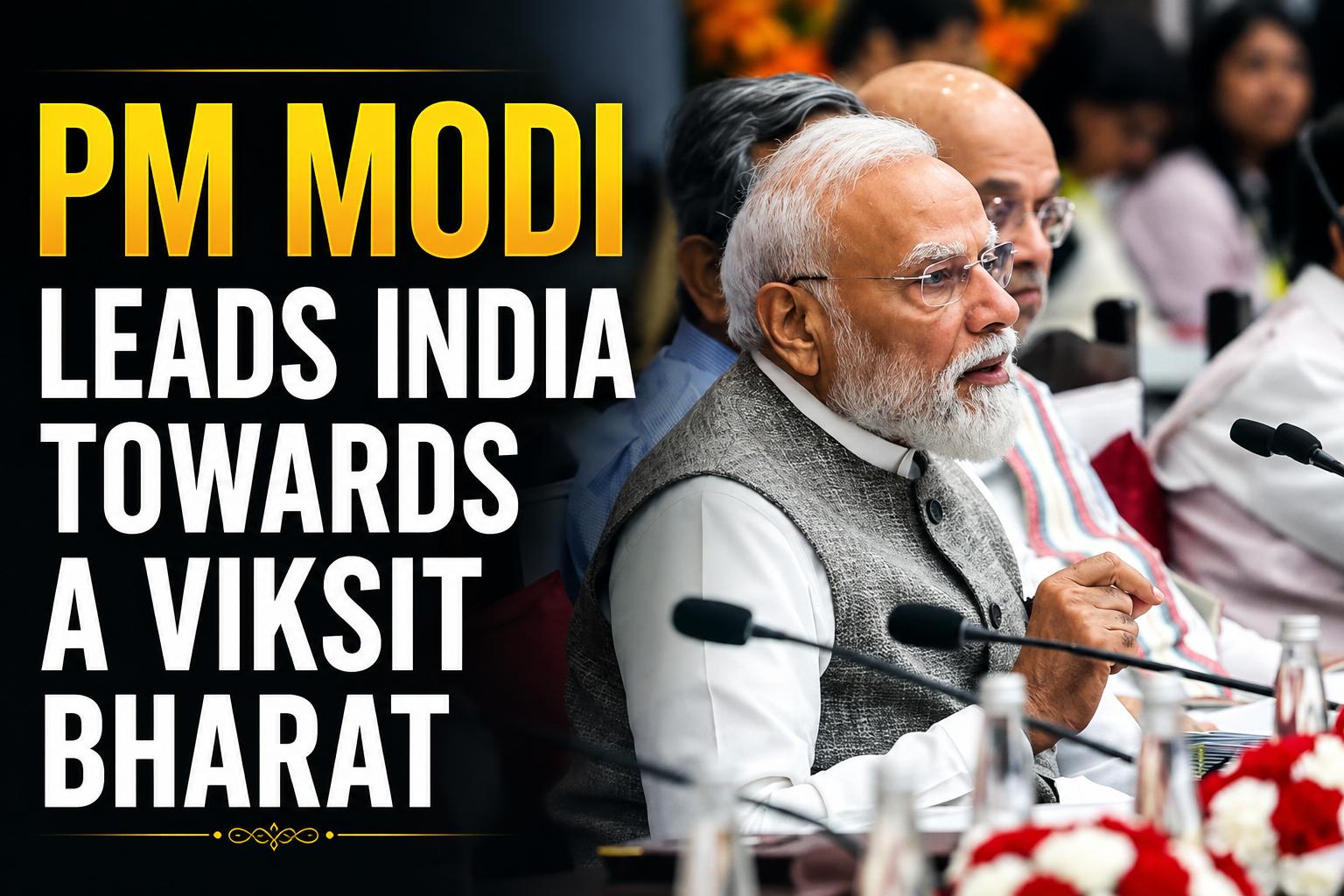
New Delhi, June 11, 2026: In a significant display of Centre-state participation, chief ministers from all 28 states attended the 11th Governing Council meeting of NITI Aayog, chaired by Prime Minister Narendra Modi, at the Rashtrapati Bhavan Cultural Centre in New Delhi on Thursday.
The full attendance gave the meeting added political and administrative importance, especially after previous sessions witnessed absences from several opposition-ruled states. The Governing Council serves as a key forum for policy coordination between the Centre and states, and this year’s participation sent a stronger message on cooperative federalism.
Chief ministers from BJP-ruled and opposition-led states joined the discussions, along with representatives of Union Territories and several Union ministers. The meeting focused on India’s long-term development priorities, including employment, skilling, MSME growth, women-led development and the broader Viksit Bharat vision.
PM Modi focuses on youth jobs and skilling
Addressing the council, Prime Minister Modi said India is moving forward with confidence despite global uncertainty. He stressed that creating a strong ecosystem for young people must remain a national priority, with special focus on quality education, demand-based skilling and employment generation.
The Prime Minister also referred to India’s recent free trade agreements and said they could create new opportunities for micro, small and medium enterprises. He urged small businesses to prepare for global markets by improving competitiveness, production standards and quality.
The message comes at a time when employment generation remains one of India’s biggest policy challenges. Job creation cannot depend only on government programmes. States, industries and training institutions will have to work together to ensure that young workers have the skills needed for manufacturing, services, exports and new technology-driven sectors.
Women-led development highlighted
PM Modi also underlined women-led development as a central pillar of the Viksit Bharat goal. He said women are contributing across agriculture, startups, science, innovation and several other sectors, and urged states to strengthen policies linked to women’s education, safety, skilling and economic participation.
The focus on women-led development reflects a wider national push to increase women’s role in the workforce and public life. However, implementation will be the real test for states. Better safety, affordable training, access to finance, support for women entrepreneurs and local job opportunities will be necessary for this vision to produce measurable results.
Full attendance signals cooperative federalism
The meeting was notable because recent NITI Aayog Governing Council sessions had seen several chief ministers stay away due to political differences, prior commitments or concerns over Centre-state relations. This year’s full participation gave the platform greater weight and showed that states may be willing to engage more actively in national policy discussions.
After the council session, some chief ministers also met Prime Minister Modi separately to discuss state-specific issues and development priorities. The wider participation suggests that despite political differences, states and the Centre may use such forums to push common development goals.
For the Viksit Bharat vision to move beyond slogans, the Centre and states will need sustained coordination on jobs, infrastructure, education, MSME competitiveness and women’s empowerment. The full attendance at the NITI Aayog meeting is a positive signal, but the real outcome will depend on how effectively the discussions translate into action on the ground.