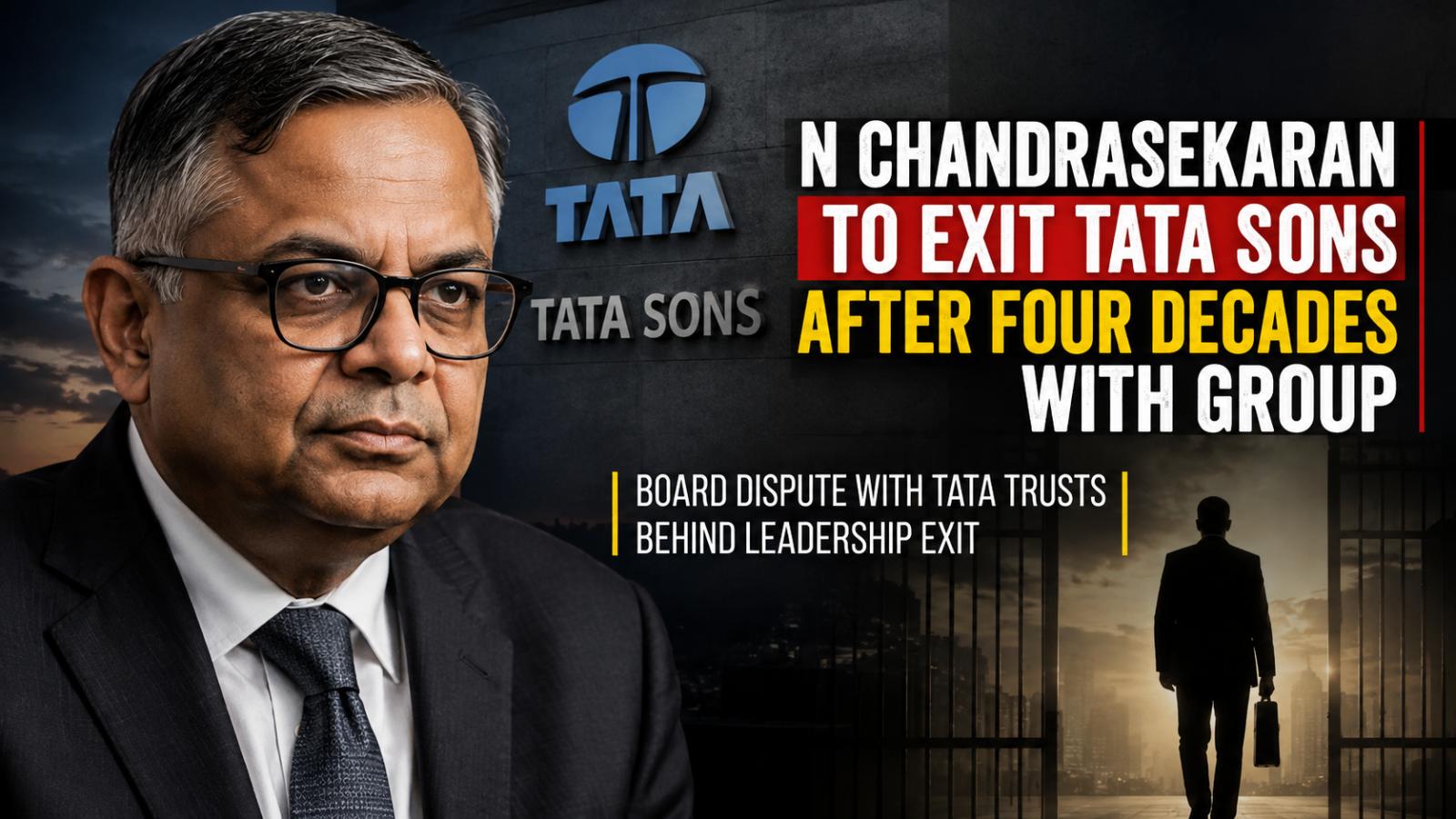

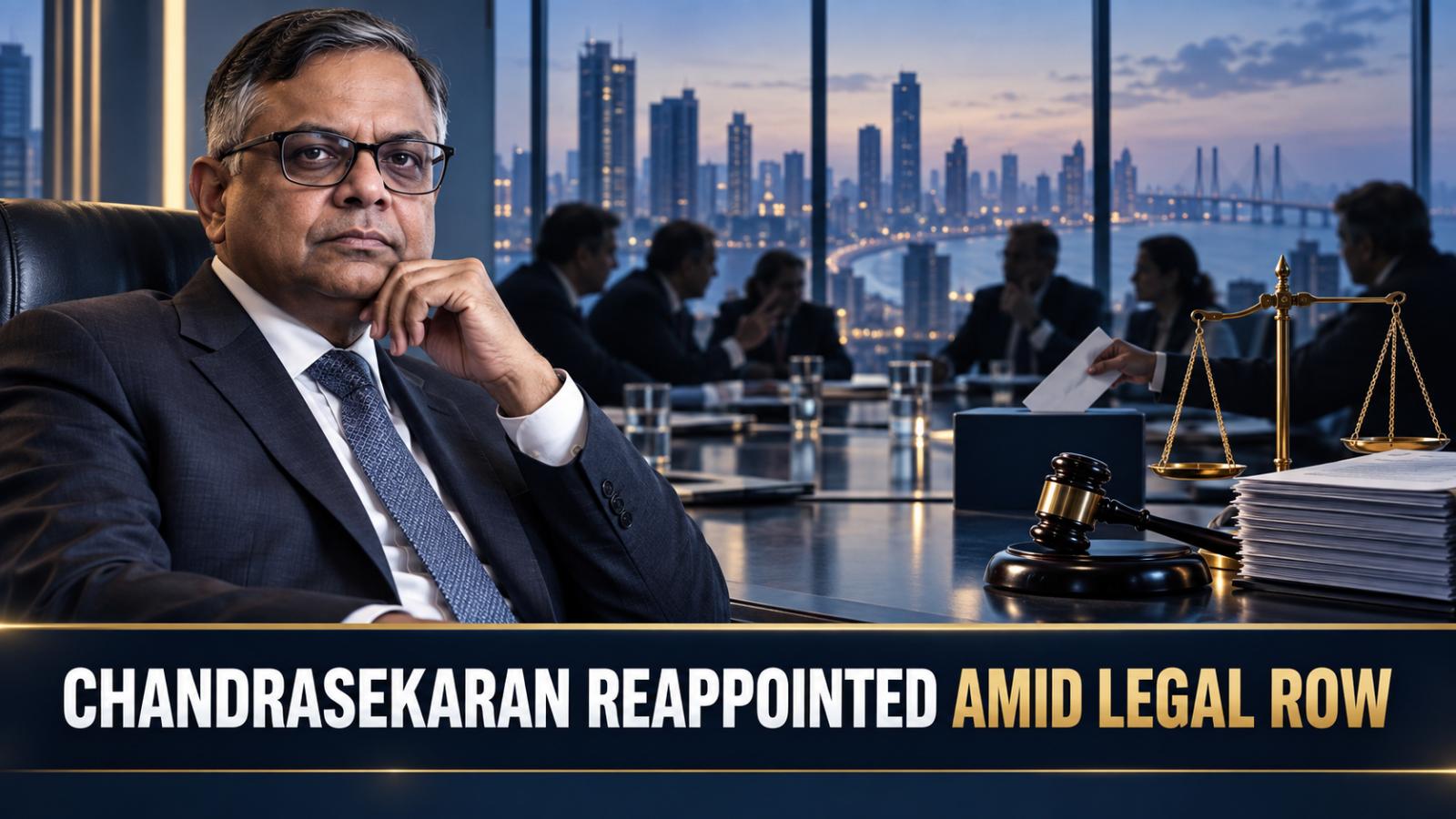
The Tata Sons board has approved N Chandrasekaran’s reappointment as chairman for another five-year term, but a disagreement over the voting process has raised questions about whether his continuation is fully settled.
Tata Trusts and its affiliated trusts own approximately 66 per cent of Tata Sons and have two nominee directors on the holding company’s board. During Thursday’s meeting, Tata Trusts chairman Noel Tata opposed Chandrasekaran’s reappointment, while fellow nominee director Venu Srinivasan supported it.
With the two Trusts nominees divided, independent director Harish Manwani, who chaired the meeting, reportedly exercised a casting vote in favour of Chandrasekaran. The board resolution was consequently approved, formally extending his leadership of the Tata Group’s holding company.
However, Tata Trusts has questioned whether an independent director’s casting vote can overcome a separate requirement for support from a majority of its nominee directors. Reuters reported that the reappointment had intensified an internal dispute between Tata Sons and its controlling charitable shareholder over governance and the company’s future structure.
A legal opinion obtained by Tata Trusts from former Chief Justice of India D.Y. Chandrachud reportedly states that the affirmative vote of a majority of the Trusts’ nominee directors is an independent requirement under Tata Sons’ governance rules.
According to the reported opinion, Manwani’s casting vote could resolve a general board deadlock but could not replace the required support of the Trusts’ nominee directors. Because Noel Tata voted against the proposal and Venu Srinivasan supported it, the necessary nominee majority may not have been secured.
The opinion does not amount to a court ruling and does not automatically invalidate the board’s resolution. It gives Tata Trusts a legal basis to challenge the process, but the validity of the reappointment would ultimately depend on Tata Sons’ Articles of Association, applicable company law and any subsequent legal proceedings. The factual position is that the board has approved Chandrasekaran’s new term. The unresolved question is whether the casting vote completed the appointment process or whether separate approval from the Trusts’ nominees was also necessary.
The leadership disagreement comes amid a larger dispute over whether Tata Sons should remain privately held or move towards a public listing. The Reserve Bank of India classified Tata Sons as an upper-layer non-banking financial company, bringing it under regulations that include listing requirements. Tata Sons attempted to surrender its NBFC registration, but the RBI reportedly rejected that request and directed the company to comply with the rules applicable to upper-layer NBFCs.
Noel Tata has argued that the RBI communication did not specifically order an immediate listing and that all legally permissible alternatives should be examined. He maintains that a public listing could alter Tata Sons’ character because outside shareholders would prioritise financial returns, potentially limiting the group’s ability to support long-term investments and charitable objectives.
Tata Trusts says its controlling ownership structure allows dividends from Tata companies to fund philanthropic work. It has therefore sought a central role in any decision involving a listing, restructuring or appointment of advisers.
At the same board meeting, Noel Tata reportedly tabled a proposal connected to the Shapoorji Pallonji Group’s liquidity requirements. The plan involves monetising part of the SP Group’s Tata Sons stake to raise at least Rs 25,000 crore through a proposed two-stage transaction. The proposal has not yet been approved. For now, Chandrasekaran remains backed by the Tata Sons board, but the dispute over nominee-director rights, the proposed listing and Tata Trusts’ majority ownership means his third term could face further scrutiny.