

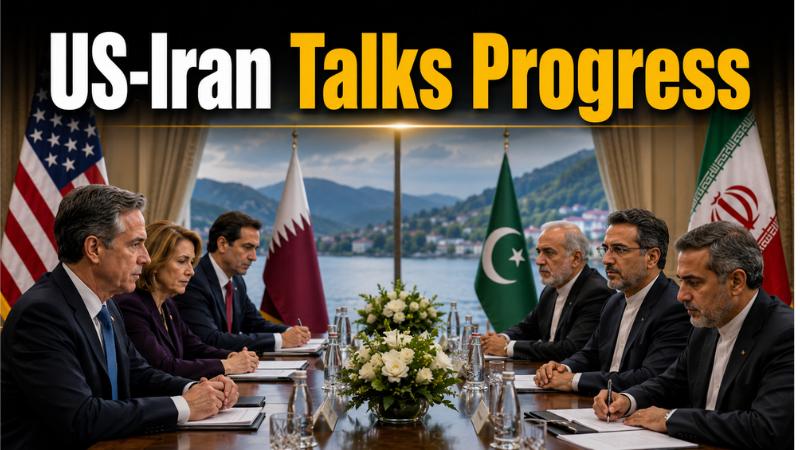
US-Iran Talks Make Progress As 60-Day Roadmap Takes Shape
The United States and Iran moved a step closer to renewed diplomacy on June 22, 2026, after agreeing on a 60-day roadmap during Switzerland talks mediated by Qatar and Pakistan. The fresh diplomatic push is aimed at reducing tensions and working towards a final agreement on key issues, including sanctions, maritime safety, nuclear-related concerns, and regional security.
The first round of talks ended with what mediators described as encouraging progress. Both sides have now agreed to continue technical-level discussions through the week, making the US-Iran 60-day roadmap an important starting point in a complex negotiation process.
Switzerland Talks Enter Crucial Phase
The US-Iran Switzerland talks were held under a wider peace framework involving Washington, Tehran, Qatar, and Pakistan. The main goal of the roadmap is to give both sides a clear timeline to address difficult issues while avoiding fresh escalation during the negotiation period.
A high-level committee is expected to guide the process and receive regular updates from negotiators. Technical teams will focus on verification, compliance, sanctions, monitoring systems and dispute resolution mechanisms.
The roadmap does not mean a final deal has been reached. However, it provides a structured path for both countries to continue talks and test whether a broader understanding is possible.
Qatar And Pakistan Lead Mediation Effort
Qatar and Pakistan have played a key role in bringing the two sides to the negotiating table. Their mediation is being seen as important because both countries have maintained channels of communication with the parties involved.
The Qatar-Pakistan mediation talks are expected to continue as negotiators work on detailed arrangements. The aim is to move the process beyond political statements and towards practical steps that can reduce tensions on the ground.
For Washington and Tehran, the next few weeks will be crucial. Both sides will have to show flexibility on sensitive issues if the 60-day roadmap is to move closer to a final agreement.
Strait Of Hormuz Safe Passage In Focus
A major part of the discussions is linked to the safe passage of commercial vessels through the Strait of Hormuz. The waterway is one of the world’s most important shipping routes and has often become a flashpoint during US-Iran tensions.
As part of the new framework, a direct communication channel has been created to reduce misunderstandings and manage possible incidents during the talks. This step is expected to support safer commercial movement through the Strait of Hormuz and reduce the risk of sudden escalation.
Any disruption in the Strait of Hormuz can affect global energy movement and fuel prices. That makes maritime safety one of the most closely watched parts of the latest diplomatic effort.
Lebanon De-Confliction Cell Planned
The talks also include a plan to set up a Lebanon de-confliction cell involving the US, Iran, and Lebanon, with Qatar and Pakistan helping to facilitate the process. The cell is expected to monitor the halt of military operations and prevent local clashes from affecting the wider diplomatic effort.
Lebanon remains a sensitive issue in the broader Middle East situation. Continued tensions involving Israel and Hezbollah have raised concerns that any fresh flare-up could complicate the US-Iran negotiation process.
The proposed de-confliction mechanism is being viewed as an attempt to keep the talks on track while lowering the risk of a wider regional crisis.
Nuclear And Sanctions Issues Still Unresolved
Despite the progress, several difficult issues remain unresolved. Iran’s nuclear programme and sanctions relief are expected to be among the toughest topics in the next phase of discussions.
The US continues to seek stronger assurances on Iran’s nuclear activities and regional role. Iran has maintained that its nuclear programme is peaceful and has pushed for relief from sanctions.
Any final agreement will depend on whether both sides can find acceptable terms on monitoring, sanctions, security guarantees, and regional stability.
Roadmap Offers Hope, But Challenges Remain
The US-Iran 60-day roadmap gives the talks a clear timeline, but it does not guarantee a final deal. The coming weeks will be important as technical teams work through the details and political leaders decide how far they are willing to go.
For now, the agreement marks a cautious but important diplomatic opening. If the process holds, it could help lower tensions between Washington and Tehran, support safer passage through the Strait of Hormuz, and ease pressure in parts of the Middle East.