
India’s Forex Reserves Are Strong, But Capital Flow Risks Remain
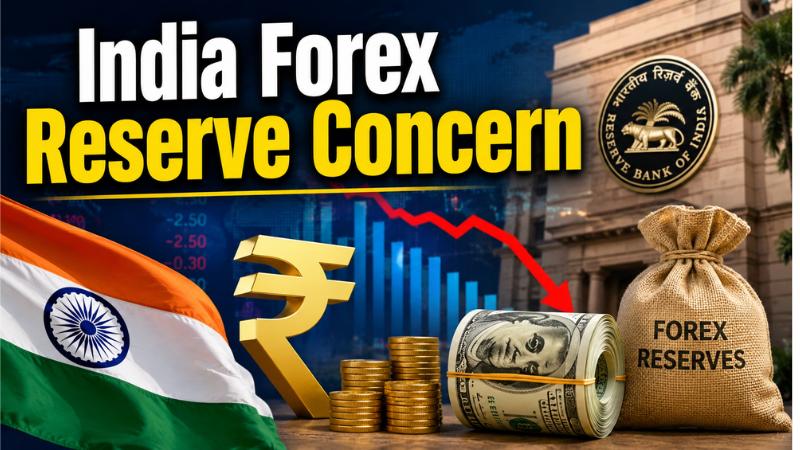
India’s foreign exchange reserves remain strong, but economists are still watching foreign capital flows closely as global uncertainty, rupee pressure, and oil import risks continue to shape the country’s external outlook.
India’s reserves are hovering near the $700-billion mark, giving the country a strong cushion compared with past periods of external stress. This has helped reduce fears of any immediate balance-of-payments crisis. However, experts say the larger concern today is not whether India has enough dollars, but whether fresh dollar inflows will continue if global market conditions turn volatile.
Why Foreign Capital Matters
India spends large amounts of foreign currency on crude oil, electronics, machinery, chemicals, and gold imports. These payments are partly supported by exports, remittances, and foreign investment.
Economists say the current account deficit itself is not the biggest worry at present. The more important question is how that deficit is being financed. If stable inflows continue, the external position remains comfortable. But if foreign investors turn cautious, the pressure can quickly show up in the rupee and financial markets.
FDI Stable, FPI More Volatile
Foreign direct investment, or FDI, is generally seen as long-term capital because it often involves factories, offices, technology centres, or strategic business investments. Foreign portfolio investment, or FPI, is different because it flows into stocks and bonds and can move out quickly when global sentiment changes.
This difference is important for India. While FDI offers greater stability, FPI can become volatile during global market shocks, rising interest rates, or geopolitical tensions. A sudden slowdown in portfolio flows can put pressure on the rupee and increase uncertainty in equity and bond markets.
Not A 1991-Like Situation
Experts also caution against comparing the present situation with the 1991 balance-of-payments crisis. India today has much stronger reserves, deeper financial markets, stronger institutions, robust services exports, and large remittance inflows.
Unlike 1991, India is not facing a shortage of dollars to meet immediate external needs. The current challenge is more about managing volatility and ensuring that foreign capital continues to flow into the economy at a comfortable pace.
Rupee Remains A Key Indicator
The rupee is usually the first place where pressure becomes visible when capital inflows weaken. If fewer dollars enter the country while demand for dollars remains high, the rupee can weaken.
A weaker rupee can make imports more expensive. Since India imports a major share of its crude oil requirement, currency weakness can also add pressure on fuel costs and inflation. It may also increase costs for companies that depend on imported raw materials or components.
Oil Still A Major Risk
Oil remains one of India’s biggest external vulnerabilities. A sharp rise in global crude prices can widen the import bill, increase inflation, and add pressure on the rupee.
Even though India’s reserves provide a strong buffer, policymakers will continue to track three key factors closely: oil prices, rupee movement, and the quality of foreign capital inflows.
Outlook
India’s external position is far stronger than it was three decades ago. However, the focus has shifted from simply having enough reserves to maintaining steady and reliable capital inflows.
For now, India’s forex cushion offers comfort. But in an uncertain global environment, the stability of foreign capital will remain an important factor for the rupee, inflation and broader economic confidence.