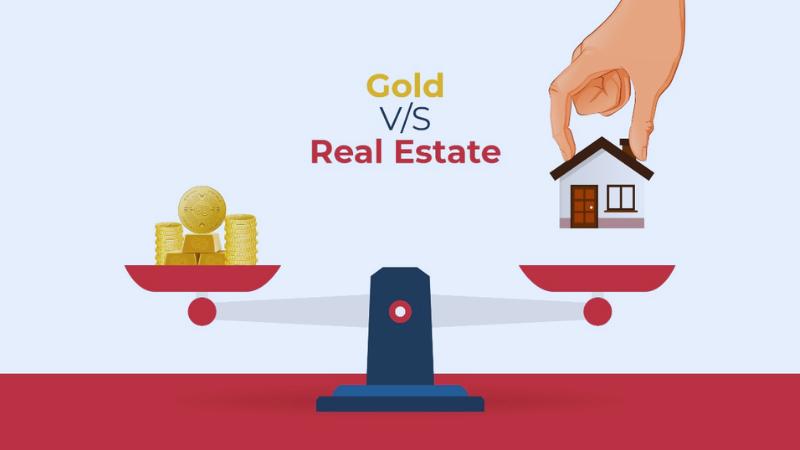
When it comes to building long-term wealth, gold and real estate have remained two of the most trusted investment options for generations. Both assets carry a sense of security and tangible value, making them attractive choices during uncertain economic times. However, choosing between gold and property requires a deeper understanding of returns, risks, liquidity, and long-term financial goals.
While both investments can strengthen a portfolio, they serve different strategic purposes. The real question is not which one is universally better, but which aligns more effectively with your financial objectives.
Understanding Gold as an Investment
Gold has historically been seen as a safe haven asset. During periods of inflation, economic instability, or stock market volatility, investors often shift toward gold to protect their purchasing power. Its value is globally recognized, and it offers high liquidity compared to many other asset classes.
Gold can be invested in multiple forms such as physical bullion, gold ETFs, sovereign gold bonds, or digital gold. One of its biggest advantages is flexibility. Investors can start with smaller amounts, making it accessible across income levels. Additionally, gold does not require maintenance costs, property taxes, or large capital commitments.
However, gold does not generate passive income. It does not provide rental yields or dividends. Its returns rely mainly on price appreciation, which can fluctuate depending on global demand, geopolitical factors, and currency movements.
Real Estate as a Wealth Builder
Real estate is often viewed as a long-term asset that builds substantial wealth over time. Property investments can generate rental income while also appreciating. Unlike gold, real estate offers dual benefits: potential capital appreciation and steady cash flow.
Owning property also provides leverage opportunities. Investors can use home loans to acquire assets, potentially increasing long-term gains through borrowed capital. Real estate can act as a hedge against inflation, as rental income and property values often rise alongside economic growth.
However, real estate requires significant upfront capital, ongoing maintenance, property taxes, and transaction costs. It is also less liquid than gold. Selling property can take time and depends on market conditions. Economic slowdowns or regulatory changes may impact returns.
Risk, Liquidity, and Diversification
Gold offers higher liquidity and lower entry barriers, making it suitable for short- to medium-term hedging strategies. It acts as a stabilizer in diversified portfolios and often performs well when equity markets decline.
Real estate, on the other hand, is more suitable for long-term wealth accumulation. It typically requires a longer holding period to realize meaningful gains. Property markets can experience cycles, but over extended periods, strategic real estate investments have created significant value.
From a diversification perspective, financial planners often recommend holding both assets in balanced proportions. Gold reduces volatility, while real estate enhances wealth creation potential.
Taxation and Cost Considerations
Both gold and real estate attract capital gains tax depending on holding duration. Real estate may offer certain tax benefits on home loans and depreciation for investors, while gold investments like sovereign bonds may provide tax advantages if held until maturity.
Cost structures also differ. Gold investments in ETFs or bonds have minimal management fees. Real estate involves registration charges, brokerage, maintenance costs, and possible loan interest payments. These expenses should be factored into overall return calculations.
Which Strategy Works Best?
The ideal choice depends on your financial stage, income stability, risk appetite, and investment horizon. Younger investors seeking long-term capital growth may prefer real estate combined with diversified assets. Those looking for liquidity and portfolio protection may allocate more toward gold.
In practice, successful investors rarely choose one over the other entirely. A strategic allocation combining gold for stability and real estate for growth can create a balanced wealth-building plan.
Ultimately, the better strategy is not about gold versus property alone. It is about clarity in financial planning, disciplined investing, and aligning assets with long-term goals. The smartest approach may be to let both investments complement each other rather than compete.
Disclaimer: This article provides information for educational purposes and is not financial advice.