

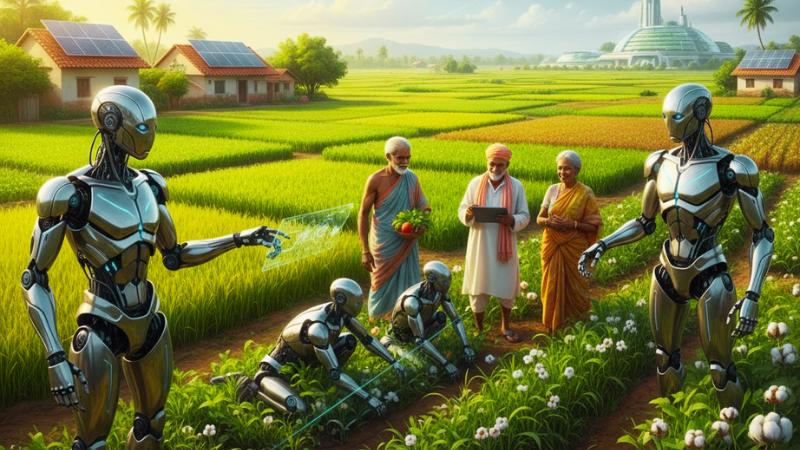
The world is rapidly evolving, and agriculture is no exception. With the advent of new technologies, particularly robotics and automation, the farming industry is poised for a transformation. In India, a country where agriculture remains the backbone of the economy, the question arises: will robotics replace Indian farmers in the future of smart agriculture?
India’s agricultural sector, which employs over 50% of the population, faces numerous challenges such as labor shortages, low productivity, and an increasing need to meet the demands of a growing population. As technology advances, robotics promises to revolutionize farming practices, making them more efficient, sustainable, and data-driven. However, the idea of robots replacing human farmers raises both excitement and concern. Let’s explore the potential impact of robotics on Indian agriculture and whether farmers will truly be replaced or merely augmented.
1. The Rise of Smart Agriculture
Smart agriculture is the future, driven by the use of advanced technologies such as Artificial Intelligence (AI), the Internet of Things (IoT), machine learning, and robotics. Smart farming systems allow for precision agriculture, where farmers can monitor crop health, optimize irrigation, and make data-driven decisions for improving yield. Robotics, in particular, is gaining attention for its potential to perform labor-intensive tasks, such as planting, weeding, and harvesting, with greater speed and efficiency than traditional methods.
For instance, autonomous robots equipped with AI-powered sensors can detect crop diseases early and take corrective action, reducing the need for manual labor and minimizing the use of harmful pesticides. This precision not only increases productivity but also improves sustainability by reducing waste and environmental impact.
2. Robotics in Indian Agriculture: Current Applications
Indian farmers are already seeing the benefits of robotics and automation in specific areas of farming. Companies are developing drones and robotic systems for various tasks such as:
- Crop Monitoring: Drones and robots equipped with sensors can scan fields to monitor crop health, detect pest infestations, and identify nutrient deficiencies. This allows farmers to take timely action, preventing crop damage and improving yield.
- Weeding and Planting: Autonomous robots can replace traditional manual labor by planting seeds with precision and weeding fields more effectively. Robots such as the "Agrobot" are designed to detect and remove weeds without damaging crops, thus ensuring optimal growth.
- Harvesting: Robotic harvesters, particularly in the fruit and vegetable sectors, are making their way into Indian agriculture. These robots can pick crops like tomatoes, strawberries, and grapes, reducing the reliance on human labor and speeding up the harvesting process.
- Irrigation Systems: Smart irrigation systems, which rely on AI and robotics, ensure that water is used efficiently. These systems monitor soil moisture levels and adjust irrigation schedules accordingly, conserving water in regions with water scarcity.
3. Challenges for Indian Farmers
While the integration of robotics into Indian agriculture holds great potential, several challenges remain:
- High Initial Investment: Robotics technology, though advancing, is still expensive. For small and medium-sized farms, especially in rural areas, the cost of purchasing and maintaining robotic systems may be prohibitive. Without financial support or subsidies, many farmers may find it difficult to adopt these technologies.
- Skill Gap: Robotics and AI-driven systems require a level of technical expertise that many Indian farmers do not possess. Training and education in these technologies are crucial for the successful integration of robotics in farming. Without proper training, the adoption of robotics could lead to inefficiencies rather than improvements.
- Job Displacement Concerns: While robotics may reduce the need for certain types of labor, many farmers fear that these technologies could lead to job losses, particularly for seasonal workers who rely on agriculture for their livelihoods. However, experts argue that while certain jobs will be automated, new roles in technology, data analysis, and system maintenance will emerge, offering opportunities for upskilling.
4. How Robotics Will Augment, Not Replace, Indian Farmers
While robotics will undoubtedly change the landscape of Indian agriculture, it is unlikely to replace farmers entirely. Instead, robots will serve as powerful tools to enhance the work of farmers, allowing them to focus on more strategic and decision-making aspects of farming. Rather than replacing farmers, robotics will augment their capabilities by:
- Improving Efficiency: Robots will help farmers complete time-consuming tasks faster and more accurately, allowing them to manage larger areas of land and improve overall productivity.
- Enabling Precision Agriculture: With robotic systems collecting vast amounts of data, farmers can make informed decisions regarding crop management, water use, and fertilization, ultimately leading to better yields and sustainable practices.
- Reducing Physical Labor: By taking on physically demanding tasks, robots will reduce the physical strain on farmers, allowing them to work longer hours with less fatigue and improving their overall quality of life.
5. The Role of Government and Policy
For robotics to truly make an impact in Indian agriculture, government support and policy interventions are essential. Policies that promote research and development in agricultural robotics, subsidies for purchasing technology, and education programs to upskill farmers will be key to ensuring that robotics benefits all stakeholders in the farming ecosystem.
The Indian government has already recognized the potential of smart agriculture and is investing in technology-driven farming solutions. Initiatives like the "Pradhan Mantri Kisan Samman Nidhi" (PM-KISAN) and the "Soil Health Card Scheme" are examples of government efforts to support farmers in adopting modern agricultural practices. However, more needs to be done to provide financial incentives, access to training, and promote the use of technology in rural areas.
6. The Future of Robotics in Indian Agriculture
As robotics technology continues to improve, its integration into Indian agriculture will become more widespread. The key to success lies in collaboration between technology developers, farmers, and policymakers. By embracing robotics, Indian farmers will be able to increase their productivity, reduce costs, and meet the growing demand for food, while also contributing to environmental sustainability.
In the long term, robotics will play a critical role in transforming Indian agriculture from a labor-intensive industry to a high-tech, precision-driven sector. However, the human touch, experience, and decision-making of Indian farmers will always remain central to the agricultural process, with robotics acting as a complement rather than a replacement.
Robotics will not replace Indian farmers but will serve as a valuable tool to augment their efforts in creating a smarter, more efficient agricultural system. By embracing technology, Indian farmers can improve their productivity, reduce environmental impact, and overcome the challenges of labor shortages and low yields. The future of Indian agriculture lies in the harmonious integration of robotics, AI, and human expertise, paving the way for a more sustainable and prosperous farming community.