Plot
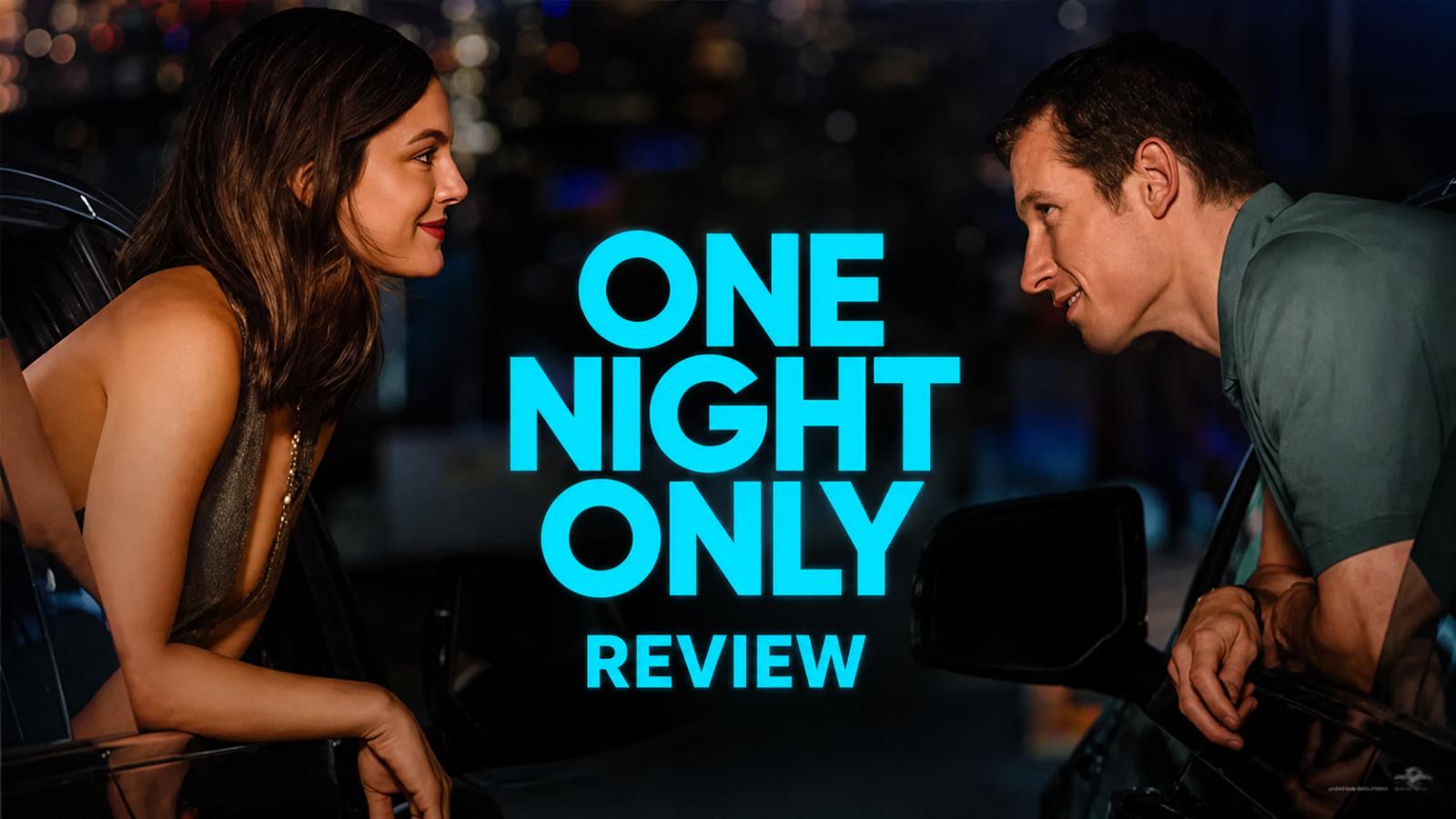
Allie, played by Monica Barbaro, and Owen, played by Callum Turner, are two strangers navigating New York during the only night of the year when premarital sex is legally permitted.
Like everyone around them, they begin the night expecting romance, intimacy or at least an unforgettable experience. Their plans quickly spiral into chaos as misunderstandings, bizarre encounters and increasingly ridiculous situations repeatedly bring them together.
Throughout the city, businesses and residents treat the unusual annual event as completely normal. Against this absurd backdrop, Allie and Owen slowly begin understanding each other while attempting to survive the madness surrounding them.
What initially appears to be a search for a one-night connection gradually develops into something more meaningful, providing an emotional foundation beneath the film's outrageous comedy.
Overview
One Night Only is a 102-minute romantic comedy starring Monica Barbaro and Callum Turner. Released in theatres on August 21, 2026, the film imagines a bizarre society in which premarital intimacy is legally permitted on only one night every year.
Rather than spending excessive time explaining how such a society functions, the movie embraces the absurdity of its premise. It follows two strangers through a chaotic New York night packed with romantic complications, misunderstandings, celebrity appearances and unpredictable comic situations.
The result is an unconventional rom-com that combines outrageous humour with a surprisingly warm romantic core.
Performances
Monica Barbaro is charming and confident as Allie. She handles the film's increasingly ridiculous situations naturally while giving the character enough personality and emotional depth to remain engaging.
Callum Turner complements her effectively as Owen. His awkwardness, confusion and understated reactions generate several funny moments without making the comedy feel forced.
The chemistry between Barbaro and Turner is easily one of the film's biggest strengths. Their developing connection prevents One Night Only from becoming merely a collection of loosely connected comedy sketches.
The supporting cast is packed with familiar faces, including Pete Davidson, Bobby Cannavale, Julia Fox, Nicholas Braun, Mike Birbiglia, Jay Ellis, Flavor Flav, Este Haim and Ziwe. Many appearances are intentionally brief, functioning more like unexpected visual jokes than conventional celebrity cameos.
Technical Aspects
One Night Only's strongest technical achievement is its colourful and chaotic interpretation of New York during the fictional annual event.
Crowded locations, busy nighttime streets and exaggerated scenarios successfully create the feeling of an entire city participating in one enormous celebration. The visual presentation matches the film's energetic and deliberately over-the-top tone.
The screenplay keeps introducing fresh characters, jokes and situations at a rapid pace. While this keeps the narrative moving, it also means the film rarely spends enough time exploring the more interesting implications of its fictional society.
The world-building is entertaining but relatively shallow. A government regulating intimate relationships could have produced sharper social satire, but the filmmakers consistently choose broad comedy over deeper commentary.
Music
The music effectively supports the energetic and romantic atmosphere of the film without becoming a major attraction on its own.
Upbeat musical cues complement the chaotic New York sequences, while softer passages strengthen the growing emotional connection between Allie and Owen.
The soundtrack suits the movie's fast-moving personality, although there are no individual musical sequences that become major highlights.
Editing
Editing plays an important role in maintaining One Night Only's frantic comic rhythm. Jokes, celebrity appearances and unexpected encounters arrive quickly, ensuring that the film rarely loses energy.
However, the movie occasionally becomes too eager to introduce another punchline before allowing the previous joke enough time to land.
At 102 minutes, a few comic detours begin to feel unnecessarily stretched. A tighter runtime could have made the humour sharper and reduced some of the repetition.
The film is at its best when the editing slows down enough to allow Monica Barbaro and Callum Turner to develop their chemistry rather than immediately moving toward another gag.
Positives
- Monica Barbaro and Callum Turner's chemistry
- Original and absurd central premise
- Several genuinely funny situations
- Energetic New York setting
- Self-aware humour
- Entertaining celebrity cameos
- Fast-paced comic sequences
- Surprisingly charming romantic core
Negatives
- Interesting social themes remain underdeveloped
- Too many jokes packed into certain portions
- Some sequences resemble extended comedy sketches
- Celebrity cameos occasionally distract from the central story
- Limited depth in the world-building
- Runtime feels slightly stretched
- Not every joke lands effectively
Analysis
One Night Only succeeds primarily because it understands exactly how ridiculous its premise is. A society allowing premarital intimacy for only one night each year could easily have resulted in complicated dystopian world-building. Instead, the filmmakers treat the strange law as an accepted part of everyday life and focus on the comedy created by people's reactions to it.
That commitment to absurdity produces some of the movie's funniest moments. Businesses prepare for the annual night, residents carefully plan romantic encounters and strangers behave as though the event is completely ordinary.
The humour becomes particularly effective because the characters often approach ridiculous circumstances with complete seriousness.
At the centre of the chaos are Allie and Owen. Their growing relationship provides the film with emotional stability. Monica Barbaro's confident screen presence works effectively alongside Callum Turner's awkward charm, allowing their chemistry to carry the story whenever the surrounding comedy becomes excessive.
The numerous celebrity appearances provide another layer of unpredictability. Many familiar faces arrive unexpectedly and disappear just as quickly, essentially turning celebrity recognition itself into part of the joke.
However, the screenplay misses a significant opportunity to explore the concept more deeply. Questions surrounding government control, personal freedom, modern dating culture and bodily autonomy naturally emerge from the premise but are rarely examined beyond surface-level jokes.
This is clearly a deliberate choice. The film prefers entertainment and romantic comedy over serious social commentary. That approach should satisfy audiences looking for an eccentric rom-com, but viewers expecting sharp dystopian satire may find the concept underused.
Pacing is another weakness. The filmmakers sometimes appear reluctant to allow a quiet moment without immediately introducing another joke, cameo or bizarre encounter. As a result, certain sections become overloaded.
Despite these limitations, enough of the humour works to keep the experience entertaining. More importantly, Barbaro and Turner's chemistry gives the movie enough warmth to prevent its outrageous concept from becoming exhausting.
One Night Only is therefore most successful when viewed as a knowingly silly, high-energy romantic comedy rather than a serious examination of its provocative premise.
Bottomline: Chaotic Fun
Rating: 3/5