Plot
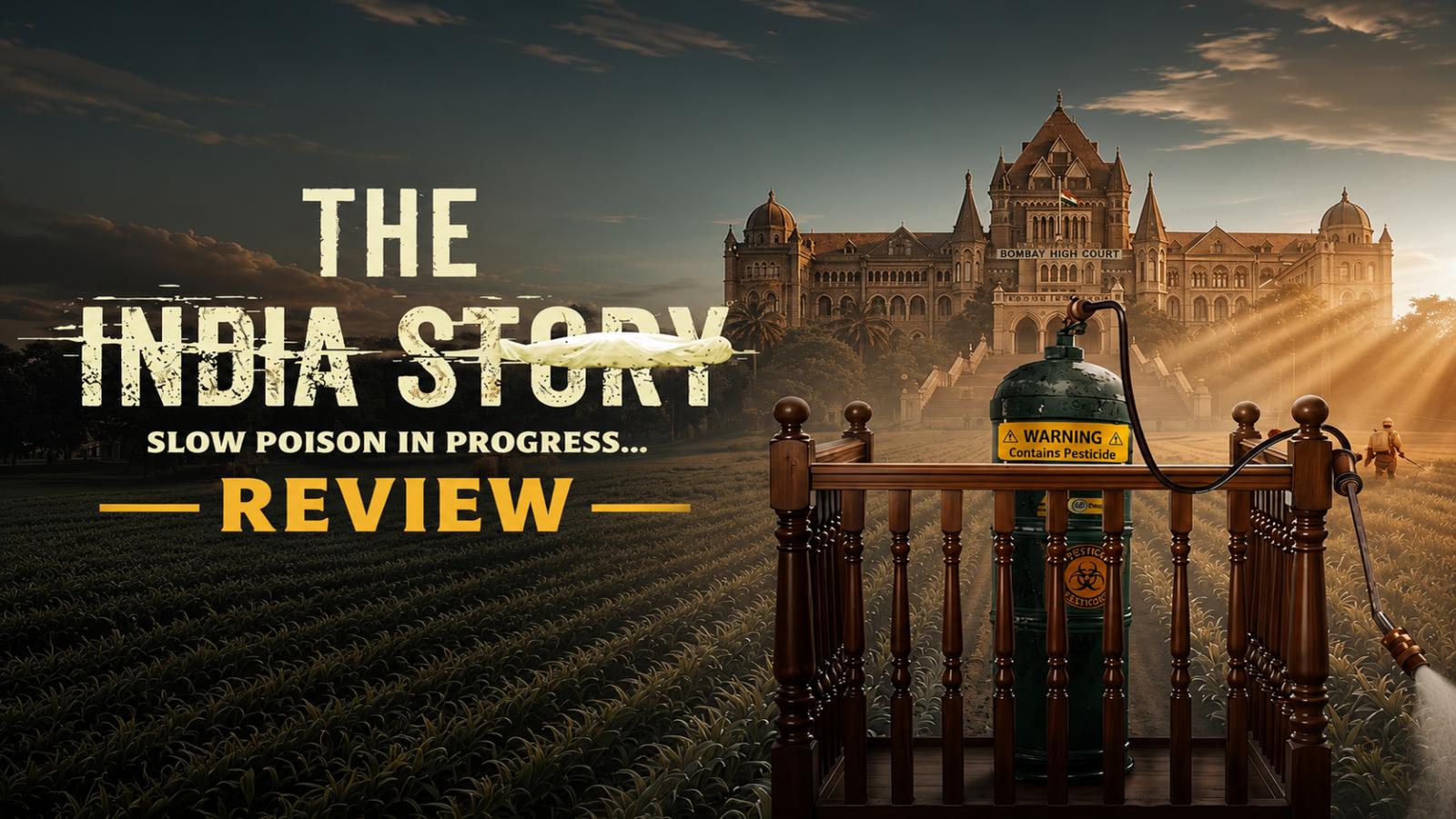
The India Story follows Major Yogesh Patil, a grieving father who loses his young daughter Pari to cancer. Convinced that toxic pesticides, contaminated food and unsafe agricultural practices contributed to her illness, Yogesh decides to seek accountability from those responsible.
When experienced lawyers refuse to support him, inexperienced advocate Archana agrees to take up the case. Together, they challenge government authorities, pesticide manufacturers and the wider agricultural system in court. What begins as a personal fight for justice gradually becomes a larger battle involving public health, food safety and consumer protection.
Overview
The India Story attempts to explore pesticide misuse, food contamination, unsafe farming methods and failures in regulatory oversight. The subject is socially relevant and has the potential to become a powerful investigative courtroom drama.
However, the film struggles to convert its important message into an engaging cinematic experience. An uneven screenplay, predictable developments and weak legal confrontations reduce the impact of its central conflict. The film raises serious questions but does not examine them with enough depth or dramatic force.
Performances
Shreyas Talpade delivers a sincere and emotionally committed performance as Major Yogesh Patil. He effectively portrays the pain, anger and helplessness of a father determined to uncover the truth behind his daughter’s death. His emotionally intense scenes provide the film with some of its strongest moments.
Kajal Aggarwal plays advocate Archana with confidence and screen presence. She convincingly presents the character’s determination, though some courtroom scenes require greater restraint and sharper writing. Trisha Sarda is touching as Pari and brings emotional weight to the father-daughter relationship.
Murli Sharma and Manish Wadhwa offer dependable support, but their characters receive limited scope to make a lasting impression.
Technical Aspects
The cinematography maintains a grounded visual tone that suits the seriousness of the subject. Hospital sequences, rural settings and courtroom portions are presented with a realistic atmosphere.
The production design supports the film’s social-drama setting without unnecessary glamour. However, the occasional use of artificial intelligence-generated visuals appears distracting and weakens the realism of certain scenes. The direction remains sincere but frequently leans toward melodrama instead of building tension through investigation and legal debate.
Music
The songs do not leave a lasting impression and add little to the emotional journey of the characters. They neither strengthen the narrative nor provide memorable musical moments.
The background score supports the dramatic and emotional scenes adequately. However, it lacks the intensity and urgency expected from a courtroom thriller dealing with public-health accountability and corporate wrongdoing.
Editing
The first half moves at a reasonable pace as the film establishes Yogesh’s tragedy and his decision to pursue legal action. The narrative becomes noticeably slower after the interval.
Lengthy hospital and treatment sequences, repetitive emotional scenes and an extended climax make the film feel longer than necessary. A tighter edit could have improved the courtroom portions and given greater impact to the emotional moments.
Positives
- Relevant discussion about pesticides and food safety
- Shreyas Talpade’s sincere performance
- Kajal Aggarwal’s confident presence
- Trisha Sarda’s emotional portrayal
- References to genuine agricultural and health concerns
- Strong potential in the central premise
Negatives
- Weak courtroom arguments and confrontations
- Predictable and underdeveloped screenplay
- Slow second half
- Excessive emotional melodrama
- Unconvincing corporate opposition
- Forgettable music
- Repetitive hospital portions
- Underwhelming climax
Analysis
The India Story begins with an important question: how safe is the food consumed every day? By focusing on pesticide exposure, contamination and failures in consumer protection, the film draws attention to a subject that deserves serious public discussion.
The emotional foundation is strong because Yogesh’s struggle emerges from personal tragedy. His fight represents not only a father seeking justice but also the fears of ordinary consumers who have limited information about what enters the food supply.
Unfortunately, the courtroom drama does not generate sufficient tension. The opposition presents little meaningful resistance, the cross-examinations lack intelligence and the legal arguments remain too simple. Instead of developing a layered debate around agricultural policy, corporate responsibility and scientific evidence, the screenplay repeatedly depends on emotional speeches.
The film is more effective as a conversation starter than as a gripping legal thriller. Its message remains relevant, but stronger writing, sharper confrontations and a more convincing climax were needed to transform the subject into compelling cinema.
Bottomline: Missed Potential
Rating: 2.5/5