

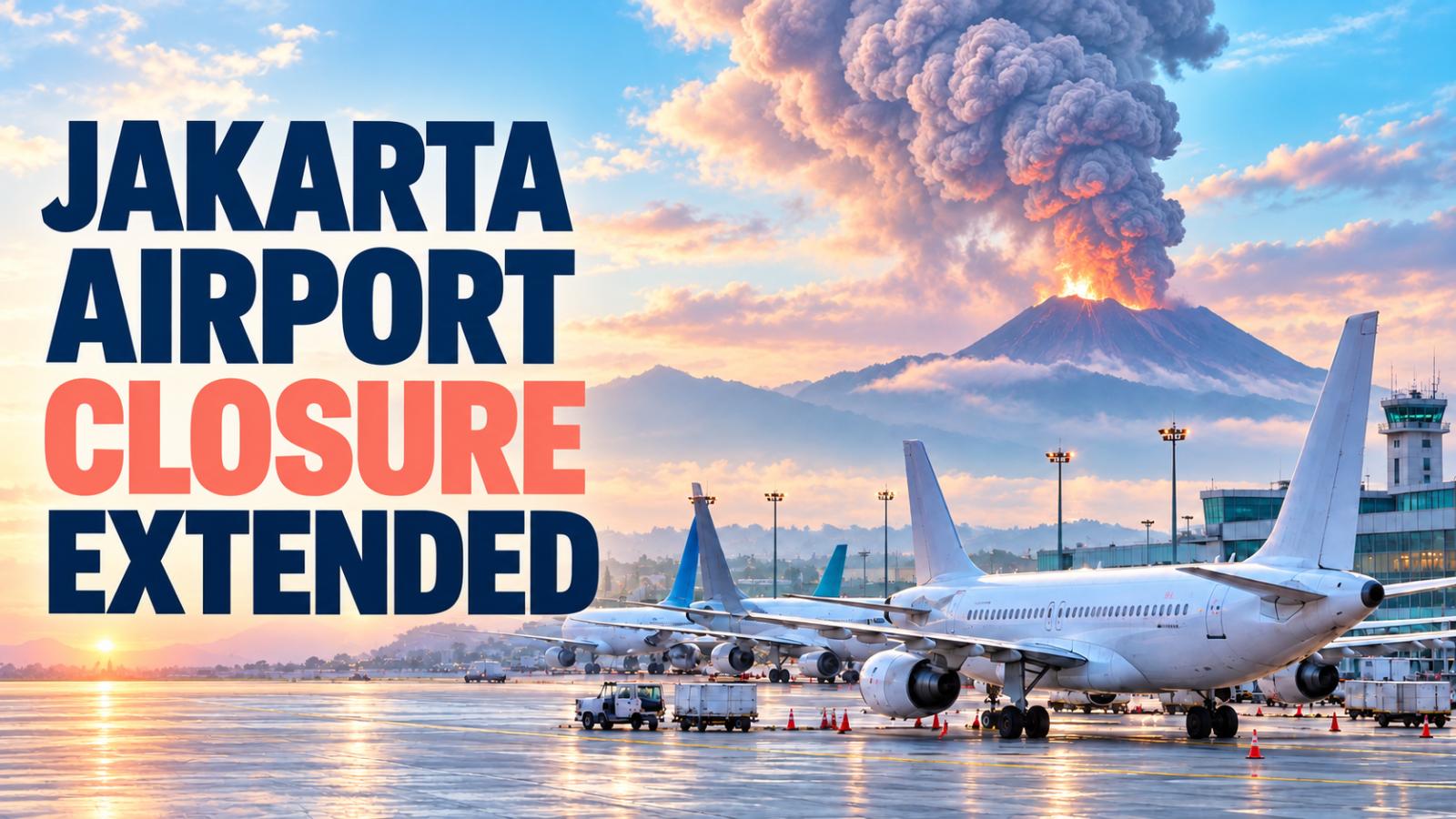
Jakarta’s Soekarno-Hatta International Airport and several other Indonesian airports extended flight suspensions until at least 6:00 PM local time on Monday. Volcanic ash from Anak Krakatau has disrupted thousands of flights and affected more than 270,000 passengers.
Jakarta Airport Closure Extended Until Monday Evening
Soekarno-Hatta International Airport, Indonesia’s primary international aviation hub, extended its temporary closure until at least 6:00 PM local time, or 11:00 AM GMT, on Monday. Volcanic ash remained in the surrounding airspace, creating dangerous conditions for aircraft.
Halim Perdanakusuma Airport, which handles civilian and military operations in Jakarta, also remained closed. Several other affected airports extended their suspensions as authorities continued to monitor the movement and concentration of ash.
Seven Indonesian airports remained closed on Monday, according to the latest available update. Eight airports had initially suspended operations after ash was detected in their airspace during the weekend.
Airport operator Angkasa Pura advised passengers to check their flight status directly with their airlines before travelling to the airport. Reopening times could change depending on volcanic activity, wind direction and aviation-safety assessments.
Anak Krakatau Eruption Disrupts Thousands of Flights
Anak Krakatau began erupting late on Friday and produced further eruptions over the weekend. The volcano emitted lava, loud explosive sounds and large ash plumes that spread across parts of Java, Sumatra, Banten and the Jakarta region.
The disruption has affected more than 2,300 flights and over 270,000 passengers, according to updated reports. Services were cancelled, delayed or diverted as airport authorities worked to protect passengers and aircraft from volcanic ash. Reuters reported that seven airports, including Jakarta’s two airports, remained closed on Monday.
At Soekarno-Hatta alone, hundreds of domestic and international flights were affected. Airlines serving routes connecting Jakarta with Singapore, Kuala Lumpur, Doha, Sydney and other major destinations altered or cancelled services.
Airports in Semarang, Surabaya and other locations were prepared as possible alternatives for diverted flights. Airlines and airport officials also arranged refreshments, transportation and hotel assistance for some stranded passengers.
Volcanic Ash Creates Serious Risk for Aircraft
Volcanic ash can damage aircraft engines, reduce visibility and interfere with navigation and other critical systems. Even when an airport runway appears clear, ash suspended in surrounding airspace can make takeoffs and landings unsafe.
Indonesia’s geological authorities warned that the probability of further eruptive activity remained high. Potential dangers included falling incandescent rocks, heavy ashfall and lava flows if sustained eruptions resumed.
Ash columns were detected at heights of up to 20,000 feet on the Java side and approximately 50,000 feet over parts of Sumatra and Banten. Authorities urged residents in affected locations to wear masks and eye protection, limit outdoor activities and protect water supplies.
Schools in Jakarta and some other ash-affected regions shifted to remote classes because of health concerns. Officials also advised ships travelling through the Sunda Strait to remain at least three kilometres away from the volcano.
Anak Krakatau History Keeps Indonesia on Alert
Anak Krakatau, meaning “Child of Krakatau,” is located in the Sunda Strait between Java and Sumatra. It emerged from the caldera created by the catastrophic 1883 Krakatau eruption and has remained periodically active.
A collapse involving Anak Krakatau generated a tsunami in December 2018, killing more than 400 people along the coasts of Java and Sumatra. Authorities said there was no imminent tsunami threat from the latest eruption, but monitoring remained active.
Indonesia is located along the Pacific Ring of Fire and regularly experiences volcanic eruptions and earthquakes. Officials are continuing to monitor Anak Krakatau while aviation authorities assess when affected airports can safely resume operations.
Passengers should confirm departure and arrival information with their airline because airport closures and flight schedules may change at short notice.