
Keir Starmer Resigns As UK Prime Minister
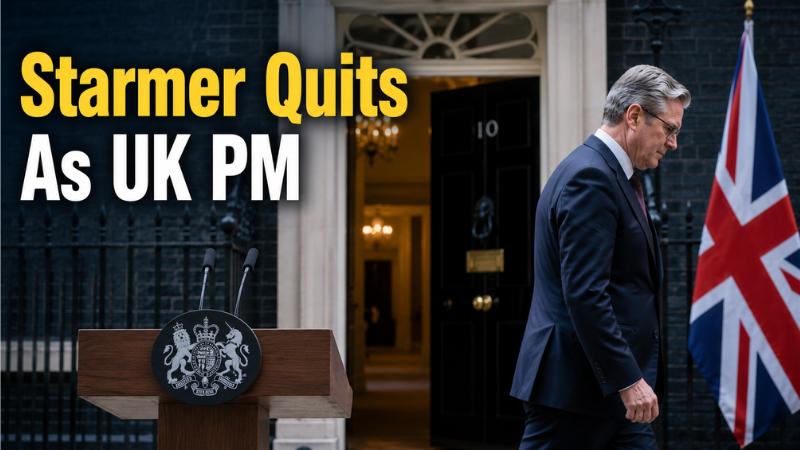
UK Prime Minister Keir Starmer announced on Monday, June 22, 2026, that he will resign as Prime Minister and leader of the Labour Party, bringing a sudden end to his time in office less than two years after Labour’s historic 2024 election victory.
The announcement came after months of pressure from within the Labour Party, with several lawmakers questioning whether Starmer could continue to lead the party into the next general election, due in 2029.
Starmer is expected to remain in office in a caretaker role until Labour completes the process of choosing its next leader. Whoever wins the contest is likely to become the next Prime Minister of the United Kingdom.
Labour Leadership Contest To Begin
Starmer said Labour’s governing bodies would begin the process of selecting a new leader. Nominations are expected to open in July, and if a full contest is required, a new Labour leader and Prime Minister could be in place by September.
The leadership race is now expected to become the main focus of British politics over the coming weeks. Andy Burnham, who recently returned to Westminster, is widely seen as one of the leading contenders, though Labour has not yet confirmed its final list of candidates.
The next leader will face the challenge of uniting Labour, rebuilding public confidence, and preparing the party for the 2029 general election.
Why Did Keir Starmer Resign?
Starmer’s resignation followed months of criticism over policy reversals, falling public support, and frustration among Labour MPs. Critics accused his government of failing to deliver the level of improvement in living standards that voters expected after Labour’s landslide victory in 2024.
In his resignation speech, Starmer defended his government’s record, pointing to economic growth, rising wages, investment, infrastructure projects, worker rights, renters’ rights, defence spending and efforts to reduce child poverty.
However, he acknowledged that many Labour lawmakers no longer believed he was the best person to lead the party into the next general election. His decision marks a major reversal after weeks of insisting that he would fight any challenge to his leadership.
Britain Set For Seventh Prime Minister In A Decade
Starmer’s exit adds to a long period of political instability in the United Kingdom. Britain is now preparing for its seventh Prime Minister since the 2016 Brexit referendum, underlining how frequently power has changed hands at No. 10 Downing Street in recent years.
The political turnover reflects growing public frustration over living costs, immigration, public services, and the direction of the economy. For many voters, Starmer’s resignation has again raised questions about whether any government can deliver long-term stability.
Why This Matters For India
The leadership change in Britain will also be closely watched in India because of the strong economic, education, and diaspora links between the two countries.
A change in UK leadership could affect discussions around trade, immigration policy, student visas, skilled worker routes, and India-UK diplomatic engagement. Indian businesses, students, and professionals in the UK will be watching how the next Prime Minister approaches these key areas.
What Happens Next?
For now, Starmer is expected to continue as caretaker Prime Minister until Labour chooses its next leader. The party will have to decide whether it wants continuity or a sharper political reset after a difficult period in government.
The new Prime Minister will inherit major challenges, including the cost of living, public service pressure, immigration concerns, economic uncertainty, and the task of rebuilding Labour’s image before the next national election.
Starmer’s resignation has turned Britain’s political focus toward the Labour leadership race, which will decide not only the country’s next Prime Minister but also the future direction of the UK government.